Here is a detailed breakdown of the content and structure of the YouTube video "3 English Speaking Exercises (zero friends needed)" by the channel English by Jay - Sprout.
Overview
In this video, Jay shares three practical Englis

Here is a detailed breakdown of the content and structure of the YouTube video "3 English Speaking Exercises (zero friends needed)" by the channel English by Jay - Sprout.
Overview
In this video, Jay shares three practical Englis
h speaking exercises that language learners can practice entirely on their own to improve their pronunciation, spontaneous word-recall speed, and conversational readiness.
Exercise 1: Playing with Your Voice (Reading Out Loud) [0

1:08]
Jay compares the human voice to a piano. If you only play one note, your speech sounds boring and monotonous. To sound more dynamic and natural, you need to practice vocal variety.
How to practice:
Grab any English book.
Op

en to a random page.
Read out loud for one minute while playing with your delivery.
The 4 Vocal Controls:
To easily remember these controls, Jay suggests the mnemonic "Very Small Purple Penguins" (V.S.P.P.):
Volume: Alternating b

etween loud and quiet. Loud trains you to articulate clearly; quiet forces you to slow down and get precise.
Speed: Alternating between fast and slow. Fast trains your mouth to keep up; slow trains you to focus on clarity.
Pitch:

Moving your voice high and low.
Pause: Using pauses strategically to create emphasis and rhythm.
Exercise 2: Word Games to Speed Up "Brain Wi-Fi" [04:55]
Jay explains that many students freeze up in conversations because their b

rains lack speed when retrieving words. He uses the analogy of improving your brain's "Wi-Fi" connection through two dynamic word games:
A. The Word Tree Game [05:24]
Concept: Think of a tree where the trunk is your central word,

and the branches are words directly related to it.
Example demonstration (using the word "Book"):
[Words] [Bibliography]
\ /
[Page] -----[ BOOK ]----- [Aut
hor]
/ || \
[Illustrator] || [Library]
(Trunk)
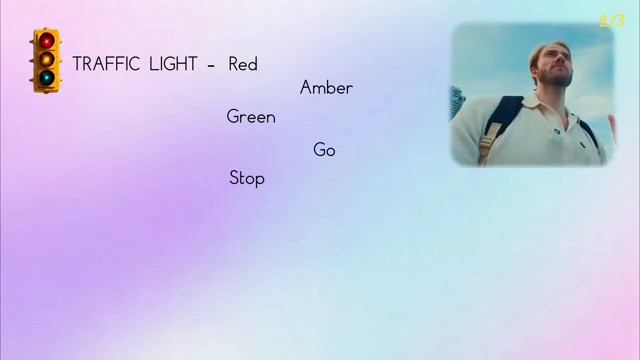
B. The Word Association Chain Game [07:34]
Concept: Start with a random word, then say the very next word y

ou associate with it, creating a continuous stream-of-consciousness chain.
Example demonstration:
Traffic Light → Red → Amber → Green → Go → Stop → Pause → Play → Video → YouTube → Subscribe
Exercise 3: Interactive Roleplay with

Feedback (Using AI) [12:46]
A major drawback of practicing English alone is the lack of feedback—you don't always know if what you said is correct. Jay addresses this by demonstrating how to use JI (his AI assistant tool) for sim

ulated real-life practice.
How it works:
You engage in a back-and-forth verbal roleplay scenario with the AI (e.g., catching up with an old friend you haven't seen in 5 years).
The conversational assistant acts naturally, respond

s to your inputs, and concludes the conversation organically.
Once finished, the system analyzes your performance, providing tailored feedback on what you did well and how you can improve.
Summary of Key Takeaways [14:50]
Exercis

e Core Focus Benefit
1. Vocal Variety (V.S.P.P.) Volume, Speed, Pitch, Pause Prevents monotone delivery; trains mouth muscles for better articulation.
2. Word Games Word Tree & Associations Boosts spontaneous vocabulary retrieval

and "brain Wi-Fi" speed.
3. AI Roleplay Interactive Scenario Practice Provides a safe space to practice real-world situations with active feedback.
3 English Speaking Exercises (zero friends needed)
English by Jay - Sprout · 294

Viewer Discussion & Comments