The video "5 Steps To Speak English Fluently - Not Just Understand It" by the channel "Speak English With Tiffani" outlines a systematic approach to transitioning from understanding English to speaking it fluently
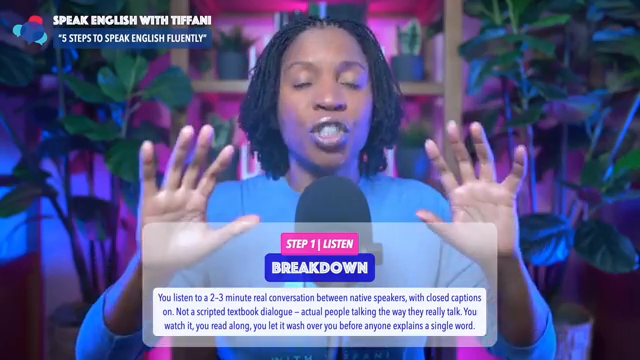
The video "5 Steps To Speak English Fluently - Not Just Understand It" by the channel "Speak English With Tiffani" outlines a systematic approach to transitioning from understanding English to speaking it fluently
. The speaker emphasizes that these skills are distinct and that active practice is required to bridge the gap.
The 5 Steps to English Fluency
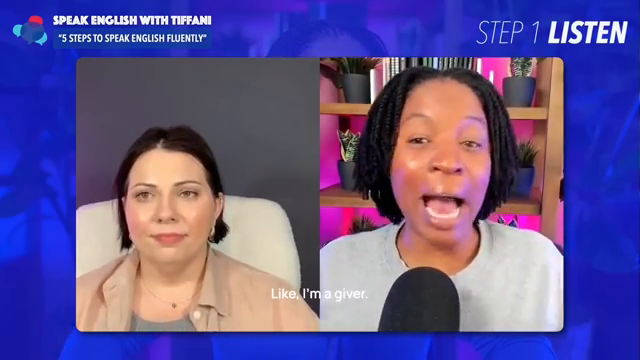
Listen [00:14]: Watch a 2–3 minute clip of a real, unscripted conversa
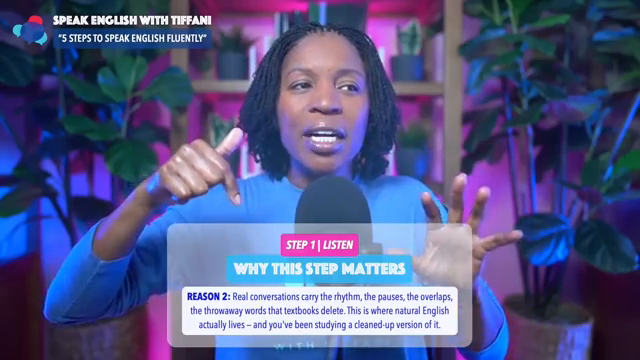
tion between native speakers with closed captions enabled. Avoid scripted textbook dialogues. This trains your ear to recognize the rhythm, pauses, overlaps, and natural throwaway words of daily English.
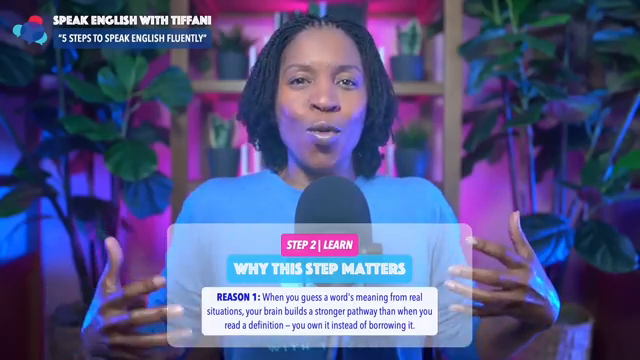
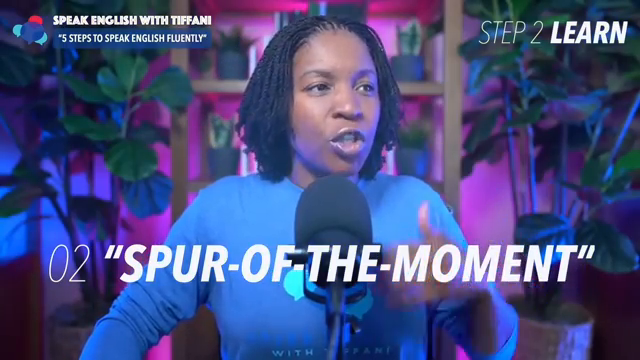
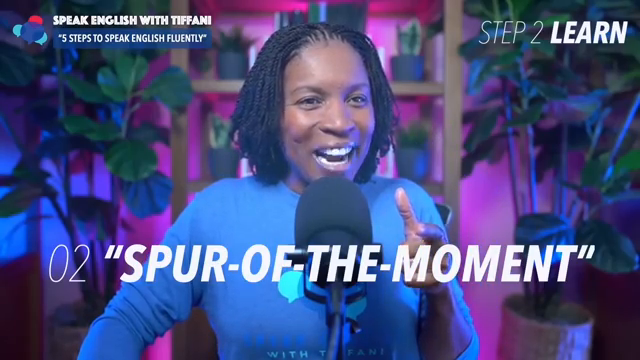
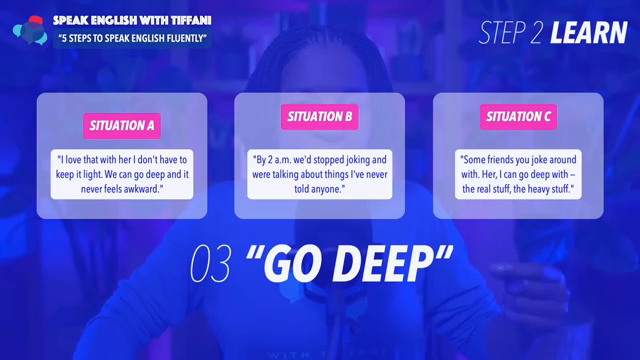
Learn [05
:02]: Select three terms from the clip. Instead of looking up definitions immediately, analyze them in different real-life contexts first to infer their meaning. This builds stronger neural pathways and deeper ret
ention.
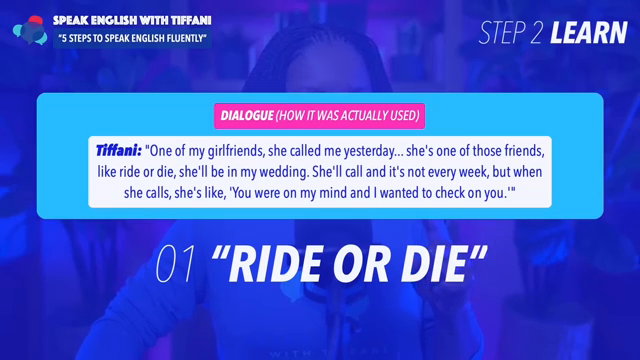
Examples covered: "Ride or die" [06:40], "Spur of the moment" [08:36], and "Go deep" [10:32].
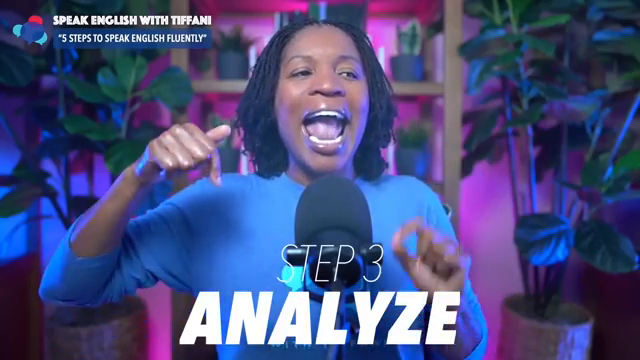
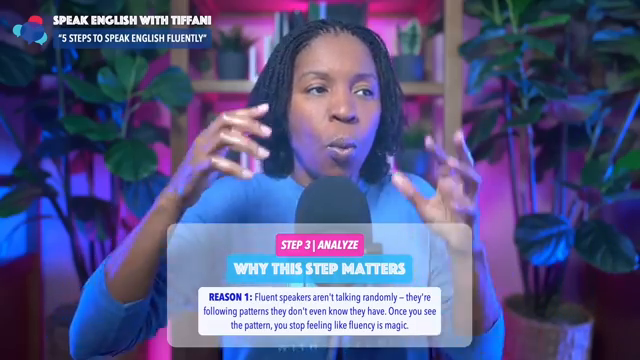
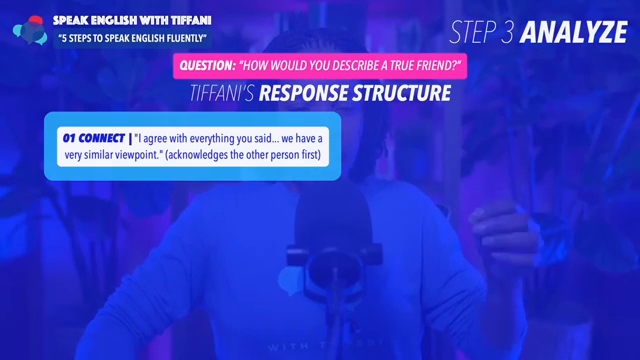
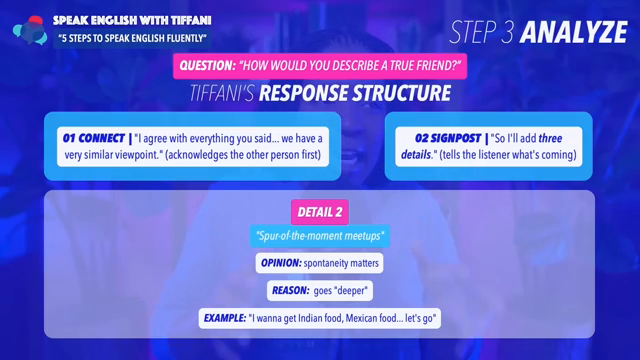
Analyze [11:55]: Dissect the structure of a fluent answer to make the "invisible" patterns of natural speech vi
sible. The speaker explains the formula: Detail → Opinion → Reason → Example.
Apply [16:23]: Turn analyzed patterns into formulas to practice generating your own responses.
Formula A: Opinion + Reason + Example [1
8:13]
Formula B: Connect + Signpost + List with examples [18:42]
Action [20:39]: Apply the formulas to new questions in diverse situations. This is where recognition becomes production.
Visualization of the Analyt
ical Structure
As explained in the video, native speaker responses often follow a logical pattern rather than being random. Here is a representation of the structure used for building a response:
Plaintext
+------
-------------------------------------------------+
| THE FLUENCY STRUCTURE |
+-------------------------------------------------------+
| 1. Detail (What you are talking about)
|
| | |
| 2. Opinion (Your viewpoint on the detail) |
| | |
| 3. Reason (Why you have
that opinion) |
| | |
| 4. Example (A real-life instance/experience) |
+-------------------------------------------------------+
| *Note
: Native speakers may sometimes skip the |
| 'Reason' slot, as the structure is a tool, |
| not a strict cage. [00:15:34] |
+----------------------------------------------
---------+
Personal Narrative
At [25:26], the speaker shifts to a personal story about an encounter at a Subway restaurant. She describes meeting a homeless man named Walter. Driven by a desire to help, she provid
ed him with a meal for himself and his brother, as well as financial assistance. She reflects on this experience as a reminder of the principle that it is "better to give than to receive" and connects this philoso
phy to her dedication to teaching English to her viewers.
Reference Video: https://www.youtube.com/watch?v=sjJY7ypRQpo
5 Steps To Speak English Fluently - Not Just Understand It
Speak English With Tiffani · 21K vi
Viewer Discussion & Comments