A New Kind of Bearing


Channel: Chronova Engineering
Uploaded by Chronova Engineering on 20260803
Categories: Science & Technology
Tags: Bearing, ball bearing
What practical purpose could there be for slicing a bearing in half? If you would like to support our channel and access extra content, please check out our Patreon page: https://www.patreon.com/c/ChronovaEngineering

The video "A New Kind of Bearing" by Chronova Engineering explores an innovative approach to modifying standard ball bearings to eliminate wobble and reduce mechanical backlash [02:47], [05:48].

The Fundamental Limitation of Ball Bearings

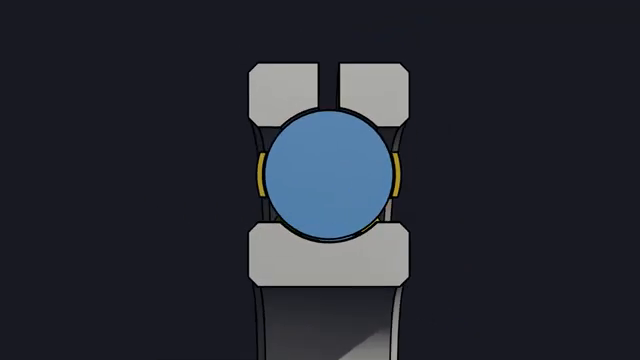
The Problem of Wobble: Standard ball bearings consist of an inner ring, an outer ring, and a set of spheres held by a cage [00:16]. Due to manufacturing tolerances in the real world, it is impossible to achieve an absolute, zero-clearance fit,
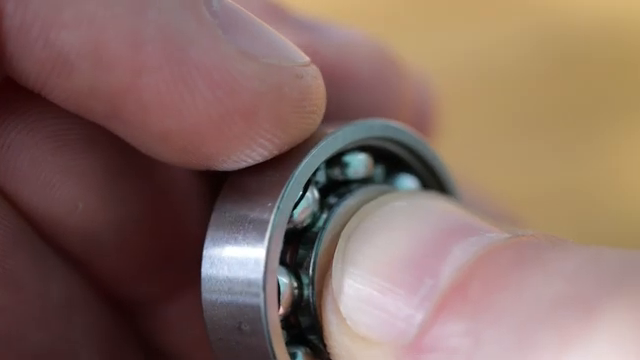
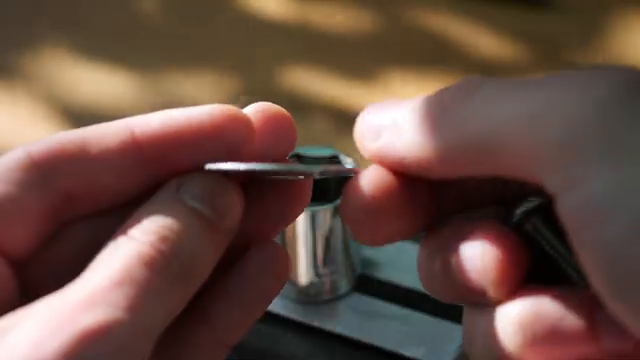
Image for chunk 1

resulting in a slight wobble when the inner and outer rings are pushed relative to each other [00:48].

The Preload Challenge: To remove this wobble, engineers apply opposing axial forces—a technique known as bearing preload [01:10]. However, doing this typically impedes rotation or locks the bearing up entirely [01:26].

Conventional Solutions: Traditionally, engineers must stack two bearings together with a spacer or use complex setups that are vulnerable to thermal expansion ch

Image for chunk 2

anges [02:10].

The Split Bearing Concept

The video details an experimental solution developed by the creator and his father, Alistair [02:47]:

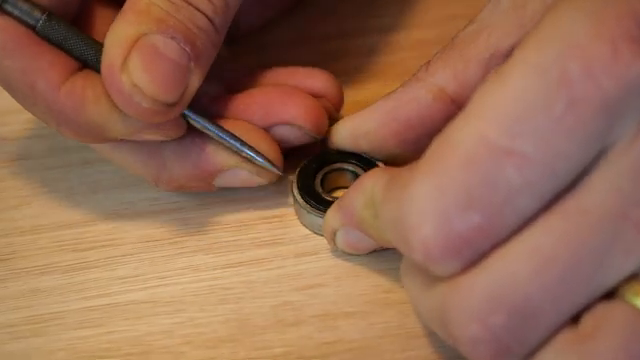
Dismantling: The process begins by removing the rubber seals and prying apart the crimped cage of a standard bearing to release the balls [03:00].

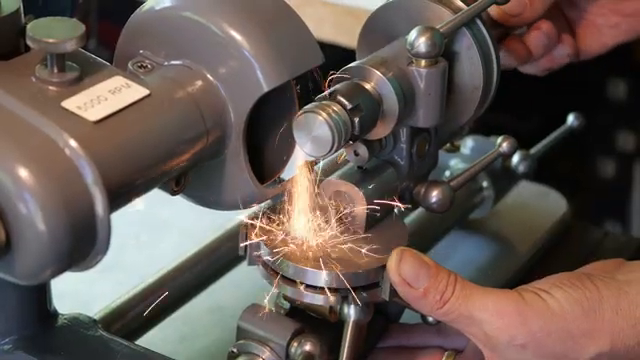
Modifying the Outer Race: The outer component of the cage is mounted onto a grinder, where a segment is cut through the outer ring [03:44].

Reassembly: The bearing is reassembled by popping the

Image for chunk 3

balls back into the cage [04:31].

The Advantage: With part of the outer race separated, force can be applied directly to the outer raceway to preload a single bearing, successfully eliminating wobble without sacrificing rotation [04:53].

Practical Application on a Milling Machine

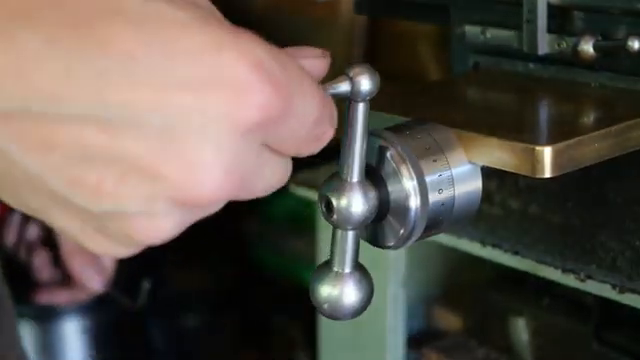
Testing: The creators tested this modified bearing on the Y-axis feed screw of Alistair's milling machine to tackle mechanical backlash [05:22].

Results: Before the modification, the machine exhibited

Image for chunk 4

between 0.1 mm and 0.2 mm of backlash [05:37]. After fitting the split bearing and preloading it using a shim, the backlash dramatically dropped to 30 to 40 microns, resulting in a much smoother action and a noticeable improvement in the quality of cuts [05:55].

An Investigation into Bearing Lubrication

The second half of the video investigates the role of lubrication in ball bearings:

The Spinner Test: An ultrasonically cleaned, degreased bearing spun freely for an impressive a

Image for chunk 5

mount of time compared to one straight out of the package with factory grease [06:45]. However, adding a drop of low-viscosity oil brought the clean bearing to an abrupt stop [07:06].

The Stribeck Curve: While fluid lubrication reduces friction between sliding flat metal surfaces by keeping microscopic bumps (asperities) separated, rolling elements behave differently [07:45]. Because balls roll, adding a viscous fluid introduces drag that slows the bearing down [08:31].

Microsco

Image for chunk 6

pic Sliding: Although ball bearings roll, heavy loads cause the balls and raceway to compress ever so slightly at a microscopic level, meaning some sliding still occurs [08:45]. Therefore, while most applications require lubrication to prevent wear, specialized low-load devices (such as fidget spinners) can benefit from removing heavy factory grease to minimize viscous drag [09:09].

https://www.youtube.com/watch?v=RKvOfX1s3-k

A New Kind of Bearing

Chronova Engineering · 303K vie

No image available for chunk 7

Viewer Discussion & Comments

@chronovaengineering
Thanks for watching! For extra monthly videos and articles, check out our Patreon page: https://www.patreon.com/c/ChronovaEngineering
@jeromeprater183
The bearing you made is called a Gothic Arch bearing. It is designed to preload both radially and axially with one bearing.
@rallymodeller
And many of the issues you raise regarding play and slop are addressed by other kinds of bearings designed specifically to reduce or eliminate those, such as angular contact bearings, taper roller bearings, thrust bearings and needle bearings. Horses for courses.
@mrtnsnp
For some bike races, mechanics may prepare the bike with dry bearings. It is a huge risk, as rain will ruin the bearings (and any chance the athlete had), so this is typically limited to indoor tracks, but it can be an option for some sprint races.
@perplearner
the animation at the beginning is very well done, chefs kiss
@chorgzent.3978
I never knew Alistair was your dad this entire time that you say alister did this and Alistair did that. Makes sense LOL almost like the sensei
@RGmcd56
Thanks for the ancient bearing info.
@JoseSilveira-newhandleforYT
Very interesting concept and very well explained! Worth the full duration of the video, which is now an exception!
@t0mn8r35
This was very interesting and "dumbed down" enough for me to understand. Well done. Subscribed.
@TheProggyRock
Brilliant 😊
@richardbradley961
THANK YOU
@trustyrustydustyaxe
Never heard or seen this kind of bearing, very insightful! And that's considering I supposedly studied mechanical engineering...
@sonovoxx
*regimen. Sorry. Couldn't help myself.
@EdwinWiles
Thank you! Quite intriguing! I suppose the reason most machining tools don't come with these bearings normally is cost.
@claybair4904
At the chassis shop I was trained at we would add a small amount of oil to the grease making it more fluid for steering and other very slow turning gears