A Telescope So Powerful It Can See Into the Past


Channel: Great Big Story
Uploaded by Great Big Story on 20160217
Categories: People & Blogs
Tags: National Radio Astronomy Observatory, great big story, supercomputers, universe, lag, galaxies, telescope, chile, astronomy, planet, data, exploration, hewlett packard enterprise, Atacama Large Millimeter Array, space, gbs, nasa, astronomer, seize the data, crystal brogan, hpe, seizethedata, array
There’s a telescope deep in Chile’s Atacama Desert that takes pictures so massive that it requires a supercomputer as powerful as 16 million PCs to decipher the images. This is the Atacama Large Millimeter Array (ALMA), run by the National Radio Astronomy Observatory and the data it’s retrieving from space, after crunched by an inc

Here is a detailed overview of the video "A Telescope So Powerful It Can See Into the Past" by Great Big Story:

Exploring Cosmic Origins: The primary mission of the Atacama Large Millimeter/submillimeter Array (ALMA) is to investig
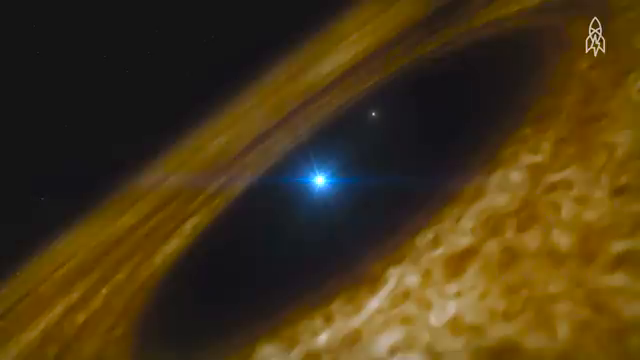
Image for chunk 1

ate the early stages of the universe, including the birth of galaxies, stars, and planets [00:01].

Unprecedented Detail: Located in Chile, ALMA captures space images in unprecedented detail, with every new dataset capable of surpri
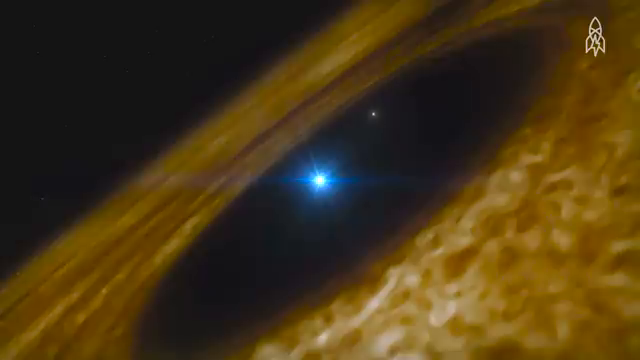
Image for chunk 2

sing scientists and shifting perspectives in astronomy [00:30].

How ALMA Works: The facility consists of 66 individual 12-meter antennas distributed up to 10 kilometers apart [00:45]. By working together as a single interferometer,
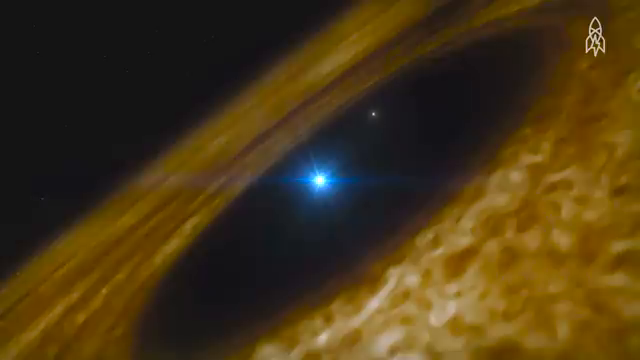
Image for chunk 3

they combine their signals to produce high-sensitivity images of the sky [00:54].

Looking Back in Time: ALMA's powerful capabilities allow researchers to peer back 11 to 12 billion years into the history of the universe [01:17].

T
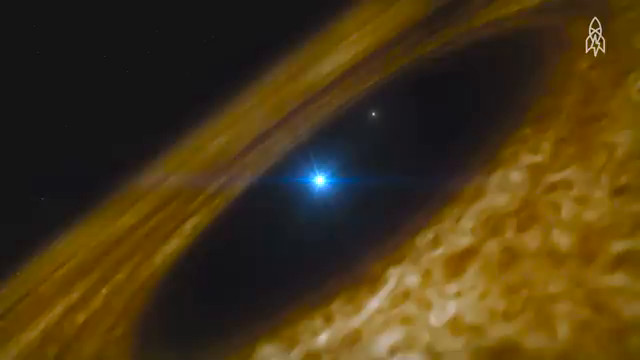
Image for chunk 4

he Supercomputer Correlator: Signals from all the antennas are processed by the ALMA correlator, a supercomputer with processing power equivalent to 16 million PCs [01:38].

Data Processing: Raw data collected by the telescope often
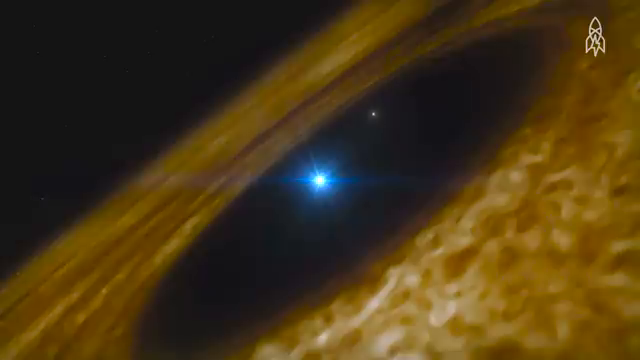
Image for chunk 5

ranges from several hundred gigabytes to a terabyte, which is then synthesized into manageable images around four to five megapixels in size [02:01].

Understanding Our Place in the Universe: By uncovering the mechanisms behind pla
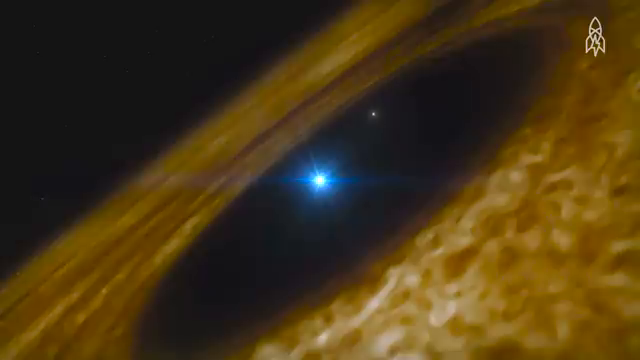
Image for chunk 6

net and solar system formation, ALMA helps humanity better understand its origins and future trajectory [02:24].

https://www.youtube.com/watch?v=5mIiMXdEaLs

A Telescope So Powerful It Can See Into the Past

Great Big Story · 489K vi

No image available for chunk 7

Viewer Discussion & Comments

@starpartyguy5605
Not to complain but all starlight we see was generated in the past. Even the Sun's light is 8 1/2 minutes old.
@johnross1968
"A Telescope So Powerful It Can See Into the Past" In the exact same way that even a $50 telescope from walmart can.
@Hurricane1668
Good article, informative video, bad title.
@danielladada9419
If so, give us a good view of Moon!
@franciscomartins6936
In fact, we don't need a telescope to see the past. When we look at the sky at naked eye we are already seeing the past because the light takes time to reach our eye. If im not mistaken, The light of the sun takes around 8 min to reach us.
@ethanclemons7132
Every star you see is from the past by years that's why when you hear a stars distance it's always light years other than the Sun
@kadafi4lyf
Imagine if we could put up a telescope 4000 lightyears away and point it at the earth, viewing it in real-time. We'd see the pyramids of Egypt being built. That is just fascinating.
@jomitjohn6862
You don't need a telescope to see the past. Look at the sky with your naked eyes!!
@alexk1682
1:58 "two quadrillion years of music" can somebody explain why music is the unit they are using?
@Elysiumlost
Lol. Common now. Are you serious with this title?
@anyarr
Time Machine: Teaser Trailer
@thebrokenman6860
I'll be interested if they implement a multi-player system. Till then, star citizen it is.
@iipenguin0324
I’d be depressed if I seen my past Infront of me
@philoshark1234
Me watching the stock market with Chiles telescope.
@Ice-yp8dz
Wouldn't we see into the future because it will take a long time for light to reach a galaxy or planet from the galaxay?