America Regrets China’s Rise — Now It’s Warning India


Channel: GVS Deep Dive
Uploaded by GVS Deep Dive on 20260714
Categories: News & Politics
Tags: Najma Minhas, GVS Deep Dive, GVS Deep Dive Latest, America helped China rise, America afraid of India rise, India rise 2026, JD Vance China speech, JD Vance India, America China mistake, US warns India, India next China, India economic rise, US foreign policy India, Trump India policy, India China America, India superpower, India manufacturing rise, India economic power, American decline, Global South, Indo Pacific strategy, India strategic autonomy, new American doctrine
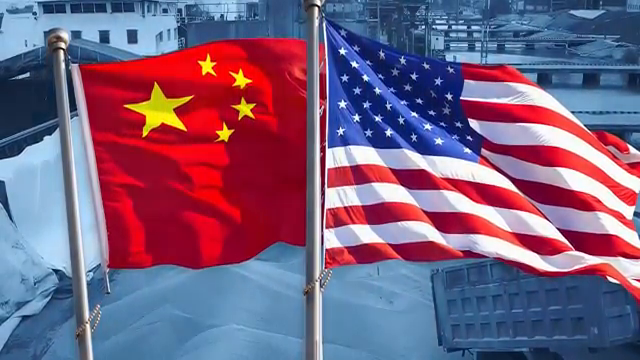
America helped China integrate into the global economy, opened its markets, shared technology and allowed Western investment to pour into Chinese industry. Decades later, Washington increasingly believes it helped create its greatest strategic rival. Now India is rising. Recent comments from Vice President JD Vance and senior US of

The YouTube video titled "America Regrets China’s Rise — Now It’s Warning India" by the channel GVS Deep Dive (presented by Namin House) analyzes a major shift in United States foreign policy and international political economy [03:35]. Below is a detailed breakdown of the video's content:

1. Executive Sum

Image for chunk 1

mary & Core Thesis

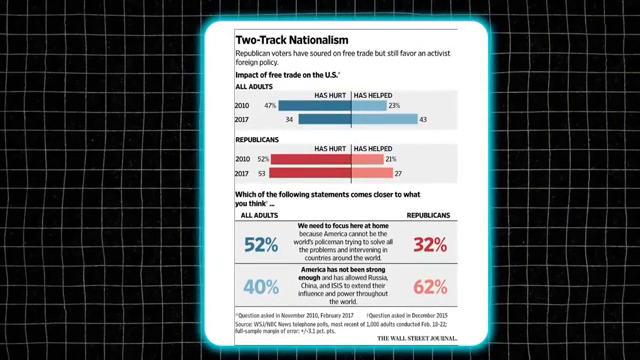
The Post-Cold War Assumption: For three decades, US policy was built on the belief (influenced by post-Cold War optimism like Francis Fukuyama’s "End of History") that integrating rising powers into the global market economy would lead to political convergence toward Western liberal demo

Image for chunk 2

cracy [00:35].

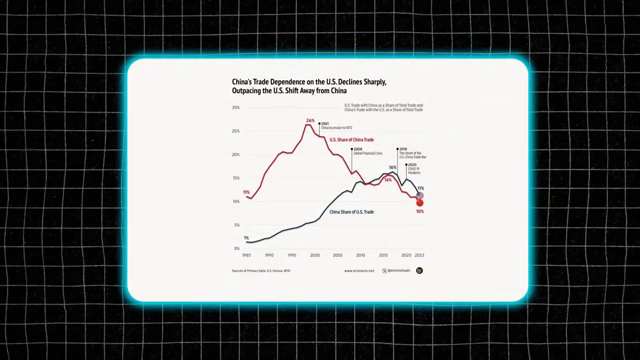
The Policy Shift: This assumption has collapsed [02:00]. American leadership views China’s rapid rise—from cheap manufacturing to advanced technologies (AI, EV, semiconductors)—as a geopolitical and economic mistake enabled by US open markets and capital [01:42], [02:39], [07:21].

The Warnin

Image for chunk 3

g to India: Washington is applying the "lessons learned" from China to India. The US seeks to partner with India to counterbalance China, but it is explicitly guarding against letting India become another unchecked economic or industrial superpower that threatens American dominance [03:14], [09:27].

2. key

Image for chunk 4

Statements & Political Context

JD Vance's Perspective: Expresses frustration among the American political class, arguing that past US leaders allowed China to build its middle class at the expense of the American middle class [00:00], [02:46], [08:08].

Christopher Landau (US Deputy Secretary of State) at

Image for chunk 5

Raisina Dialogue: Explicitly stated that the US will not repeat the same mistakes with India that it made with China 20 years ago regarding market development and commercial competition [03:14], [03:45].

Elbridge Colby: Framed US–India defense cooperation around hard sovereign interests and practical align

Image for chunk 6

ment rather than sentimental rhetoric about shared democracy [14:59].

3. Shift from Idealism to "Geopolitical Capitalism"

+-------------------------------------------------------------------------+

| THE POLICY PARADIGM SHIFT |

+--------------------------------

Image for chunk 7

-----------------------------------------+

| OLD ERA (Post-1990s) | NEW ERA (Present) |

+-----------------------------------------+-------------------------------+

| * Free Trade & Global Integration | * Managed Rise & Nationalism |

| * Efficiency & Cheap Supply Chains

Image for chunk 8

| * De-risking & Reshoring |

| * Shared Values & Ideological Alignment | * Transactional Alignment |

| * World Trade Organization (WTO) Focus | * Security-Filtered Trade |

+-------------------------------------------------------------------------+

Transition of Bipartisan Policy: The sh

Image for chunk 9

ift began under the Trump administration (tariffs under Section 301) and was largely maintained under the Biden administration, showing a broad consensus [11:23], [11:39].

Industrial Strategy: Strategic sectors like semiconductors, artificial intelligence, critical minerals, and defense are now strictly re

Image for chunk 10

gulated via technology transfer restrictions and domestic subsidies (e.g., bringing Apple/chip manufacturing back to the US) [11:56], [12:30], [13:16].

4. Dynamics of the US–India Relationship

Strategic Contradiction:

What the US Wants: A strong India to balance China in the Indo-Pacific; a market for US e

Image for chunk 11

xports; alternative supply chain hub [09:13], [13:40].

What the US Fears: An autonomous Indian industrial power that displaces US companies or military technologies [09:34], [14:30].

Key Areas of Friction [15:38]:

Trade: US market access vs. India's domestic economic protections.

Technology: India's desire

Image for chunk 12

for semiconductor/AI technology vs. US security restrictions.

Defense: US push to decouple India from Russian military systems vs. India's preference for strategic autonomy.

Geopolitics: India's refusal to be a front-line proxy against China and its ambition to lead the Global South while maintaining rela

Image for chunk 13

tions with both West and East [16:16], [16:40].

5. Conclusion

The video concludes that the "innocent age of globalization" is over [20:03]. The world has entered an era of strategic economic rivalry where every economic relationship is treated as a security relationship [18:15]. While India recognizes this

Image for chunk 14

transactional reality and aims to protect its own national interests, its economic growth path will face significantly tighter restrictions and greater scrutiny from Washington than China experienced two decades ago [18:49], [19:28].

America Regrets China’s Rise — Now It’s Warning India

GVS Deep Dive · 21

Image for chunk 15

Viewer Discussion & Comments

@SM-df9hm
Very Interesting explanations.
@chanhonming3723
arrogant American politicians thinking 'they'' can allow other countries to raise or not..
@QSynenergy
The US 🇺🇸, "I will let you eat only if you become my dog 🐕". "I must be able to keep you on a leash and take you for a walk."
@skyy4548
Silly, can we allow or disallow the sun to rise, or the tide to rise and fall. LOL
@linaizhong
China existed 5,000 years before the United States. We Chinese are preparing for the next 5,000 years without the United States.