Bizarre Units used by Scientists - Sixty Symbols


Channel: Sixty Symbols
Uploaded by Sixty Symbols on 20181030
Categories: Science & Technology
Tags: sixtysymbols, units, SI units, parsecs, nanomaggy, erg, astronomy
From nanomaggies to SNUBS... Featuring Dr Becky Smethurst. More links and info below ↓ ↓ ↓ More Becky: http://bit.ly/Becky_Playlist Full screen of the recipe animation: https://youtu.be/yqCc2iavDNE Dr Smethurst was the "Sixty Symbols Ogden Fellow", supported by The Ogden Trust. Discuss this episode on Brady's subreddit: https:

Bizarre Units used by Scientists - Sixty Symbols

[00:00] In this episode, physicists explore some of the weirdest and most wonderful units actually used in physics literature and research. While units are crucial—such as a 1999 unit error that led to the loss of the Mars Climate Orbiter—certain fields rely on unconventional or historical measurements.

[00:51] Parsec: Commonly known from popular
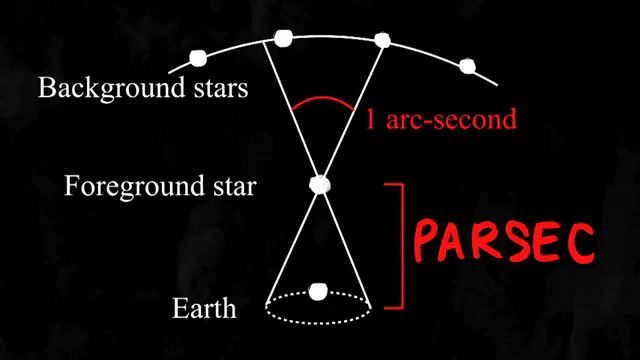
Image for chunk 1

culture as a unit of time, a parsec is actually a measure of distance based on parallax and arcseconds. It describes the apparent shift of a foreground star against background stars as the Earth orbits the Sun, with distances scaling from nearby stars to the size of the observable universe [02:39].

[03:29] Electron Volt (eV): Representing the energy gained by an electron moving through a voltage

Image for chunk 2

of one volt, this empirical unit is widely used in atomic, nuclear, and particle physics. Due to mass-energy equivalence (E=mc

2

), it is also frequently used as a mass unit for tiny particles [04:40].

[05:38] Snoopy: Standing for "supernova unit in the b band," this astronomy term measures the number of supernovae per century per 10 billion solar luminosities (roughly equivalent to per galaxy)

Image for chunk 3

[05:54].

[07:07] Unit (u): Used in radiation physics, "unit" represents air kerma strength (kinetic energy released per unit mass in air over a given distance), defined as one microgray per meter squared per hour [08:23].

[08:28] Erg: An energy unit belonging to the centimeter-gram-second (CGS) system favored by James Clerk Maxwell. Though largely historical, astronomers still use ergs to descr

Image for chunk 4

ibe massive energy outputs from events like supernovae [09:41].

[10:12] Foe: Invented by supernova scientists, a "foe" equals 10

51

ergs, serving as a shorthand for the immense energy released by a supernova [10:19].

[10:45] Jansky: Used heavily in radio astronomy to measure flux density, this complex unit integrates power over frequency and square radians (steradians) on the sky [11:04].

[12:1

Image for chunk 5

3] Nano Maggie: Linked to magnitude systems in astronomy, it measures brightness relative to a zero point [12:32].

[12:45] Kelvin per Centimeter Cubed: A quirky way astronomers express pressure in low-density molecular clouds by rearranging the ideal gas law while omitting the Boltzmann constant [14:18].

[14:58] Barn: Used in particle physics to measure the cross-sectional area of a particle (ro

Image for chunk 6

ughly the size of a uranium nucleus), the name originates from the idiom "couldn't hit the broad side of a barn" [15:21]. By combining tiny areas (barns) with vast distances (megaparsecs or hubble lengths), physicists can even derive everyday volumes like teaspoons or liters [16:43].

https://www.youtube.com/watch?v=hsEB65Q4kHI

Bizarre Units used by Scientists - Sixty Symbols

Sixty Symbols · 320K

No image available for chunk 7

Viewer Discussion & Comments

@sixtysymbols
Postscript: Becky got so excited by this idea of a physics cake recipe that she went full steam ahead and managed to ignore her own advice about being careful with units. For those wishing to convert the values back to normal metric values in order to bake the cake, know that it should be 126 giga-yotta eV/c2 of both sugar & flour and only 0.02 Hubble Barns of butter. Otherwise you’ll end up with a cake that is ~74% butter and Mary Berry won’t enjoy that soggy bottom.
@jaimie00
When my brother and I were young (I was about 12, so he would have been 11), we used to make up units that we found in our everyday lives and then applied them to astronomical things. Like we once measured the time it took an ant (whom we named Larry) to go from one end of a paving stone to the other. Then we'd calculate how many "Larry" it took for Jupiter to complete one orbit around the sun. We were weird kids.
@dermathze700
The biggest unit, used to measure the size of a lad , is obviously the absolute unit.
@doougle
By moving her finger she was forcing her results to match her thesis
@Kostchei
My cake didnt fit the oven, i think i made a conversion error somewhere
@cmhiekses
“We’re going to talk about units.” Immediately calls thrust (a force) Newtons per second (not a force)
@benbenjamin2530
My favourite unit is the Twaddle. It is a measure of viscosity used in ceramics for sodium silicate gloop.
@tibees
I had a lecturer who would refuse to give students a percentage score on their assignment if they handed it in without units on the answers. He would instead just give the assignment a grade of say 'pi' in retaliation
@sammarks9146
Measuring the power of supernovae in ergs sounds like measuring cars in antpower rather than horsepower.
@adamgray9212
Everyone: "Can I get uuuuuhhh sensible units"
@kylenolan2710
I'm reminded of the extra credit question on a physics exam - Express the speed of light in furlongs per fortnight.
@gizmoguyar
You should throw in a Butt load. It's a unit of volume equal to approximately two hogsheads, or approximately 108 US gallons.
@douglasmacaulay2301
It's not used in physics, or by anyone really, but my favourite unit of measurement is the Millihelen, the amount of beauty required to launch one ship in ancient Greece.
@john-paulwallcraft9362
My cake has turned into a black hole, think I may have gone wrong somewhere.
@cadr003
Dr. Smethurst is such a lovely person and seems like a blast to talk to.