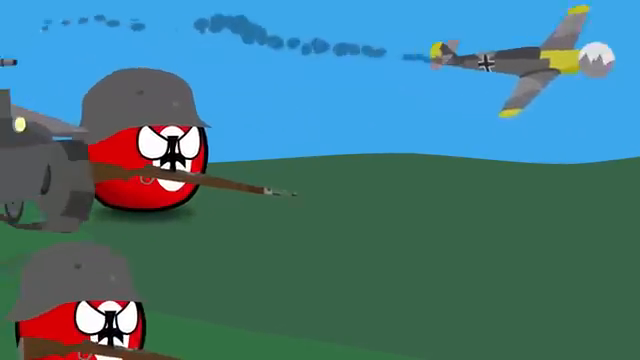
COUNTRYBALLS: Modern History Of Germany (Full)


Channel: Bulgarian Countryball
Uploaded by Bulgarian Countryball on 20200721
Categories: Film & Animation
Tags:
Full video of the modern history of Germany

The video "COUNTRYBALLS: Modern History Of Germany (Full)" by Bulgarian Countryball presents a comprehensive animated overview of Germany's historical events, conflicts, and political transformations from the late 19th century through modern times.

Here is a detailed breakdown of the content covered in the video:

Late 19th Century and World War I

[00:00] The timeline begins with the Franco-Prussian War, followed by the annexation of Alsace–Lorraine [00:05].

[00:11] Germany engages in the colonization of Africa, the conquest of Qingdao [00:19], and faces the Tangier Crisis [00:38].

[00:51] The Triple Alliance is formed between Germany, Austria-Hungary, a
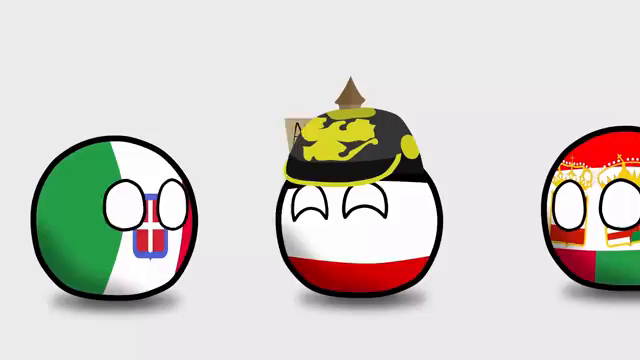
Image for chunk 1

nd Italy.

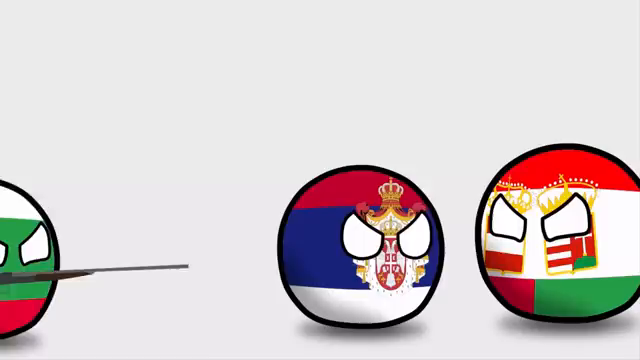
[01:05] The assassination of Archduke Franz Ferdinand by Gavrilo Princip sparks the beginning of World War I, pitting Germany and Austria-Hungary against Serbia, Russia, and France.

[01:28] Germany initiates the Schlieffen Plan, invading Belgium [01:36] to bypass French fortifications along the Maginot Line [01:18]. Great Britain subsequently joins the war on the French side.

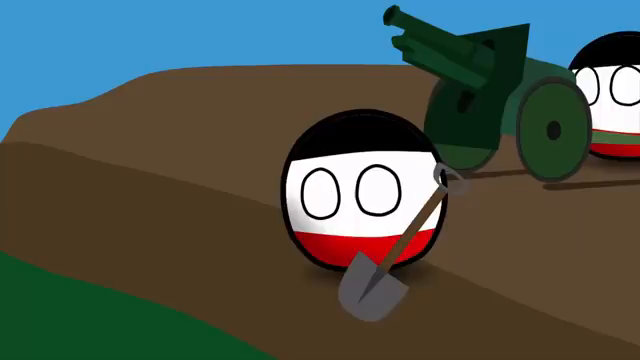
[01:54] Trench warfare develops across the front lines, with Germans introducing poisonous gas [02:04] and British forces deploying tanks [02:13].

[02:38] Following Russian military preparations [02:34], Germany achieves a victory at the Battle of Tannenberg [02:38], whil

Image for chunk 2

e Italy refuses to join the German side [02:42].

[02:52] Bulgaria and Turkey join the Central Powers, and Romania later joins the Russian side before being conquered with Bulgarian assistance [03:02].

[03:17] After Great Britain intercepts the Zimmermann Telegram [03:22], America enters the war [03:32].

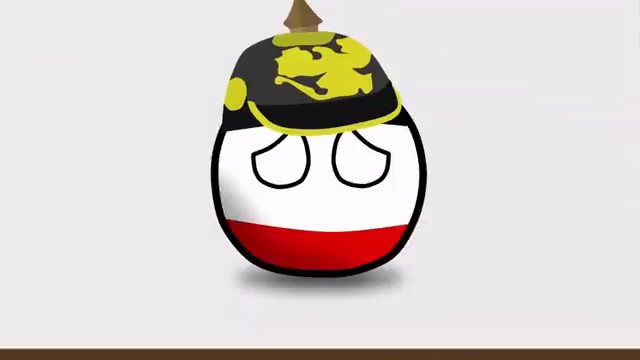
[03:37] Successive offensives by Italy, Greece, and Britain, alongside surrenders from Bulgaria, the Ottoman Empire, and Austria-Hungary [03:37], lead to Germany's surrender and the signing of the Treaty of Versailles [03:51].

Interwar Period and World War II

[04:00] Following the November Revolution [04:00], territorial losses occur: France reclaims Als

Image for chunk 3

ace–Lorraine, Poland receives the Danzig corridor, Lithuania takes Memel, Denmark recovers Schleswig, and Belgium takes Eupen.

[04:14] Economic crisis weakens the German government, leading to the rise of the Hitlerites to power [04:20].

[04:23] German military forces enter the demilitarized Rhineland, followed by the annexation of Austria [04:41] and the Munich Betrayal regarding the Sudetenland [04:48].

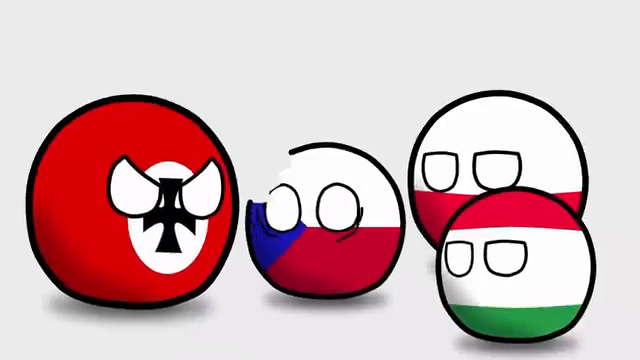
[05:00] Czechoslovakia is partitioned, establishing the puppet state of Slovakia, followed by the annexation of Memel [05:15].

[05:24] Geopolitical alliances shift with the Pact of Steel (Germany, Italy, and Japan) [05:24] and the Ribbentrop-Molotov Pa

Image for chunk 4

ct between the USSR and Germany [05:30].

[05:40] World War II begins in Europe with the German invasion of Poland (Fall Weiss) [05:40], followed by the Soviet invasion [06:17] and the Fourth Partition of Poland [06:24].

[06:30] Germany launches operations in Denmark and Norway (Unternehmen Weserübung) [06:30], invades the Netherlands, Belgium, and Luxembourg (Fall Gelb) [06:37], and executes the Ardennes Offensive [06:45] leading to the Battle of Dunkirk [07:01] and the Battle of France [07:04].

[07:08] In North Africa, Germany assists Italy against Allied forces during Operation Compass.

[07:21] Hungary, Romania [07:26], and Bulgaria [07:31] join the A

Image for chunk 5

xis powers due to regional awards and territorial threats.

[08:05] Operation Barbarossa marks the invasion of the Soviet Union, but a severe Russian winter causes supply shortages [08:35], prompting a redirected offensive toward Caucasian oil fields [08:57] and the Battle of Stalingrad [09:05].

[09:36] Following Operation Citadel and the Battle of Kursk [09:36], Allied forces execute D-Day landings [09:57], culminating in the fall of Germany [10:32].

Post-War Era and Modern Integration

[10:46] Germany is divided with the establishment of the German Democratic Republic (GDR) and the Federal Republic of Germany (FRG) [10:53].

[11:07] European integration

Image for chunk 6

begins with the European Coal and Steel Community, coinciding with the establishment of the Warsaw Pact [11:14].

[11:21] The Berlin Wall is constructed, followed later by both German states joining the United UN [11:31].

[11:34] The Berlin Wall is demolished, and Germany achieves reunification.

[11:55] Following the Treaty of Maastricht and Eastern European EU referendums, Germany develops into one of the world's leading economies [12:02] and adopts the euro [12:08], leading up to events surrounding Brexit [12:13].

Watch the video here: https://www.youtube.com/watch?v=J24JCnWg9Cw

COUNTRYBALLS: Modern History Of Germany (Full)

Bulgarian Countryball · 14M

No image available for chunk 7

Viewer Discussion & Comments

@chombus2602
How to learn history:
@labaguettedu64
Switzerland : gamemode spectator
@DarthPoleon
Ok so let me conclude that
@randomnum111
Germany: Tries to do anything
@cl0ver.2763
Das ist einfach unglaublich! NEIN! Es ist perfekt! Ich habe einfach nicht die Worte, um zu erklären, wie sehr ich das liebe!
@proudomnissiahbeliever40000
germany, austria hungary and italy- creating an alliance
@mabel8880
Germany lost two world wars and was split after WW2, yet it somehow emerged as one of the strongest economies in the world.
@PopsicleXOfficial
Germany: Creative Mode 🙃
@ProjectoValentino
Germany: loses ww1
@irmaosmascarados9450
WW1
@FerşatOran
German Empire: Happy
@JSA2.0
I think you know that this is one of the most viewed video on Countryballs and the fact Drew Durnil reacted to 4 of your videos makes me impressed
@RONOKI
Germany: breaths
@insaneelectro8238
Soviet Union gets invaded by Nazi Germany
@Idk_what_name_to_put_
WW1: