China Built An AI Doctor — And It's Already In 300 Hospitals


Channel: Snap Shift
Uploaded by Snap Shift on 20260713
Categories: Science & Technology
Tags:
This video breaks down exactly how China went from launching a national smart hospital initiative back in 2014 to deploying AI inside over three hundred hospitals by 2025, and eventually opening the world's first fully integrated AI hospital in March 2026. You'll see how AI triage systems, robotic pharmacies, and real-time diagnost

China Built An AI Doctor — And It's Already In 300 Hospitals

The video discusses China's rapid deployment and integration of artificial intelligence in healthcare, specifically highlighting the open-source model DeepSeek R1 and the world's first fully integrated AI hospital.

1. The Breakthrough of DeepSeek R1

Stanford University Medical Knowledge Test: In early 2025, nine of the most advanced AI models globally participated in a medical knowledge test designed by Stanf
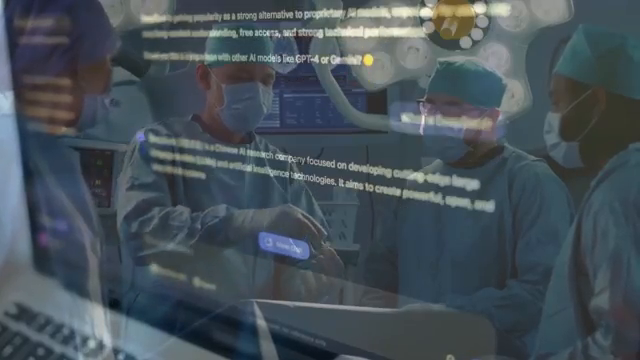

Image for chunk 1

ord University. DeepSeek R1, an open-source model developed in China, emerged victorious [00:15].

Performance Scores: DeepSeek R1 achieved a 66% win rate against the other AI systems and a macro average score of 0.75 across standardized medical assessments designed using real licensing exam questions [00:55].

The MedLM Benchmark: The test involved 35 different medical tasks validated by 29 physicians across 14 specialties (including cardiology, neurology, oncology, and

Image for chunk 2

pediatrics) to evaluate clinical reasoning rather than simple trivia retrieval [04:15].

2. Digital Infrastructure Development (2014–2025)

This deployment was not sudden but the result of a decade-long national effort [05:10]:

2014 Initiative: The Chinese government launched the National Smart Hospital Initiative to digitize the administrative, diagnostic, and logistical frameworks of public hospitals [05:28].

Hospital Evaluation Metrics: Smart technology usage was int

Image for chunk 3

egrated into the performance rating criteria of public hospitals, driving internal investments [06:01].

Strategic Partnerships:

Huawei: Assisted hospitals in building robust digital infrastructure [06:26].

iFlytek: Developed voice-to-text AI models to translate medical conversations directly into structured digital patient files [06:35].

3. Workflow of a Chinese Smart Hospital

The video outlines a typical patient's journey inside a modern smart hospital [07:50]:

+-----

Image for chunk 4

--------------------------------------------------------+

| 1. Pre-arrival AI Triage & Registration |

| - Patient inputs symptoms, history, and wearable vital |

| data into a smartphone app. |

| - AI identifies department, estimates weight, and routes. |

+------------------------------+------------------------------+

|

v

+--------------------------

Image for chunk 5

-----------------------------------+

| 2. Arrival & On-site Reception |

| - Lobby robot reads facial features. |

| - Automatically retrieves records; directs to destination. |

+------------------------------+------------------------------+

|

v

+-------------------------------------------------------------+

| 3. Consult & Real-time Documentation

Image for chunk 6

|

| - Ambient AI listens to patient-doctor dialogue. |

| - Transcribes and files EHR documentation instantly. |

+------------------------------+------------------------------+

|

v

+-------------------------------------------------------------+

| 4. Diagnosis and AI Diagnostics Assistance |

| - AI pathology analyzes tissue samples (e.g., Ruijin). |

|

Image for chunk 7

- AI radiology produces scan analyses in seconds. |

+-------------------------------------------------------------+

Administrative Relief: Doctors traditionally spend up to 2 hours on documentation for every 1 hour spent with patients. Ambient transcription eliminates most of this burden [09:21].

Pathology & Radiology Scaling: At Ruijin Hospital in Shanghai, the AI pathology system processes 3,000 slides daily [09:45]. Diagnostic errors decreased by 15%, while r

Image for chunk 8

adiology report turnaround times plummeted by 90% (from 30 minutes to seconds) [10:13].

4. Nationwide Clinical Deployment

Scale and Timeline: Following the early 2025 results, DeepSeek was integrated into clinical workflows. By March 2025, over 300 hospitals utilized the AI [11:42]. By mid-2025, it was deployed within the local networks of more than 260 hospitals across 93.5% of Chinese provinces [11:42].

Data Security: The AI runs entirely inside hospital firewalls ra

Image for chunk 9

ther than a cloud, ensuring that patient data never leaves the hospital's premises [12:03].

Regional Examples:

Chengdu First People's Hospital: DeepSeek is used for telemedicine and chronic disease monitoring for patients residing in remote rural villages [12:19].

Jinshan Branch of Shanghai Sixth People's Hospital: Doctors utilize real-time AI workstations for point-of-care diagnostics [12:43].

Huashan Hospital (Fudan University): Performed rapid parallel stress-testin

Image for chunk 10

g of DeepSeek across platforms within weeks [13:11].

Concerns: Rapid deployment prompted a study in JAMA (Journal of the American Medical Association) warning that the rollout might be outstripping established safety and regulatory frameworks [13:46].

5. The World's First AI Hospital

Hainan Launch: On March 26, 2026, China opened its first fully integrated AI hospital in Boao, Hainan Province [15:04]. AI is embedded throughout the clinical care cycle: prevention, diagn

Image for chunk 11

osis, treatment, rehabilitation, and long-term health management [14:45].

Establishing International Definitions: On the same day, China released the first internationally recognized definition of an AI hospital at the Zhongguancun Forum in Beijing [15:11].

The Tsinghua AI Agent Hospital: Running as a separate simulation platform, this virtual training ground has processed over 10,000 clinical cases, achieving a 93.06% accuracy rate on the MedQA benchmark (compared to

Image for chunk 12

the human doctor average of roughly 87%) [15:37].

6. Comparative Global Overview

Country / Region Primary AI Implementation Style Current Challenges & Status

China Deeply integrated from architecture up; native AI loops in everyday clinical care. Rapidly deploying; targeting 80% primary care AI coverage by 2027 [20:06].

United States Add-on layers on top of legacy electronic medical records and scheduling. 31-day average wait for new appointments; 60% of hospitals stil

Image for chunk 13

l use fax machines to transfer records [17:04].

United Kingdom Piloted symptom-checking chatbots supervised by physical doctors [18:32]. Add-on style to NHS legacy frameworks.

Singapore Implemented automated pharmacy robots and elder care monitoring [18:43]. Add-on style to existing structures.

7. Future Trends and Projections

Coverage Target: AI-assisted diagnostic systems are aiming for 80% primary care coverage in China by 2027 [20:06].

Emergency Response: AI sensor

Image for chunk 14

integration has reduced emergency rescue response times by over 40% [20:06].

Market Growth: China's smart healthcare market grew to approximately 11 billion yuan in 2024, is projected to exceed 12 billion yuan by 2025, and some long-term estimates project the market reaching 50 billion yuan by 2035 [20:16].

For more details, watch the video on YouTube: https://www.youtube.com/watch?v=fVpzx9buhTk

China Built An AI Doctor — And It's Already In 300 Hospitals

Snap Shift ·

Image for chunk 15

Viewer Discussion & Comments

@ung-jinkim2774
China seems to be using the technologies for the benefit of people, first.
@TeslaEVolution
Millions of documents? No. BILLIONS....I hope it incorporates HOLISTIC treatments also : )
@AbdullahAjia
Good, 👍 keep going
@lokeshar1513
100% analysis truth
@garudadrikrishnamurthy
Good work. Please proceed to post more. This will be useful to country India where I live