Climate Extremes (Full Documentary)


Channel: OoS Pictures
Uploaded by OoS Pictures on 20241025
Categories: Film & Animation
Tags: climate extremes, climate, tipping points, AMOC, the AMOC, climate change, climate science, extreme weather
Share Climate Extremes with your friends and followers! Help the public become more educated about planetary behavior, tipping points, and climate science from global leading scientists! Click the "share" button above for sharing options! Take the interactive quiz after watching the film and help lock in your learning!: https

Based on the documentary "Climate Extremes", here is a detailed breakdown of the content and scientific concepts discussed in the video.

1. The Concept of Tipping Points and Nonlinearities

The core focus of the documentary is the planetary "Tipping Point"—a critical threshold where a natural system shifts from a stable condition into a completely new, often irreversible state due to self-reinforcing internal dynamics.

A simple analogy used is a glass of water being pushed toward the edge of a table:

Linear Phase: The gradual pushes move the glass closer to the edge with incremental cha
Image for chunk 1

nges.

Nonlinear Phase (Tipping Point): Once the glass passes the edge, a tiny nudge causes a massive, rapid effect as it falls over on its own.

A planetary tipping point consists of two main ingredients:

Critical Threshold: The exact point beyond which a system changes automatically without further external force.

Self-Reinforcing Positive Feedback Loop: An internal mechanism that amplifies a small nudge into a massive change (analogous to microphone feedback next to a speaker).

2. The Historical "Corridor of Life"

The documentary provides geological perspective by examining the planet

Image for chunk 2

's temperature over the last 3 million years (the Quaternary Period).

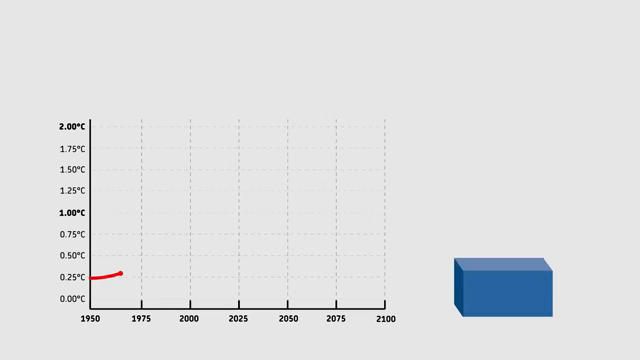
The Reference Point: The pre-industrial global average temperature was 14°C [04:47].

Historical Range: Global temperatures have fluctuated within a narrow boundaries—never exceeding +2°C during warm interglacials and never dropping below -6°C during deep ice ages [05:03]. This is termed the Corridor of Life.

The Holocene Stability: The last 10,000 years (the Holocene) featured an incredibly stable climate (+/- 0.5°C variations). This predictability allowed humans to switch from nomadic hunting to farming, domesticati

Image for chunk 3

ng animals, and developing modern civilization [08:10].

Current Status: With global temperatures currently around 1.3°C to 1.45°C above pre-industrial levels, humanity is operating far outside the historical boundaries experienced since leaving the last ice age [06:43].

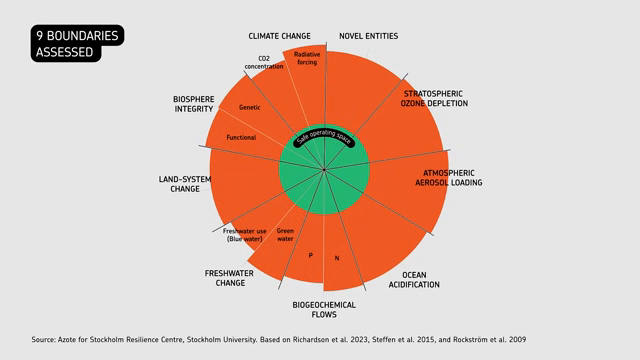
3. Buffering Capacity and the 9 Planetary Boundaries

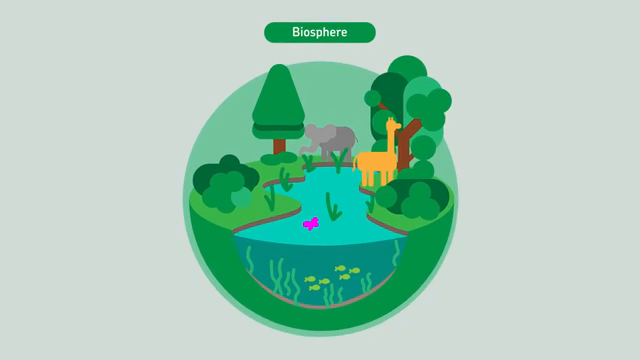
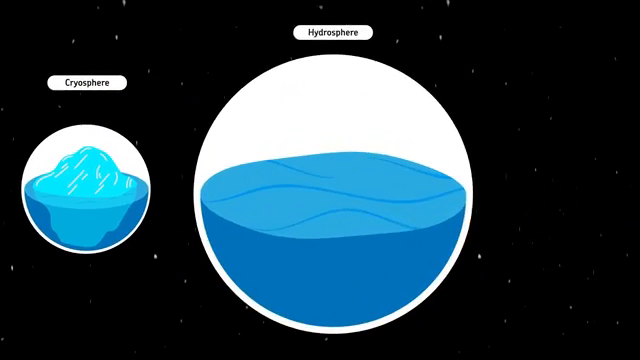
When healthy, the Earth acts as a self-regulating system where the hydrosphere, cryosphere, biosphere, and geosphere are deeply interconnected. It possesses a buffering capacity driven by negative feedbacks (dampening mechanisms). Currently, the planet absorbs:

90% of

Image for chunk 4

the excess heat generated by fossil fuel emissions into the oceans [09:33].

50% of human carbon dioxide emissions (25% absorbed by land biology/soils, 25% by oceans) [09:41].

However, human activities are pushing the planet close to the edge of the 9 planetary boundaries, threatening to turn these helpful dampening buffers into destructive self-reinforcing drivers.

4. Case Studies of Major Tipping Element Systems

Scientists have mapped 16 major tipping element systems across the globe. The video highlights three primary examples:

A. The Amazon Rainforest (Biosphere)

Stable State: A he

Image for chunk 5

althy tropical rainforest creates 40% of its own rainfall, acting as a powerful carbon sink [20:50].

Tipping Mechanism: If pushed past a certain threshold of warming and deforestation, the system shifts from self-generating moisture to self-drying.

New State: The rainforest irreversibly transitions into a dry savanna, losing its capacity to hold massive carbon reserves.

B. The Ice Sheets (Cryosphere)

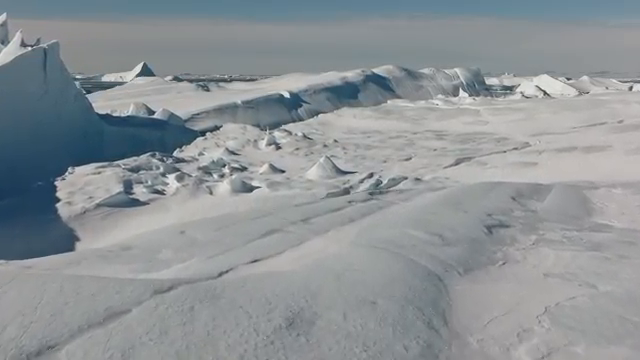
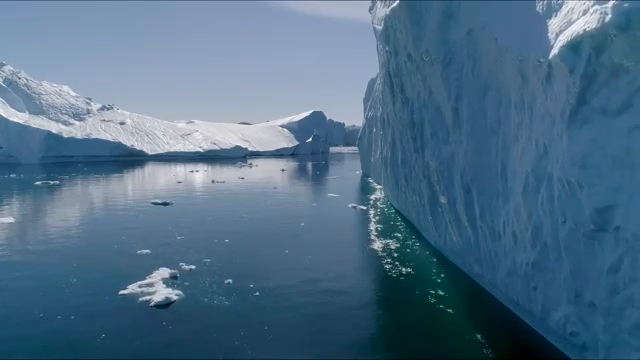
Ice sheets act as massive cooling systems because their white surfaces reflect roughly 90% of solar radiation back into space (the Albedo Effect) [25:33].

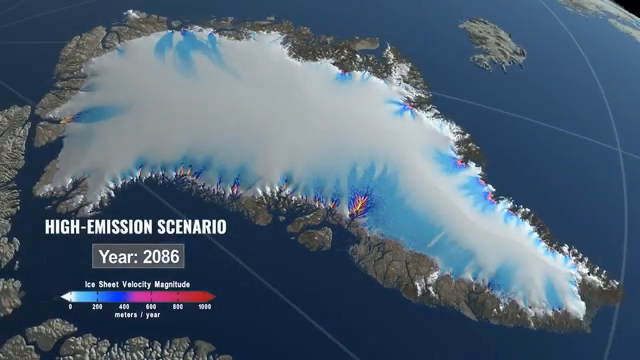
The Greenland Ice Sheet: Subject

Image for chunk 6

to a Melt-Elevation Feedback Loop. The sheet has a peak altitude of about 2 km [27:09]. For every 100 meters the ice melts downward, the surrounding air temperature becomes roughly 1°C warmer [27:42]. This drop in height accelerates further melting.

Hysteresis: It is easier to push the system past its tipping point than to reverse it. To refreeze a melted Greenland ice sheet, the Earth would have to return to deep Ice Age conditions [30:13].

Hidden Heat: Currently, 3% of the planet's energy imbalance goes entirely into melting ice [28:42]. This process consumes energy and temporarily m

Image for chunk 7

asks atmospheric temperature spikes. Once the ice disappears, that heat will rapidly distribute into the atmosphere and oceans.

C. The Atlantic Meridional Overturning Circulation - AMOC (Hydrosphere)

The AMOC functions like a planetary central heating system, transporting warm, salty surface water from the tropics north toward the subpolar North Atlantic [35:40].

Plaintext

[ Surface Flow: Warm & Salty Water Moves North ]

====================================================> Subpolar North Atlantic

| |

| (Deep Water Format

Image for chunk 8

ion) | (Water cools, gets

| | dense, and sinks)

<==================================================== V

[ Deep Return Flow: Cold Water Moves South ]

The Feedback Loop: The AMOC sustains itself by continuously bringing salt up from the subtropics. If fresh meltwater from the Greenland ice sheet dilutes the ocean's salinity, the water becomes less dense and fails to sink. This creates a positive feedback loop: a weaker AMOC carries less salt, slowing down the circulation further until it risks c

Image for chunk 9

ollapsing completely [39:27].

Consequences of Collapse:

A massive cooling zone ("Cold Blob") would permanently expand over Iceland, Scotland, Scandinavia, and the UK, dropping winter averages in places like Norway by up to 30°C [41:22].

The tropical rainfall belts would shift southward toward the geographic equator, causing devastating droughts in regions reliant on current rain patterns and unexpected flooding elsewhere [42:05].

5. The Domino Effect (Cascading Transitions)

Because the Earth's systems are interconnected, the collapse of one tipping element can act like a falling domino

Image for chunk 10

, triggering a chain reaction across the globe.

Plaintext

+-----------------------+ Freshwater +------------------------+

| Greenland Ice Sheet |--------------------->| AMOC Slowdown |

| (Lowest Threshold) | | (Ocean Current Mediator|

+-----------------------+ +------------------------+

|

| Changes Rainfall

V

Image for chunk 11

+------------------------+

| Amazon Rainforest |

| (Shifts to Savanna) |

+------------------------+

6. The Four Climate Equilibrium States

Earth's long-term history consists of four distinct planetary equilibrium phases:

State Description Current Risk Status

Snowball Earth Entire planet freezes over; high albedo reflects almost all sunlight. Completely irrelevant today due to severe warming [43:48].

Ice Age State Cycles between gl

Image for chunk 12

aciations and interglacials; features two solid polar ice caps. Unlikely to return anytime soon because fossil fuel burning has effectively stopped the next ice age [45:49].

Interglacial State The current stable 14°C world (Holocene) that sustains human civilization. We are currently here, but actively pushing ourselves out of it [46:03].

Hot House Earth A tropical planet with virtually no ice sheets; self-reinforced by massive feedback emissions (methane, CO2). Last seen 60 million years ago during the dinosaurs. The ultimate threat. If we trigger enough cascading tipping points, the

Image for chunk 13

planet will self-drive into this state irreversibly [45:55].

7. Scientific Projections and Probability

Timeline to 1.5°C and 2°C: If current greenhouse gas emission trajectories continue in a straight line, the planet is on track to hit 1.5°C by the early 2030s and 2°C by the 2050s [49:09].

Critical Threat Level: Systems like the Greenland ice sheet, West Antarctic ice sheet, abrupt Permafrost thaw, Barents sea ice, and tropical coral reefs are vulnerable to tipping right at or near the 1.5°C threshold [47:53].

The 5% Risk Dilemma: Most models suggest a 90% to 95% chance that the AMOC

Image for chunk 14

will not collapse this century. However, scientists caution against complacency using an aviation analogy: If you were boarding an airplane and told there was a 5% chance the plane would crash, the only rational response would be to refuse to step on the plane [50:50].

The documentary concludes that while ecosystems are weakening, the window remains open to stabilize the Earth within a Holocene-like state, provided immediate action is taken to prevent the planet from initiating its own unstoppable self-warming cycle [46:42].

Climate Extremes (Full Documentary)

OoS Pictures · 1.6M views

Image for chunk 15

Viewer Discussion & Comments