Crafting Luxury The Secrets Behind China's Exquisite Porcelain


Channel: Miracle Process
Uploaded by Miracle Process on 20251027
Categories: Science & Technology
Tags: mega factory, factory made, factory, manufacturing process, Chinese factory, factory tour, production process, production technology, mass production, manufacturing, inside the factory, manufacturing industries, how to produce, How It's Made, 世界の工場, world factory, product manufacturing principles
00:00 Highlights 00:35 Design, Printing, Glaze Preparation, Pressing Clay 08:43 Mold Making, Forming Clay Bodies, Glazing, Glaze Firing 21:00 Printing, Gold Tracing, Firing, Testing Note: This video does not contain any paid promotion. The video contains subtitles in multiple languages, please

This video, titled "Crafting Luxury The Secrets Behind China's Exquisite Porcelain" by the Miracle Process channel, offers a comprehensive, step-by-step look into the manufacturing facility of Shenzhen Guoci Yongfengyuan Porcelain Industry Co., Ltd. Established in 1795 during the Qing Dynasty, this enterprise represents five g
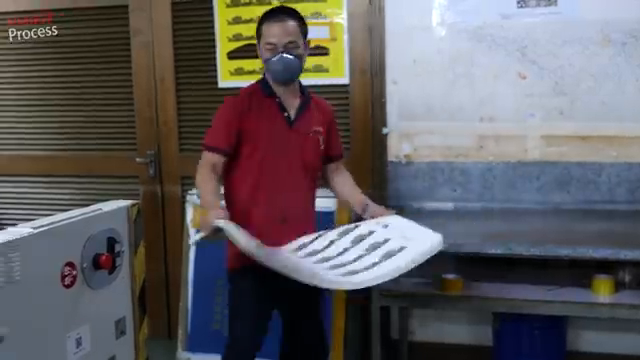
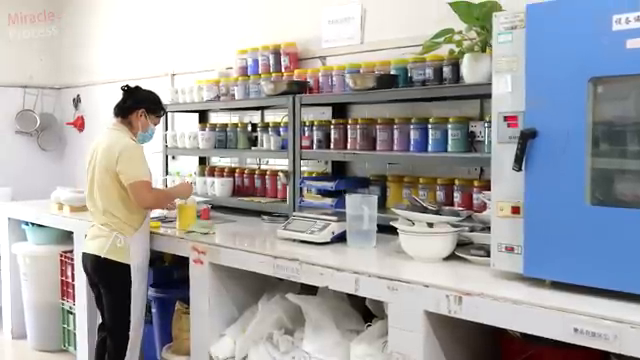
Image for chunk 1

enerations of ceramic craftsmanship. Known as the "Modern Official Kiln," it produces over 30 million pieces annually, including household, gift, hotel, and collectible porcelain used in major national events like the G20 Hangzhou Summit.

Below is a detailed breakdown of the complete manufacturing, testing, and finishing proce

Image for chunk 2

ss showcased in the video.

1. Design & Material Preparation

Decal R&D Laboratory & Printing Workshop [00:37]: Designers create custom, intricate ceramic patterns and styles. These digital concepts are then transferred to the printing workshop where high-quality decals are produced.

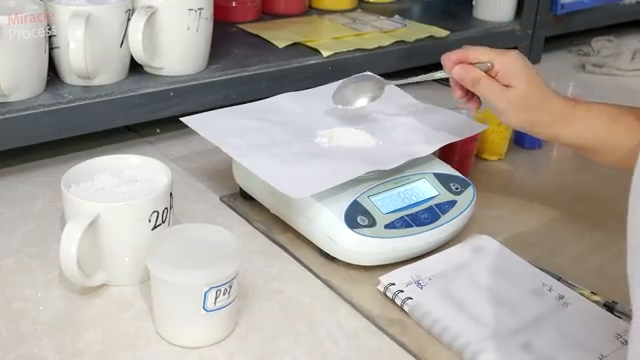
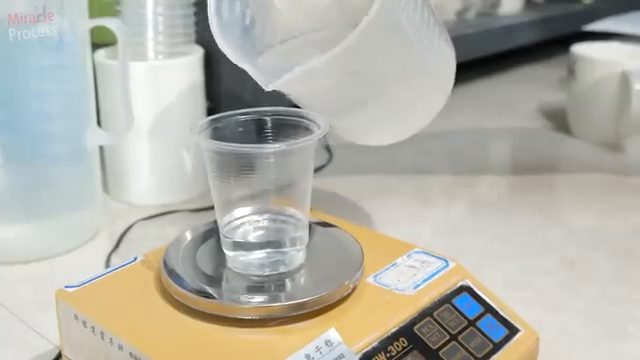
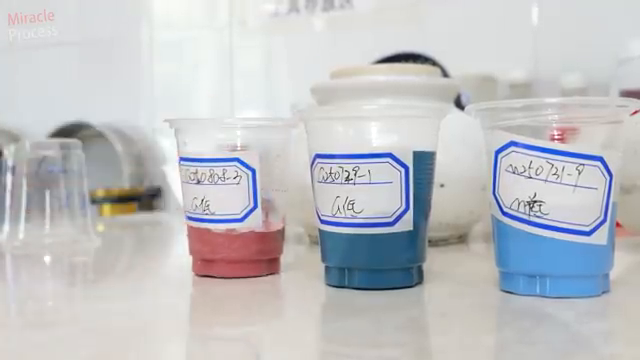
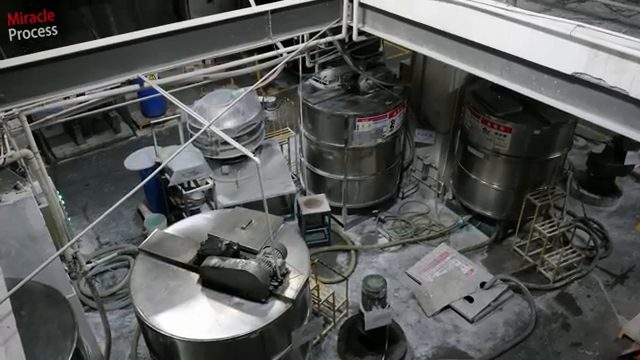
Glaze & Slip Laboratories [01:56]: Engineers

Image for chunk 3

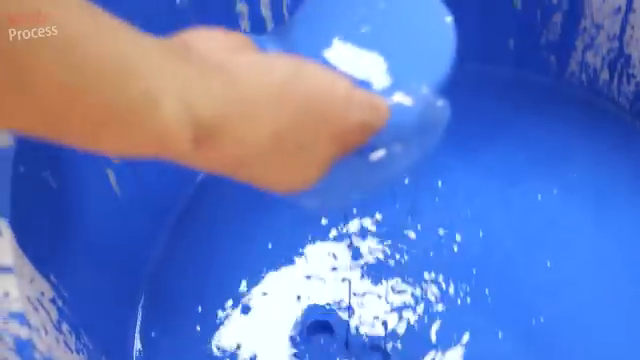
test glaze formulas, monitor flow rates [05:59], and handle bulk preparation in the mixing grinders [04:23].

Raw Material Milling & Aging [06:08]: In the bone china grinding workshop, raw ingredients undergo ball milling, vibration screening, and mechanical filter pressing. The refined material is stored in underground slurry

Image for chunk 4

tanks to age and stir [06:23].

2. Molding & Shaping Methods

The factory employs multiple methods to shape the clay depending on the specific product design:

+-----------------------------------+

| Raw Material Slurry |

+-----------------------------------+

Image for chunk 5

|

+----------------------------+----------------------------+

| | |

v v v

[ Isostatic Pressing ] [ Slip Casting ] [ Jiggering Forming ]

|

Image for chunk 6

| |

| Dry pressing of | Pouring slip into | Rotational shaping

| automated shapes | plaster molds for | for plates/bowls

| using SAMA machines | hollow items |

v v

Image for chunk 7

v

+----------------------------+----------------------------+

|

v

[ Drying Ovens ]

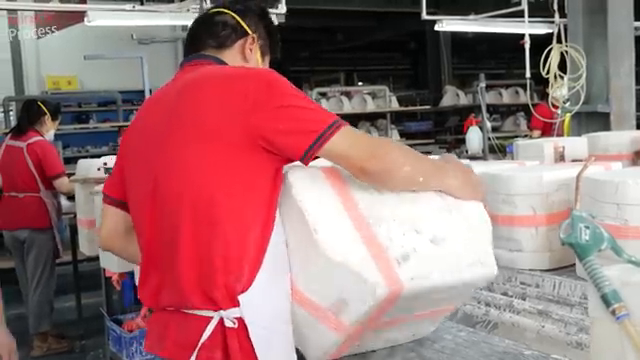
Isostatic Pressing [07:42]: Utilizes high-tech German SAMA machinery for fully automated, high-pressure dry mo

Image for chunk 8

lding of uniform items.

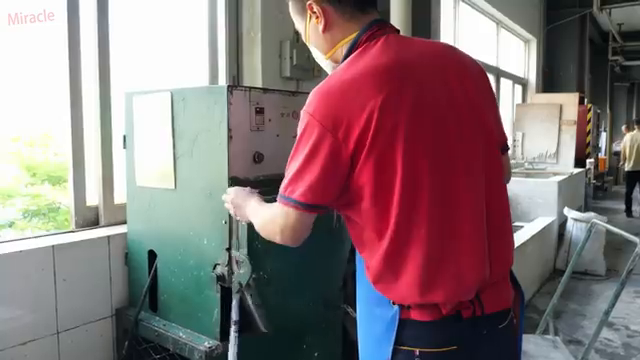
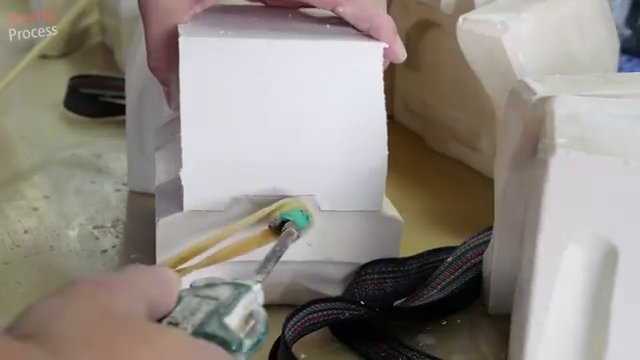
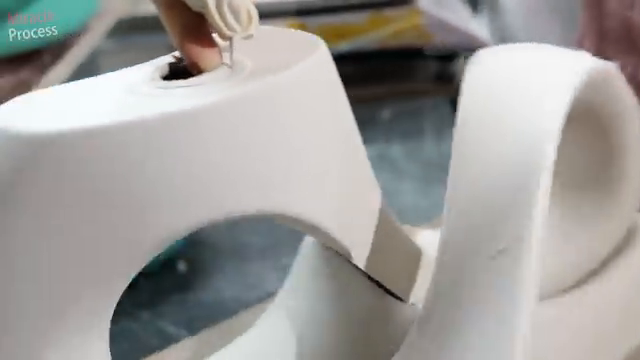
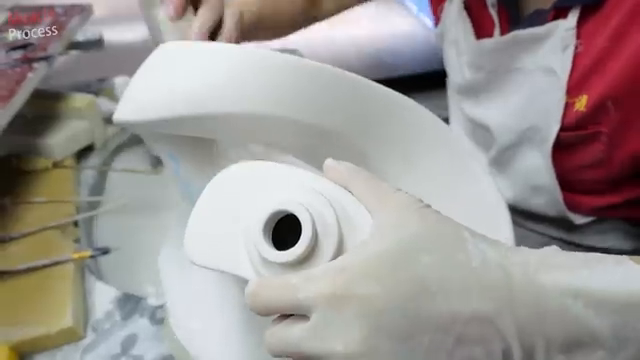
Plaster Mold Manufacturing & Slip Casting [08:47]: Artisans create plaster molds, insert vent rods for air-assisted demolding [09:23], and pour liquid slip directly into the molds [10:38]. Excess slip is drained to create hollow objects like specialty liquor bottles [10:47].

Jiggering Forming [13:34]: R

Image for chunk 9

otary blades shape malleable clay against a rotating mold, a technique primarily used for circular tableware like plates and bowls.

3. Firing, Glazing, & Refinement

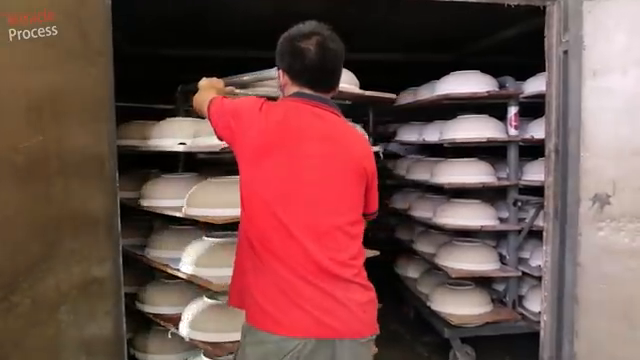
Bisque Firing [15:28]: The molded ceramics enter kilns for an initial bake between 980–1280°C. This hardens the ceramic body to prevent breakage during subsequent

Image for chunk 10

handling.

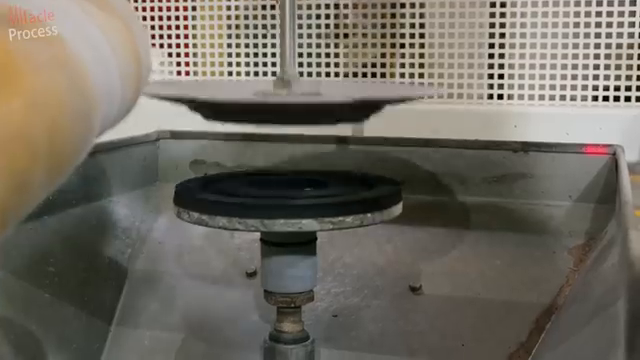
Polishing & Washing [12:18], [16:50]: Post-bisque items are smoothed down and washed to ensure maximum adhesion for the glaze layer.

Glaze Spraying [17:25]: For complex pieces like liquor bottles, an open-flame heating system preheats the ceramic body to 100–120°C [18:21] before spraying, followed by a secondary heat

Image for chunk 11

treatment to set the wet glaze.

High-Temperature Glaze Firing [19:44]: The glazed products are fired in a high-temperature kiln at temperatures exceeding 1300°C to achieve a glossy, glass-like protective finish.

4. Artistry, Quality Control, & Packaging

Decoration & Gold Tracing [21:05]: Specialized workers apply the manufact

Image for chunk 12

ured decals onto the glossy porcelain. Following this, master artisans meticulously hand-paint intricate patterns using a gold paste containing genuine gold [22:54]. Each piece is inspected under specialized flashlights to verify line uniformity [23:58] before undergoing separate firings to permanently fuse the artwork.

Labora

Image for chunk 13

tory Safety Testing [26:27]: Decal-adorned samples are soaked in a 4% industrial acetic acid solution to create a leachate. Technicians analyze this solution using an Atomic Absorption Spectrophotometer to guarantee that heavy metals, such as lead and cadmium, do not leach out of the decorated items.

Sorting & Dispatch [27:20]

Image for chunk 14

: Items that do not meet strict quality thresholds are discarded. Flawless pieces are forwarded to the packing workshop [27:50] before distribution to over 500 retail storefronts nationwide [29:16].

URL: https://www.youtube.com/watch?v=WWxjG9NgF-w

Crafting Luxury The Secrets Behind China's Exquisite Porcelain

Miracle Process ·

Image for chunk 15

Viewer Discussion & Comments

@miracleprocess
More interesting factories
@Seeker2324
The Chinese have always been superb at scaling and automation.
@ursulafrydrich5857
Vielen herzlichen Dank für diese vortreffliche Dokumentation. Chinesisches Porzellan ist etwas vom Schönsten das es gibt .
@marinaveselkova8705
Восторг от работы, от качества и, конечно, от красоты. Спасибо
@ЛюдмилаЧетверикова-л4ц
Впечатляет! Создавать такую роскошь от первого до последнего цикла это непростой и, в то же время, интересный труд.