Fundamentals of Finance & Economics for Businesses – Crash Course


Channel: freeCodeCamp.org
Uploaded by freeCodeCamp.org on 20230912
Categories: Education
Tags:
In this course on Finance & Economics for Businesses, you will learn the fundamentals of business strategy and the interplay between these three fields. You will understand how large-scale macroeconomic changes can affect businesses while also understanding how small details in financial documents can indicate a company's financial

Fundamentals of Finance & Economics for Businesses – Crash Course [00:00] is a comprehensive video course presented by Sriram Chandrasekaran that bridges fundamental economic theory with practical business applications. The curriculum spans three primary disciplines—economics, finance, and business strategy—exploring how they interconnect to influence decision-making for both individuals and corporations.

Core Financial Concepts and Time Value of Money

Return on Investment (ROI): [03:22] ROI measures the efficiency and profitability of an investment relative to its cost. While useful for comparing diverse asset classes using a universal percentage, it has limitations because it often ignores the time horizon required to achieve those returns [04:32].

Time Value of Money (TVM): [05:09] TVM dictates that money available today is worth more than the same amount in the future due
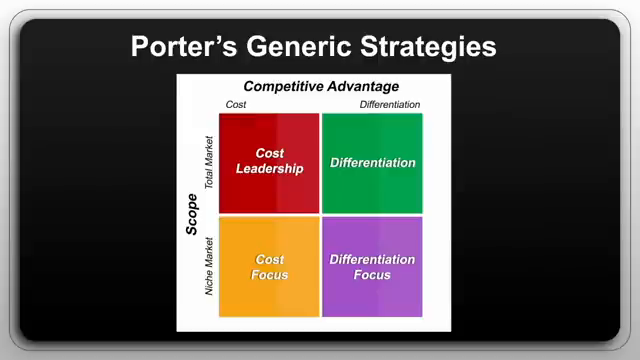
Image for chunk 1

to its potential earning capacity and the eroding effects of inflation [05:42]. Concepts like compound interest demonstrate how assets grow exponentially over long periods [05:16].

Net Present Value (NPV): [06:16] NPV determines the value of an investment by calculating the net of all expected cash inflows and outflows, adjusted using a discount rate that accounts for inflation and opportunity costs [06:57]. A positive NPV indicates a financially viable investment [06:50].

Capital and Financial Markets

Financial Markets: [10:21] Physical or virtual marketplaces where parties exchange goods, services, and capital. They are essential for firm growth and consumer access [11:01].

Stocks vs. Bonds: [11:28] Stocks represent equity (ownership) in a company, offering potential rewards through dividends and price appreciation alongside higher volatility and risk [14:33]. Bonds repres

Image for chunk 2

ent debt instruments issued by firms or governments that provide fixed, regular payments and return the principal upon maturity, carrying lower overall risk [13:40].

Valuation Frameworks: [16:35] Asset values are determined using expected cash flows and associated risks [16:36]. Common valuation methodologies include Discounted Cash Flow (DCF) analysis [17:48] and market comparables (comps) using valuation multiples such as Price-to-Earnings (P/E) and Enterprise Value to EBITDA [19:25].

Business Strategy and Strategic Analysis Tools

Strategic Planning: [14:51] Companies establish clear mission statements to outline their core purpose, target audience, and unique value proposition [11:16].

SWOT Analysis: [22:20] Evaluates internal Strengths and Weaknesses alongside external Opportunities and Threats to assess market positioning [22:27].

BCG Matrix: [24:49] Categorizes a compan

Image for chunk 3

y's product portfolio into Stars, Cash Cows, Question Marks, and Dogs based on market growth rate and relative market share to optimize resource allocation [26:29].

Porter's Generic Strategies: [26:38] Outlines competitive advantage approaches through Cost Leadership, Differentiation, and Niche (Focus) strategies [27:00].

Financial Statements and Statement Analysis

Publicly traded companies must regularly report three primary financial documents to ensure public transparency [28:31]:

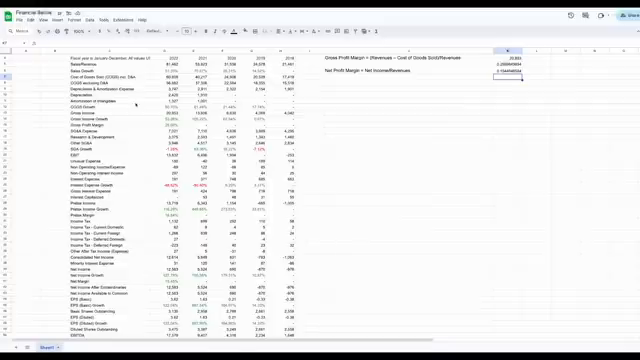
Statement of Profit or Loss (Income Statement): Summarizes revenues, costs, and expenses over a specific period to determine net profit or retained earnings [29:38].

Statement of Financial Position (Balance Sheet): Outlines assets, liabilities, and shareholder equity at a specific point in time [31:35].

Cash Flow Statement / Forecast: Tracks short-term cash inflows and outflows to assess liquidit

Image for chunk 4

y and operational health [34:30].

Analysis techniques include financial ratios (profitability, liquidity, activity, and leverage ratios) [36:33], horizontal (trend) analysis across multiple periods [42:18], and common-size analysis expressing line items as relative percentages [44:43].

Capital Budgeting

Process: [47:47] The systematic evaluation and selection of long-term investments (such as fixed assets or infrastructure projects) designed to maximize corporate value [48:08].

Evaluation Methods: [52:30] Utilizes the Payback Period [52:43], Net Present Value (NPV), and Internal Rate of Return (IRR) [50:10] to determine project viability against a defined cost of capital [53:40].

Macroeconomics

Business Cycle: [56:41] The recurring economic fluctuation consisting of four phases: Trough [57:00], Expansion [57:43], Peak [58:28], and Contraction (Recession) [59:12].

Economic Ind

Image for chunk 5

icators: [56:22] Covers Gross Domestic Product (GDP) [01:00:36], interest rates, inflation [01:07:06], and the three forms of unemployment: Cyclical, Structural, and Frictional [01:02:14].

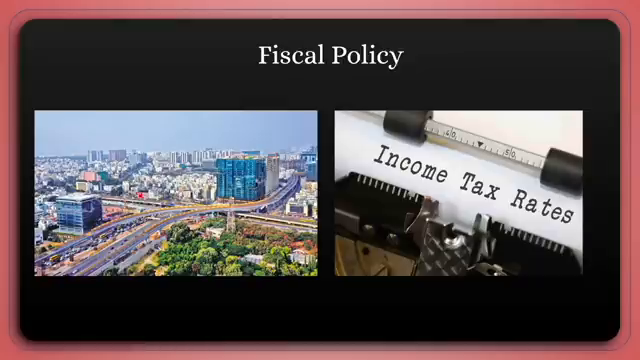
Government Policy: [01:07:51] Central banks regulate monetary policy (interest rates and money supply) [01:08:11], while governments utilize fiscal policy (taxation and public spending) to stabilize economic output [01:09:51].

Environmental, Social, and Governance (ESG)

Framework: [12:38] Evaluates corporate sustainability practices across environmental impact [01:12:49], social relations [01:12:57], and internal governance structures [01:13:05].

Investment Impact: [15:46] Emphasizes long-term risk management, regulatory compliance, and resilience against market turbulence alongside potential financial outperformance [01:16:03].

Portfolio Management and Alternative Investments

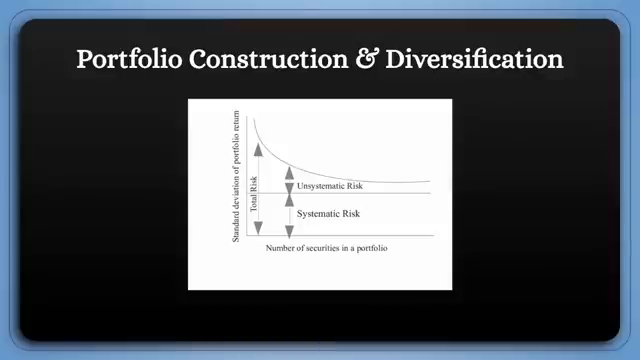
Diversificati

Image for chunk 6

on: [00:12:413] Spreading investments across 30 to 40 uncorrelated securities helps mitigate unsystematic (company-specific) risk, leaving only systematic (market-wide) risk intact [01:24:38].

Active vs. Passive Management: [01:29:41] Passive strategies (like index funds and ETFs) seek to replicate broad market returns with low turnover and minimal fees [01:30:01], whereas active management relies on security selection and market timing to outperform benchmarks at a higher cost [01:30:24].

Alternative Investments: [01:34:00] Non-traditional asset classes such as real estate, private equity, venture capital, commodities, cryptocurrencies, and collectibles that offer alternative yield profiles with distinct liquidity characteristics [01:35:42].

http://www.youtube.com/watch?v=EJHPltmAULA

Fundamentals of Finance & Economics for Businesses – Crash Course

freeCodeCamp.org · 2.5M vi

No image available for chunk 7

Viewer Discussion & Comments

@neutron417
We need a seperate channel now
@user-wc7em8kf9d
As a finance profesional I can tell you this course is very, very GOOOOOD!!!! Congrats!
@anonymall
This is a really important video for aspiring programmers, software engineers, data analysts, etc. Knowing how to code is good and all, but knowing how to apply it in a real life work environment is just as important, if not more important. Since a lot of finance management goes into these things especially if you do something like making your own startup.
@RajivBandaru
I am a first year MBA student and came across this video. This is a legit masterclass. Thanks a lot for making this happen.
@alexanderluna895
As software developers it's good to not be alien to financial topics, as I grow up I find these to be really important too.
@iffti_rahman
Glad to see your channel is also teaching finance....Thank you so much.
@Wrenvie
Im 16 But i decided i should get started early. These videos are crazy. Thank you.
@sheikhahmed6957
Good initiative to start such finance and entrepreneur courses
@Markogorkis
Every crash/collapse brings with it an equivalent market chance if you are early informed and equipped, I've seen folks amass up to $1m amid crisis, and even pull it off easily in a favorable economy. Unequivocally, the bubble/collapse is getting somebody somewhere rich
@mr.chocolaterobot
MORE FINANCE VIDEOS...THIS WAS EXCELLENT...HIRE THIS GENTLEMAN FULL-TIME....SMOOTH...EASY....TO THE POINT....💐💐💐💐✌🏾🌏🏆🏆🏆💪🏾💪🏾💪🏾
@kaitlyncranwick
The economy is grappling with uncertainties, global fluctuations, and pandemic aftermath, causing instability. Rising inflation, sluggish growth, and trade disruptions need urgent attention from all sectors to restore stability and stimulate growth.
@codingcat8
Let's go courses for math, physics, chemistry, biology!!!!!
@Stats_Worldwide
I enjoy learning about finance and economics.
@infinitego
Finance as part of a series/playlist for computational finance makes great sense. Alone?
@RohanAsuthkar
Thank you, for making this course. Every young person should be able to learn these topics.