Harvard CS50’s Artificial Intelligence with Python – Full University Course


Channel: freeCodeCamp.org
Uploaded by freeCodeCamp.org on 20230810
Categories: Education
Tags:
This course from Harvard University explores the concepts and algorithms at the foundation of modern artificial intelligence, diving into the ideas that give rise to technologies like large language models, game-playing engines, handwriting recognition, and machine translation. Through hands-on projects, students gain exposure to t

Harvard CS50’s Artificial Intelligence with Python – Full University Course

This comprehensive video course, taught by Brian Yu and published by freeCodeCamp.org, provides a complete introduction to the fundamental concepts, algorithms, and techniques in modern artificial intelligence using Python.

Course Overview & Main Modul
Image for chunk 1

es

+-----------------------------------------------------------------------+

| CS50'S AI WITH PYTHON COURSE STRUCTURE |

+-----------------------------------------------------------------------+

| 1. Search | Depth-First Search, Breadth-First Search, |

| | A* Se

Image for chunk 2

arch, Minimax, Alpha-Beta Pruning |

+---------------------+-------------------------------------------------+

| 2. Knowledge | Propositional Logic, Inference Rules, |

| | Knowledge Engineering, Model Checking |

+---------------------+----------------------------------------

Image for chunk 3

---------+

| 3. Uncertainty | Probability, Bayesian Networks, |

| | Markov Models, Hidden Markov Models |

+---------------------+-------------------------------------------------+

| 4. Optimization | Hill-Climbing, Simulated Annealing, |

|

Image for chunk 4

| Linear Programming, Constraint Satisfaction |

+---------------------+-------------------------------------------------+

| 5. Machine Learning| Supervised Learning, Nearest-Neighbor, |

| | Support Vector Machines, Reinforcement Learning |

+---------------------+------------------------------

Image for chunk 5

-------------------+

| 6. Neural Networks | Perceptrons, Multi-Layer Networks, CNNs, |

| | Recurrent Neural Networks (RNNs) |

+---------------------+-------------------------------------------------+

| 7. Language | Natural Language Processing (NLP), Syntax, |

|

Image for chunk 6

| Markov Models, Word Embeddings, Transformers |

+-----------------------------------------------------------------------+

Detailed Content Breakdown

1. Search Algorithms [02:44]

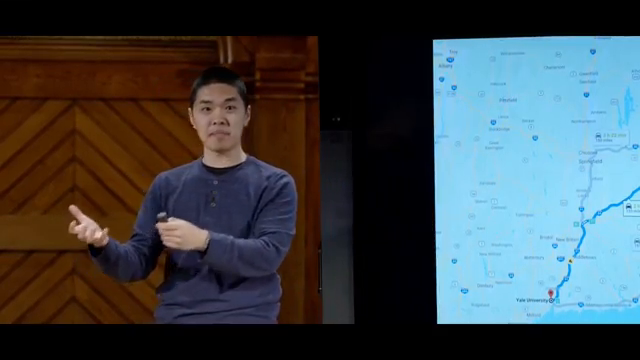
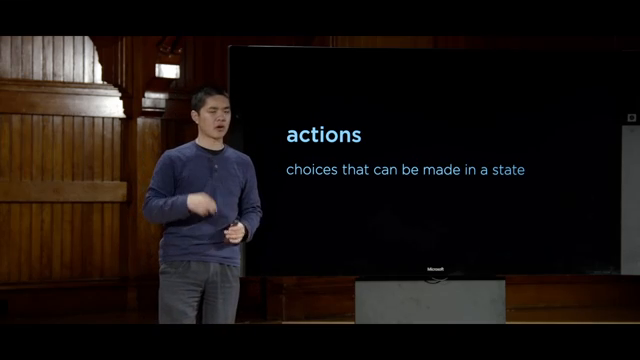
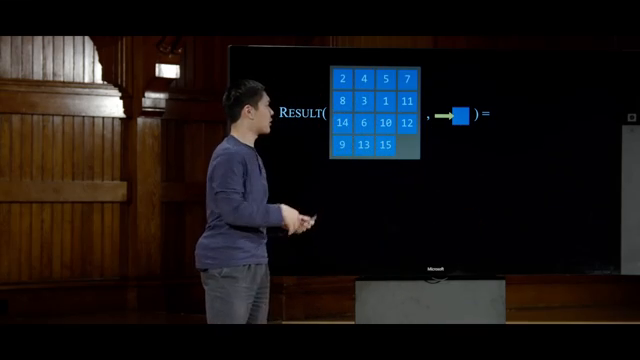
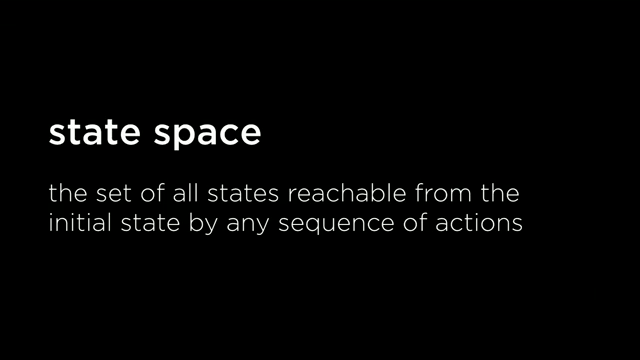
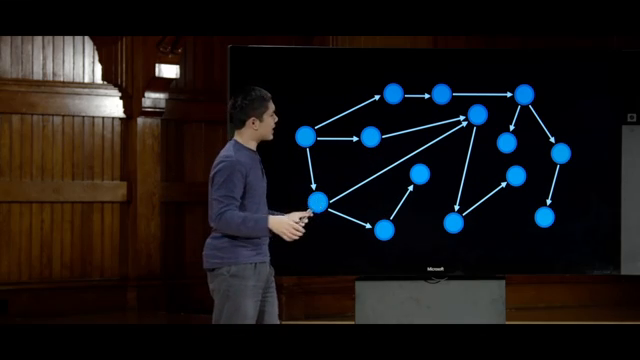
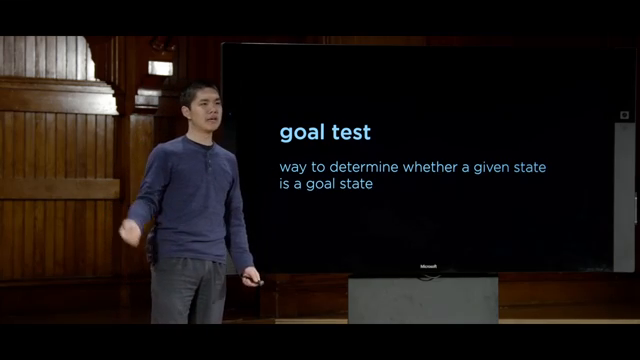
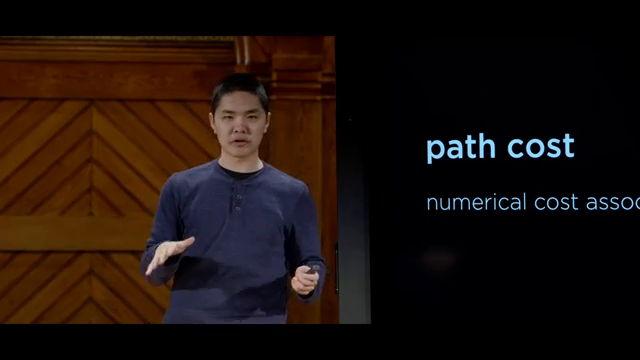
Problem-Solving Framework: Defines states, actions, transition models, path cost, and goal tests.

Uninformed Search:

Depth-First Search

Image for chunk 7

(DFS): Uses a Stack (LIFO) to explore deep paths first.

Breadth-First Search (BFS): Uses a Queue (FIFO) to explore nodes level-by-level.

Informed Search:

Greedy Best-First Search: Evaluates nodes based on heuristic function h(n).

A Search:* Combines path cost g(n) and heuristic estimate h(n) using f(n)=g(n)+h(n).

Adversarial

Image for chunk 8

Search:

Minimax: Optimizes decision-making in two-player zero-sum games (e.g., Tic-Tac-Toe, Chess).

Alpha-Beta Pruning: Optimizes Minimax search by eliminating non-influential subtrees.

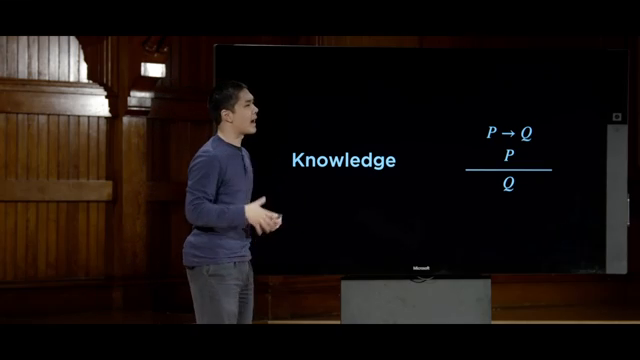
2. Knowledge & Inference [03:45]

Knowledge Representation: Representing information using formal logic symbols and rules.

Propositional Logic:

Image for chunk 9

Truth values, logical connectives (∧, ∨, ¬, ⟹, ⟺).

Inference Engines: Deriving new conclusions from existing facts (Model Checking, Resolution).

3. Uncertainty & Probabilistic Reasoning [04:03]

Handling Incomplete Information: Utilizing probability theory when facts are uncertain.

Bayesian Networks: Directed acyclic graphs re

Image for chunk 10

presenting conditional independence among random variables.

Markov Models & Hidden Markov Models (HMMs): Modeling sequential data over time (e.g., weather patterns, speech tracking).

4. Optimization Problems [04:19]

Local Search Techniques:

Hill-Climbing: Moving toward neighboring states with higher evaluation scores.

Simulate

Image for chunk 11

d Annealing: Temperature-controlled state selection to escape local optima.

Constraint Satisfaction Problems (CSPs): Assigning variables values while satisfying specific constraints (e.g., Map Coloring, Sudoku).

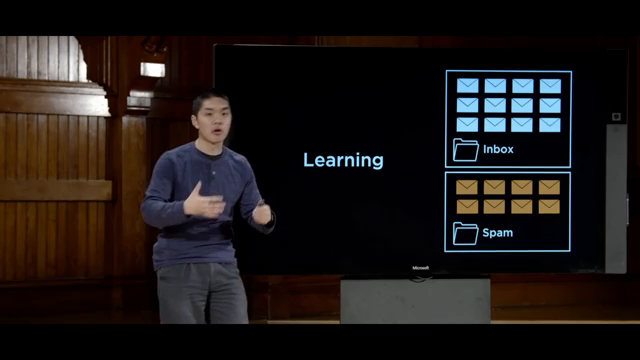
5. Machine Learning & Reinforcement Learning [04:37]

Supervised Learning: Training models using labeled data.

Classi

Image for chunk 12

fication algorithms (k-Nearest Neighbors, Naive Bayes, Support Vector Machines).

Reinforcement Learning: Agents learning optimal behavior through rewards and penalties (e.g., Q-Learning).

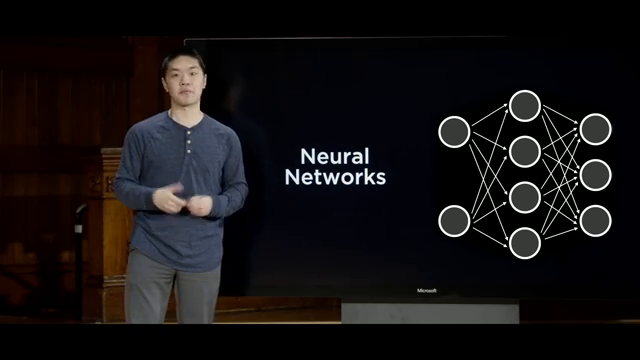
6. Neural Networks & Deep Learning [05:05]

Artificial Neural Networks: Modeling biological neurons with weights, biases, and activation func

Image for chunk 13

tions.

Architectures:

Convolutional Neural Networks (CNNs): Specialized for image classification and feature extraction.

Recurrent Neural Networks (RNNs): Tailored for processing sequential input data.

7. Natural Language Processing (NLP) [05:21]

Syntactic & Semantic Analysis: Parsing sentences, tokenization, context-free gram

Image for chunk 14

mars.

Word Embeddings: Representing word meanings in dense vector spaces (e.g., Word2Vec).

Modern Architectures: Attention mechanisms and Transformer models [11:48:10].

Video Source

URL: http://www.youtube.com/watch?v=5NgNicANyqM

Harvard CS50’s Artificial Intelligence with Python – Full University Course

freeCodeCamp.org · 4.8

Image for chunk 15

Viewer Discussion & Comments

@scarrosi7754
Stop reading comments , and follow the lesson
@divyanshsharma07
If you feel useless or ashamed of yourself anytime, just remember that there are people who disliked this one of the greatest lecture available for free.
@edwardb7811
Professor Yu is in his mid-twenties and teaches one of the most subscribed courses at Harvard. Amazing!
@PIRIZO06
THX , just completed 3hrs 39min , will be going for more , just a reminder for myself if i ever try to gave up
@0rjuela
Listing some subchapters for future reference