The video "How ChatGPT Slowly Destroys Your Brain" by Justin Sung explores the potential negative impacts of over-relying on Large Language Models (LLMs) like ChatGPT for learning and complex problem-solving.
The Core Problem: Cognitive Offl
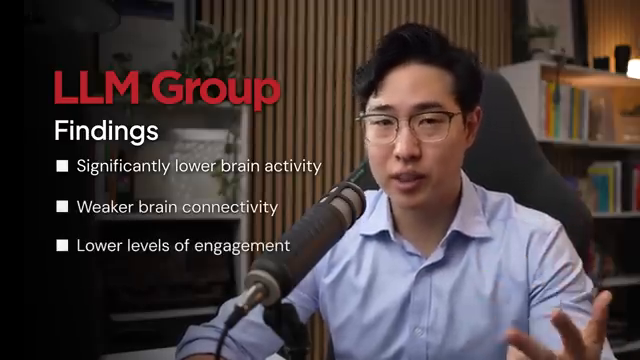
The video "How ChatGPT Slowly Destroys Your Brain" by Justin Sung explores the potential negative impacts of over-relying on Large Language Models (LLMs) like ChatGPT for learning and complex problem-solving.
The Core Problem: Cognitive Offl
oading
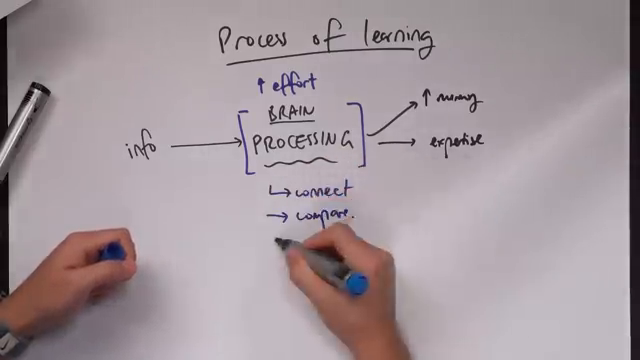
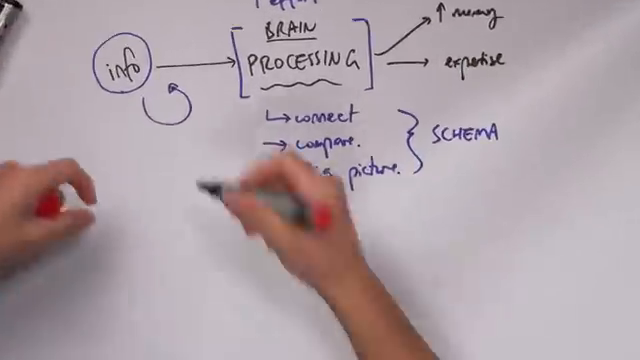
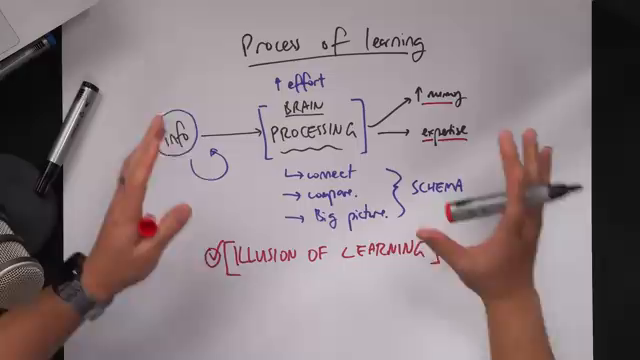
The speaker, a learning coach and former medical doctor, highlights that true learning and the development of expertise require significant mental effort. This effort is necessary for "information processing," which involves organizin

g, connecting, and evaluating new information to form deep schemas of knowledge [03:04], [03:32], [03:56].
When individuals use AI to bypass this effort—essentially asking the AI to organize and simplify information instead of doing it thems
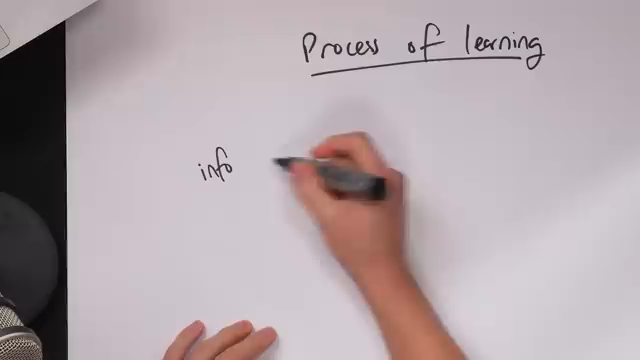
elves—they fall into what the speaker calls the "illusion of learning" [04:57]. This leads to:
Weaker cognitive outcomes: Lower brain activity, reduced connectivity, and diminished information recall [00:49], [00:59].
Residual negative effec
ts: These cognitive deficits may persist even after the individual stops using AI [01:16].
Skill atrophy: Failing to practice effortful processing prevents the development of necessary thought patterns, making future learning tasks consisten
tly harder [06:27].
The AI Limitation: Probability, Not Truth
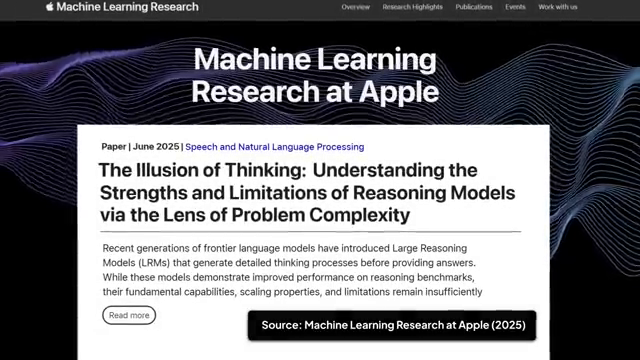
The video emphasizes that LLMs are not sources of truth but probability networks designed to predict the next likely word [07:32], [07:40]. They lack true reasoning capabilities a
nd frequently hallucinate [07:04], [08:02]. Without existing expertise, a learner cannot effectively verify the output, leading to the acquisition of incorrect information [07:11].
A Model for Effective Learning vs. Bypassing
The speaker pro

poses a shift in how AI is utilized. Instead of using it as a brain substitute, it should be used as an assistant to facilitate deeper human-led processing.
The Learning Process Flow
Plaintext
+-----------------+ +----------------
-----+ +-----------------+
| Raw Information| ----> | Effortful Processing| ----> | Expertise & |
| (Books/Lectures)| | (Human Brain Task) | | Memory |
+-----------------+ +-----------

----------+ +-----------------+
^
|
AI Assistance Here
(Summarizing, Checking Perspectives)
S

trategic Recommendations
To remain competitive and continue developing one's intelligence, the speaker suggests:
Embrace the effort: When a task feels overwhelming or difficult, recognize that this is the precise moment when learning occurs

[14:36].
Use AI for support, not replacement: Use AI to find resources, get quick overviews, or act as a sounding board to challenge your own thinking [14:44].
Focus on gaps: Use AI outputs as a starting point to identify what is missing, wh

ere connections are flawed, or which perspectives were neglected, rather than accepting the output as a final answer [15:35], [15:47].
Maintain traditional study: Supplement AI usage with traditional methods (textbooks, journal articles) to

build ownership over knowledge [16:00].
Ultimately, the video argues that because AI raises the general standard for productivity, individuals must cultivate higher levels of expertise to remain employable. Relying on AI to do the thinking f

or you is a path to falling behind, whereas using AI to augment your own cognitive processes is a way to gain an advantage.
Video reference: https://www.youtube.com/watch?v=6sJ50Ybp44I
How ChatGPT Slowly Destroys Your Brain
Justin Sung · 1M

Viewer Discussion & Comments