How China came to dominate the global EV factory boom


Channel: CNBC
Uploaded by CNBC on 20260713
Categories: News & Politics
Tags: EV, China, US, Tesla, atlas public Policy, electric vehicles, BYD, Zeekr, Xiaomi, XPENG
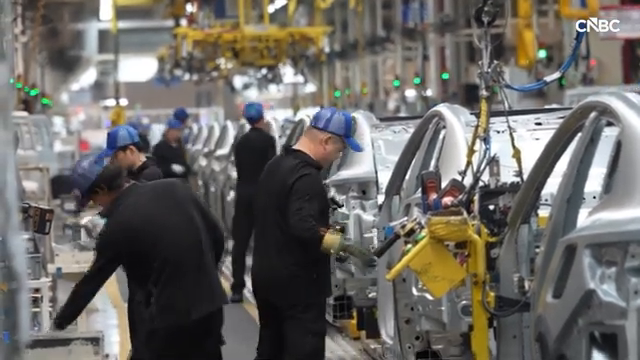
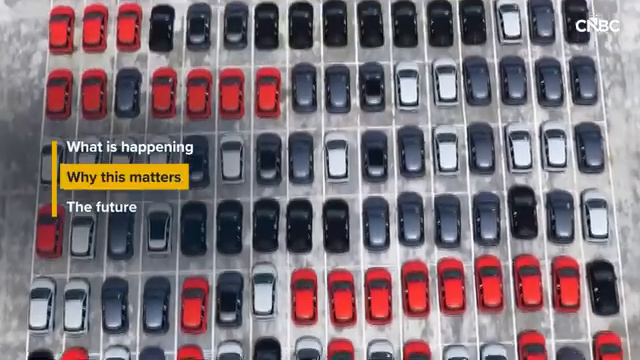
Chinese automakers have made over $100 billion in EV and battery investments abroad since 2019, according to Atlas Public Policy, far outpacing US firms. CNBC’s Robert Ferris has more on how the Asian country got here and why. Chapter 1: What is happening - 01:18 Chapter 2: Why this matters - 03:05 Chapter 3: The future - 06:00

This video from CNBC explains how Chinese electric vehicle (EV) and battery manufacturers have shifted from being domestic heavyweights and exporters to becoming global factory powerhouses, outperforming Western counterparts in international investments.

1. The Power Shift in Global Auto Investments

A few years ago, United States automotive firms significantly outpaced Chinese companies in terms of clean energy and EV investments [01:23]. However, between 2021 and 2024, the situation completely flipped.

Below is an ASCI

Image for chunk 1

I illustration representing the trend shift in EV/clean energy investments between the US and China:

Investment Volume

^

| / \ (China) * = US Investment

| / \ # = China Investment

| / \

| / \ * (US)

| # \ /

| / \ /

|/ \ /

+-------------------------> Time

2021 & Prior 2022-2025

2. Main Drivers Behind China's Global Expansion

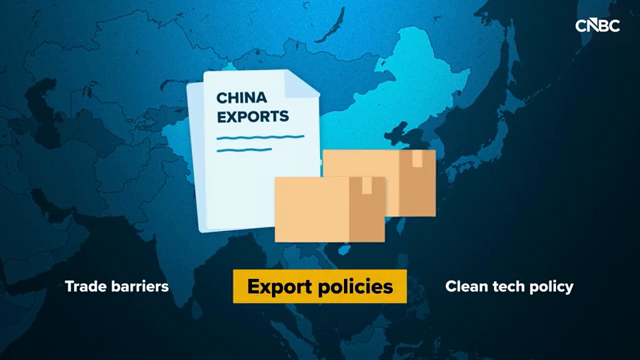
Chinese firms are forced and motivated to build factories worldwide

Image for chunk 2

due to three key factors [00:37]:

Brutal Domestic Competition: The market inside China faces intense price wars, aggressive discounts, and massive localization pressures from local governments [01:37]. This has reduced domestic profit margins, forcing companies to look abroad [02:02].

High Global Demand: Tremendous appetite exists worldwide for Chinese cars, parts, and batteries—with the notable exception of the United States [02:10].

Circumventing Trade Barriers: High tariffs imposed by the US and the European Union ha

Image for chunk 3

ve forced Chinese manufacturers to get creative [02:41]. By building factories directly within or near their target market regions (like Hungary or Indonesia), they effectively bypass these trade penalties [02:47].

3. Key Impacts and Strategic Advantages

Market Domination: Foreign direct investment (FDI) now makes up roughly 30% of total Chinese outbound investment, accelerating their global transition from simple exporters to entrenched domestic players in foreign markets [03:33].

Technological Lead & Spillover Effects

Image for chunk 4

: EVs act as the core platform for future automotive tech, including advanced software, automated sensors, and autonomous driving/robotaxis [03:56]. Demand for EVs pulls forward innovation in battery chemistry, drivetrains, and smart cabins, which spills over into adjacent advanced industries like robotics [04:36].

Industrial Diplomacy: Chinese automakers are building strategic geopolitical ties by choosing specific investment locations [05:40].

+-------------------------------------------------------------+

|

Image for chunk 5

The Cycle of "Industrial Diplomacy" |

+-------------------------------------------------------------+

| 1. China builds factory in a host country (e.g., Hungary). |

| 2. Factory creates thousands of local jobs (e.g., 3,000+). |

| 3. Host government becomes financially invested in success.|

| 4. Local policies pivot to protect the Chinese brand. |

+-------------------------------------------------------------+

4. Limitations and Future Risks

Despite China's current lead, analysts point out severa

Image for chunk 6

l factors that could alter this trajectory [06:03]:

Data Discrepancies: Tracking exact foreign direct investment numbers is notoriously difficult, as many announced projects remain rumors or fail to materialize [06:03].

Western Differences: US automakers face less tariff-related pressure to expand globally and may already have an established legacy footprint, making direct factory-to-factory comparisons difficult [06:22].

Technological Leakage Concerns: China's own government has grown increasingly worried about losing

Image for chunk 7

its competitive edge and is enforcing regulations to prevent its cutting-edge EV manufacturing tech from leaking to local foreign players [07:02].

According to data cited from the Rhodium Group and researchers, China continues to outpace the US significantly, receiving three to four times more domestic EV/battery investment and four to six times more international investment, signaling a massive structural rewrite of the global auto industry [07:28].

How China came to dominate the global EV factory boom

CNBC · 19K views

Image for chunk 8

Viewer Discussion & Comments

@binulai8856
i just had to stop and ask myself why i'm watching this. i've watched a version of this video probably 10 times and i'm not getting new info i'm just wasting my time lol. time to close my laptop and pick up my guitar
@iamcrazyforkittycats5668
I see the EU is failing to compete.
@Micksmix256
went to China 3 weeks ago and my 30 minute cab cost 7 dollars, and had heated/massage seats. They also had insane leg room. Great cars.
@mamanitubea
The US stucked on 19th century technology...what a shame
@portalkey5283
Cutthroat competition plus generous government subsidies. Next question!