How Tech Companies Lie to You.


Channel: Mrwhosetheboss
Uploaded by Mrwhosetheboss on 20260425
Categories: Science & Technology
Tags: tech, scam, marques, brownlee, mkbhd, apple, samsung, iphone
Let them know with your wallet 🫡 Huge thanks to @mkbhd for jumping in on this! He's just done a deeper dive into the whole "Glass is Glass" concept on his channel! https://www.youtube.com/watch?v=7YrdI7h2XoY I spend a LOT of time trying to make my videos as concise, polished and useful as possible for you - if you would like to s

This YouTube video is titled "How Tech Companies Lie to You." by Mrwhosetheboss (featuring Marques Brownlee / MKBHD).

Below is a detailed overview and breakdown of the contents and topics covered in the video:

Executive Overview

In this video, Arun Maini (Mrwhosetheboss) and Marques Brownlee (MKBHD) collaborate to break down the most common marketing tricks, deceptive statistics, and misleading tactics used by major


Image for chunk 1

technology and automotive companies (including Apple, Samsung, Rivian, Hisense, and others) to sell minimal upgrades as massive technological leaps.

Detailed Content Breakdown

1. The "Up To" Performance Claim [00:23]

The Concept: Companies rarely say "X% better than the last generation" anymore. Instead, they use phrases like "up to 2x faster" or "up to 8 hours more battery."

Why It’s Misleading: An "up to" claim t

Image for chunk 2

echnically covers any result from 0% up to the maximum stated limit. Companies use this to put huge numbers in marketing materials without facing legal repercussions.

2. The "Imaginary Spec" & EV Range Claims [01:37]

Combining High Performance with Base Price: Companies feature top-tier performance figures alongside baseline entry prices on the same page, even though you cannot get maximum performance for the minimu

Image for chunk 3

m price [01:57].

Example (Rivian R1T): The advertised 420-mile range and 0–60 mph under 2.5 seconds starting at ~$74,000 are not achievable in one configuration:

The $74,000 base model does not achieve either the maximum range or the top speed.

The 2.5-second acceleration model costs significantly more and loses range.

Achieving maximum rated range often depends on specific wheel and tire choices that decrease perfo

Image for chunk 4

rmance [03:24].

3. Invented Specs & Terminology Obfuscation [03:49]

Companies create proprietary names for standard technologies to prevent direct side-by-side comparisons and obscure product limitations.

+-------------------+----------------------------+-------------------------------------------------------+

| Term / Claim | Actual Technology | Misleading Aspect / Reality |

Image for chunk 5

+-------------------+----------------------------+-------------------------------------------------------+

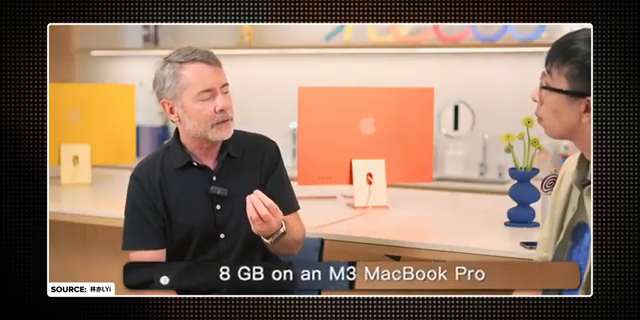
| Unified Memory | Shared System RAM | Shares RAM between CPU and GPU; caps overall memory [04:43]|

| Motion Rate 120 | Software Motion Smoothing | Not a native 120 Hz refresh rate panel [05:43] |

| ULED / QLED / QED | LCD Panels | Branding engineered to sound like OLED [06:08]

Image for chunk 6

|

+-------------------+----------------------------+-------------------------------------------------------+

4. Factually Misleading Numerical Measurements [06:37]

1-Inch Camera Sensors [06:45]:

A "1-inch type sensor" does not measure 1 inch in physical diameter or diagonal length.

Historical Origin: The term originates from 1950s video vacuum tube outer diameters, where a 1-inch tube produced an image diagonal

Image for chunk 7

of roughly 16 mm [07:42].

"1.5K" Display Resolution [08:21]:

Displays marketed as "1.5K" do not measure 1500 pixels horizontally or vertically.

It is a marketing term used to describe resolutions sitting vaguely between 1080p ("1K") and 1440p ("2K") [09:23].

5. Launch Event Feature Padding [09:44]

Third-Party Software Spotlight: Presentations dedicate long segments to features powered by third-party partnerships (e

Image for chunk 8

.g., Google’s Circle to Search during Samsung launches) to imply exclusivity, despite being available on competing devices [10:29].

Backward Compatibility Concealment: Keynote speeches present new software upgrades as reason to purchase the latest hardware, hiding the fact that older models will receive the exact same software updates [11:15].

6. Comparing Against Outdated Hardware [12:03]

Multi-Year Comparisons: Co

Image for chunk 9

mpanies compare their latest generation products to models released 4 to 6 years prior rather than the immediate previous generation (e.g., comparing M5-generation chips to M1 chips) [12:33].

Purpose: Masking year-over-year gains (often 5%–10%) behind a larger multi-year figure (e.g., "8x faster") [13:24].

7. The Glass Durability Trade-off [13:44]

Marketing cycles alternate yearly between highlighting "scratch resis

Image for chunk 10

tance" and "shatter resistance."

Material Physics Reality: Harder glass resists scratches but becomes more brittle and prone to shattering. Softer glass resists shattering but scratches more easily.

HIGH ^

| / Scratch Resistance (Harder)

Durability | /

Rating | /

|/

|\

| \ Shatter Resistance (Softer)

LOW +--------------------------------

Image for chunk 11

-->

Material Hardness

8. Efficiency Improvements vs. Real Performance [16:05]

Companies claim both a percentage boost in overall speed and a percentage boost in power efficiency.

The Reality: Utilizing the added efficiency to run the processor faster cancels out potential battery savings, leaving real-world gains in the single digits [16:49].

9. Buzzword Materials [17:21]

Claims of "aerospace-gr

Image for chunk 12

ade aluminum" or "surgical-grade stainless steel" describe common, mass-market alloys:

6000/7000 Series Aluminum: Standard material used in everyday consumer products like kick scooters [18:02].

316L Stainless Steel: Commonly used in kitchen sinks and standard fixtures [18:15].

10. Selective & Irrelevant Metrics [18:39]

Thinnest Point Measurement: Measuring a device's thickness strictly at its thinnest section while

Image for chunk 13

excluding camera bumps or display bezels [19:10].

Peak Brightness (Nits): Display specs cite peak brightness achieved by a tiny cluster of pixels for a few seconds under extreme conditions, rather than typical full-screen brightness [20:25].

Megapixels vs. Sensor Size: High megapixel counts (e.g., 200 MP) are advertised over physical camera sensor size, even though photos are downsampled to standard resolutions [21

Image for chunk 14

:24].

Extreme Digital Zoom: Marketing massive digital zoom magnifications (e.g., 140x) that simply crop and degrade the image [21:43].

"Shot on Smartphone" Marketing: Showcasing images/videos captured using extensive commercial equipment, external lenses, stabilization rigs, and studio lighting setups that obscure true out-of-the-box phone camera performance [22:59].

How Tech Companies Lie to You.

Mrwhosetheboss · 6

Image for chunk 15

Viewer Discussion & Comments

@Mrwhosetheboss
I think I’ve done more collabs in the last 3 months than the entire 2 years before 😳
@Monsux
My Tinder profile: "Up to 7 feet tall"
@hamzahpatel4994
WE can all agree we need more mrwhosthebrownlee
@EhabAboud
These two lads woke up and chose violence. And I'm here for it
@David-kv7xh
When a poor man does it, it’s called scamming and he’s jailed. When a billionaire CEO does it, it’s called marketing.