How the EU Fixed Irregular Immigration (Sort Of)


Channel: TLDR News EU
Uploaded by TLDR News EU on 20260719
Categories: People & Blogs
Tags: tldr, news, politics, eu, europe
Take back your privacy- start using Proton Mail for free: http://proton.me/tldr In response to the hot topic of immigration across Europe, the EU has implemented a series of policies to better secure its borders. And, it seems like those policies are working. In this video, we're taking a look at the EU's new strategy and what mig

Here is a detailed breakdown of the content covered in the video "How the EU Fixed Irregular Immigration (Sort Of)" by TLDR News EU:

1. Overview & Recent Data

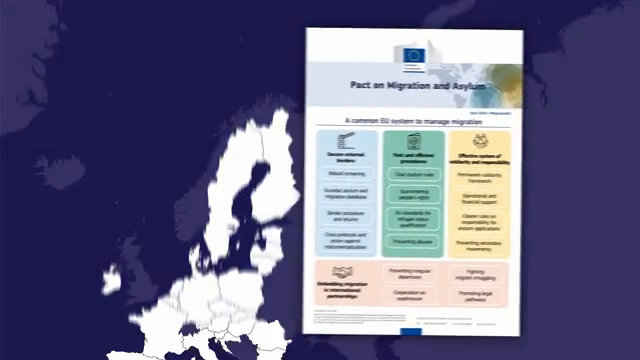
Migration Policy Shift: The EU's Pact on Migration and Asylum fully came into force in 2026 alongside an "externalization strategy"—deals with third-party nations (e.g., Albania, Turkey, Tunisia) to intercept migrants before reaching European soil [00:10].

Frontex Data (July 10, 2026): In the first 6 months of 2026, irregular border crossings into the EU dropped by 37% year-on-year compared to H1 2025 [0
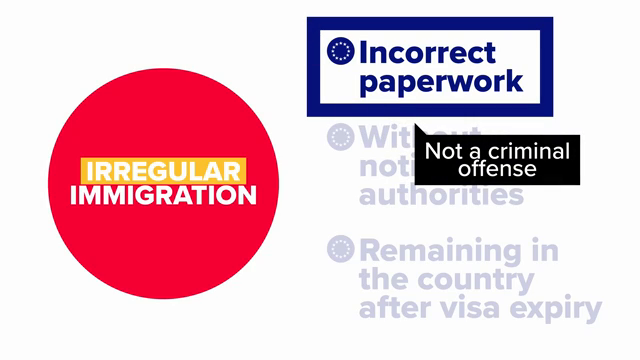
Image for chunk 1

0:33].

Nearly every primary migration route experienced a drop of at least 20%, except the Western Mediterranean route [00:47].

2. Defining Migration Types

Regular Migration: Entering an EU nation with official permission (work/study visas, official asylum application) [01:26].

Irregular Migration: Entering without correct paperwork or overstaying legal permission [01:34].

Terminology Note: The EU prefers "irregular" over "illegal" because administrative paperwork issues are civil infractions rather than criminal offenses, and approved refugees are deemed lega

Image for chunk 2

l retroactively [01:55].

3. Evolution of the Migration Policy

2015–2016 Crisis: Large inflows from Syria, Afghanistan, and Africa exposed vulnerabilities in EU border management [02:11].

June 2024 Agreement: The EU agreed on its Pact on Migration and Asylum, prioritizing external border security through deals with transit countries [02:55].

Funding & External Deals:

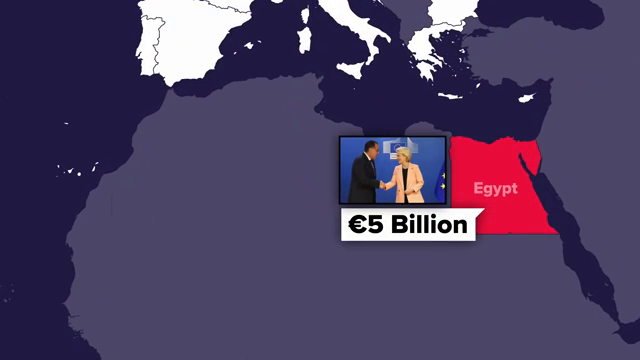
Egypt: Multi-billion euro aid deal [04:02].

Mauritania: €210 million deal [04:02].

Tunisia: €165 million deal [04:02].

Balkan Partners: Deals with Serbia, Albania, and Moldova allowing Frontex pres

Image for chunk 3

ence on their territory [04:34].

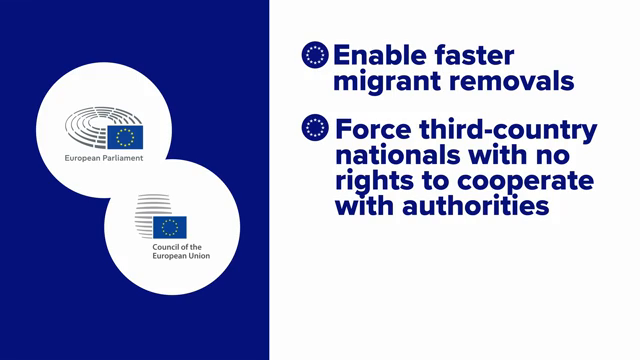
Return Hubs & Fast Removals (June 2026): EU policy updates facilitate faster deportations and allow member states to set up "return hubs" in safe third countries [04:56].

4. Route Breakdown (H1 2026 Data)

+-----------------------------------+--------------------+

| Migration Route | Year-on-Year Trend |

+-----------------------------------+--------------------+

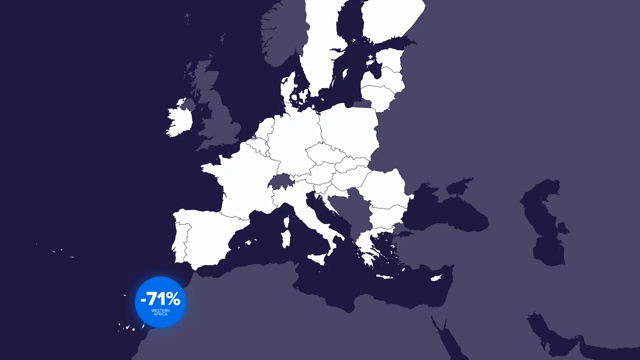
| West African Route | -70% |

| Central Mediterranean Route | -52% |

| Eastern Land Border (Belarus/Uk

Image for chunk 4

r) | -39% |

| Eastern Mediterranean Route | -20% |

| Western Mediterranean Route | Increased |

+-----------------------------------+--------------------+

West African Route (Mauritania/Morocco to Canary Islands): Experienced the largest drop at -70% [05:59].

Central Mediterranean (Tunisia/Libya to Italy/Malta): -52% drop [06:08].

Eastern Land Border (Belarus/Ukraine): -39% drop [06:08].

Eastern Mediterranean (Turkey to Greece/Cyprus): -20% drop [06:08].

Western Mediterranean (North Africa to mainland Spain): The

Image for chunk 5

only major route to increase, primarily due to heightened enforcement on other routes [06:21].

5. Nuance, External Factors, and Criticism

Confounding Variables: Migration numbers had already fallen by 25% between 2023 and 2024, prior to full pact implementation [06:42]. Shifts in regional political stability (e.g., Syria) and harsh weather conditions early in the year also played a role [06:50].

Humanitarian Concerns:

Rights organizations (e.g., International Rescue Committee) fear third-country return centers lack legal oversight [05:30].

Well-documented hum

Image for chunk 6

an rights abuses by partner forces, such as the Libyan Coast Guard [07:11].

Investigations (e.g., April BBC report) revealed Greek law enforcement using masked migrants/mercenaries to violently turn back newcomers [07:18].

6. Conclusion & Sponsorship

While politically successful in Brussels for reducing arrivals, the policy carries significant human rights and ethical costs [07:26].

The video ends with a sponsored segment for Proton Mail focusing on privacy and security features [08:12].

How the EU Fixed Irregular Immigration (Sort Of)

TLDR News EU · 140K view

No image available for chunk 7

Viewer Discussion & Comments

@LeviMusiimeNturwabakye-gc2fj
That's it I'm moving to Planet Sigma IX, Recyclon forever.
@AlexKwiatek
What is funny, in my country right-wing anti-immigration parties were super strongly against migration pact. Like unreasonably. At it's not like they had grievances with some of it's point, no. They actually went full gaslight mode and tried to convince voters that since it's called "Migration Pact" then it must mean it's pro-immigration.
@thepax2621
Trying to enforce immigration rules actually works?! Unimaginable 🙄
@aelux4179
It's about time they started doing something different. Left unaddressed, rampant immigration will lead to a rise in more extreme solutions from frustrated countries.
@johngrimes93
Ignoring Spain’s law to regularise illegal migrants is an oversight when explaining increase in the Western Sahara route
@altaccount648
"Irregular"
@SamueleCastiglioni
1:37 yet another slide that looks like the Japanese flag
@bill7445
Illegal > irregular
@Miłosz1804
It turns out the EU is better at protecting borders than the far-right?
@cowboybeboop9420
The only difference between now and 10 years ago is that now European governments are quietly changing migration rules and bringing in these people legally. Nothing has changed accept some administrative filing. The reality still remains.
@houghin
Oh boy. This comment section surely will be civil...
@macbaryum
The biggest weakness to EU border security was called Merkyl.
@manuelreinaldo3417
This overlooked one extremely important factor. In the latest Spanish legalization of immigration, it has been seen that close to 90% of the immigrants arrived via airplane, meaning that you are analyzing 10% of it giving whatever impression you want, as you can pick a 10% that grows or shrinks. This is a horribly incomplete reporting which lead an impression that I have no idea if it has or not anything to do with reality. Sea routes in Spain are almost irrelevant. What is the evolution of airplain routes?
@CharmingYak12543
*illegal immigration
@macbaryum
It's called "illegal" and "illegals".