How to Manage Your AI Before It Makes the Wrong Decision


Channel: IBM Technology
Uploaded by IBM Technology on 20260712
Categories: Education
Tags: IBM, IBM Cloud
Learn more about AI Management here β†’ https://ibm.biz/~6alSV2Ho4 Managing AI requires more than trusting models blindly. Jeff Crume explains how to manage your AI using structured governance systems. Learn how ISOβ€―42001 helps organizations control AI risk and accountability. AI news moves fast. Sign up for a monthly newsletter fo

This video from the IBM Technology channel addresses the critical gap in how corporations deploy, monitor, and assign responsibility to artificial intelligence systems when they make mistakes [00:10]. The core subject is the implementation of an AI management system to govern these processes continuously, highlighting the ISO 42001 standard alongside other frameworks [00:19, 00:56].

The Core Governance Cycle (PDCA Model)

ISO 42001 operates as a risk management standard rather than a simple checklist [01:16]. It uses a continuous
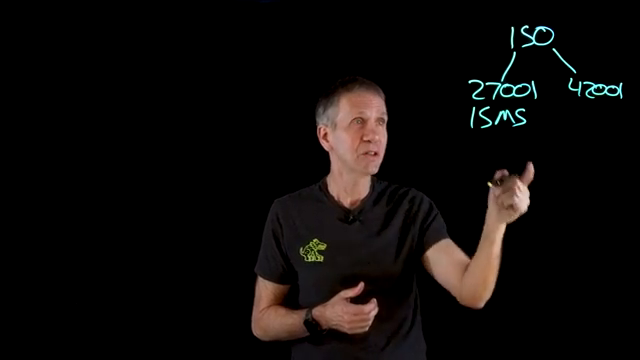
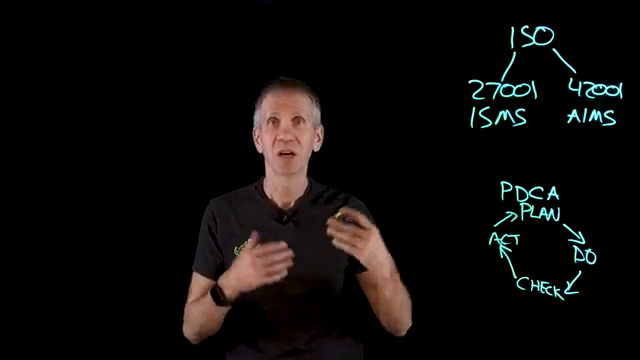
Image for chunk 1

structural loop built on the Plan-Do-Check-Act (PDCA) system [01:26]:

+-----------------------------------------------+

| PLAN |

| - Define AI policies, scope, & risk metrics |

+-----------------------+-----------------------+

|

v

+-----------------------------------------------+

| DO |

| - Develop & deploy with appropriate controls |

+---------------------

Image for chunk 2

--+-----------------------+

|

v

+-----------------------------------------------+

| CHECK |

| - Monitor performance, bias, drift, & effects|

+-----------------------+-----------------------+

|

v

+-----------------------------------------------+

| ACT |

| - Continually improve based on findings |

+--

Image for chunk 3

---------------------------------------------+

Multilayered Risk Approach

The standard enforces a granular evaluation of risk because not all AI infrastructures carry identical stakes [02:02]. Risk is systematically assessed across four primary layers [02:18]:

Data Risk: Addressing concerns regarding biases and discrepancies in information quality [02:22].

Model Risk: Handling questions surrounding the exact accuracy and overall explainability of output results [02:35].

System Risk: Focusing on operational security and individua

Image for chunk 4

l software integrations between technical components [02:42].

Usage Risk: Preventing explicit system misuse and mitigating unintended consequences [02:50].

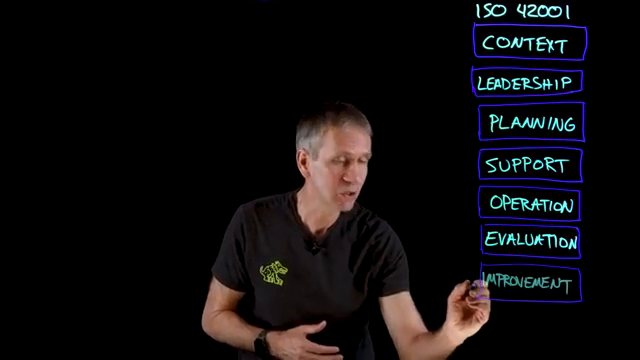
Major Structural Components of ISO 42001

The framework follows the standard high-level structure of global International Standards Organization records [03:00]:

Context: Clarifies the exact boundaries of the AI deployment, maps out major stakeholders, and identifies regional regulatory demands [03:06].

Leadership: Dedicates clear, institutional accountability for AI errors, d

Image for chunk 5

rafts overarching governance policy, and sets up reporting channels [03:27].

Planning: Orchestrates technical risk assessments to detail the company's risk appetite, risk tolerance, and definitive treatments [03:44].

Support: Organizes documentation, internal communication streams, and essential awareness training for personnel [04:13].

Operation: Enforces life-cycle architecture control, maps out change management protocols, and handles supplier oversight [04:31].

Evaluation: Runs internal auditing, routine performance monitori

Image for chunk 6

ng, and formal management reviews [04:44].

Improvement: Prescribes mechanisms for structural incident handling and corrective feedback loops [05:02].

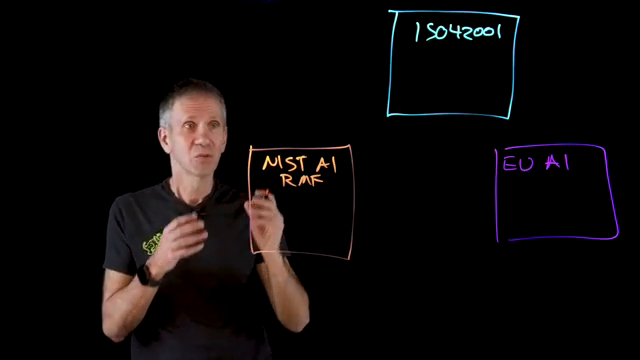
Comparative Framework Landscape

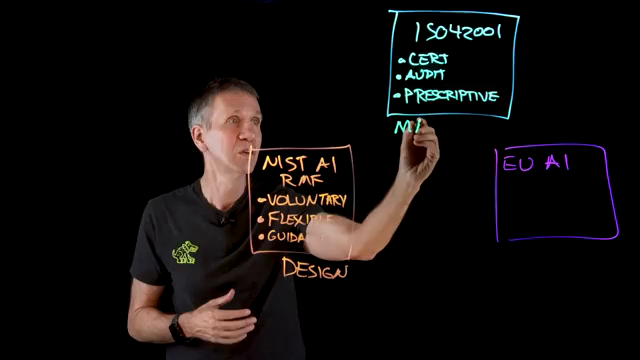
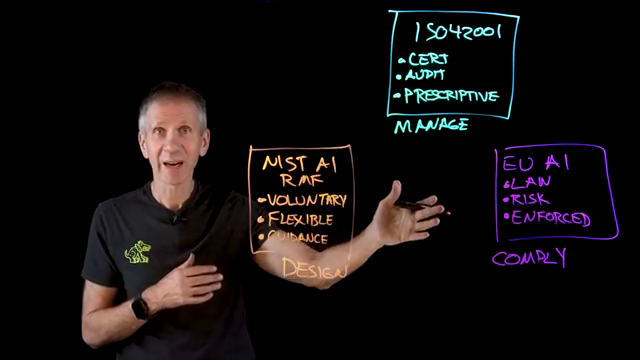
The video contrasts ISO 42001 against two alternative mainstream tools in the tech industry to show how they complement each other instead of competing [05:16, 08:02]:

Framework Nature & Enforcement Core Utility

NIST Risk Management Framework Voluntary, highly flexible, design guide [06:01] Establishes risk modeling guidelines and details "what good

Image for chunk 7

looks like" [06:23, 07:43].

ISO 42001 Certifiable, formal third-party audit capability, prescriptive structure [06:36] Standardizes corporate infrastructure governance and ensures measurable operational compliance [06:50, 07:43].

EU AI Act Legally binding law with strict tiered risk enforcement (Unacceptable, High, Limited, Minimal) [07:14] Dictates the legal constraints and explicit conditions an enterprise must satisfy to operate [07:37, 07:43].

How to Manage Your AI Before It Makes the Wrong Decision

IBM Technology Β· 10K view

Image for chunk 8

Viewer Discussion & Comments

@aurora.radial
How could Youtube hide this jewel from me for 19 hours
@davidlowe8597
Great video. A video with significantly more detail on how to write code to implement the functional overseers would be very helpful!
@sazolpaul7431
This is why AI governance matters as much as AI innovation. Excellent video!
@GuardianADSF
Awesome Insight πŸŽ‰β€πŸ˜Š alignment as we look at Ethics Governance Legislation Policies ( EGLPs )
@charlielynn9531
Excellent video!