Intel: The Godfather of Modern Computers


Channel: Business Casual
Uploaded by Business Casual on 20170423
Categories: Education
Tags: intel, intel history, intel processors history, business casual intel, behind the business intel, the story of intel, intel processors, intel x86 history, intel x86 processors, intel microprocessors, microprocessor history, computer history, intel pentium, intel celeron, intel centrino, intel dual core, multicore processors, intel business, intel dram, gordon moore, moore's law, intel moore's law, intel chipset, integrated electronics
📨 Follow Business Casual on Substack ➡️ https://businesscasualhq.substack.com Intel is the world's largest and highest valued semiconductor chip maker based on revenue and is the inventor of the x86 series of microprocessors: the processors found in most personal computers (PCs). Intel supplies processors for computer system manuf

This video from the Business Casual channel provides a detailed history of Intel, tracing its evolution from the founding of Silicon Valley to its position as a dominant force in modern computing.

Origins and Foundation

The Transistor Legacy: The story begins with the invention of the transistor at Bell Labs in 1947. William Shockley, one of the inventors, moved to the West Coast in 1956, establishing the first
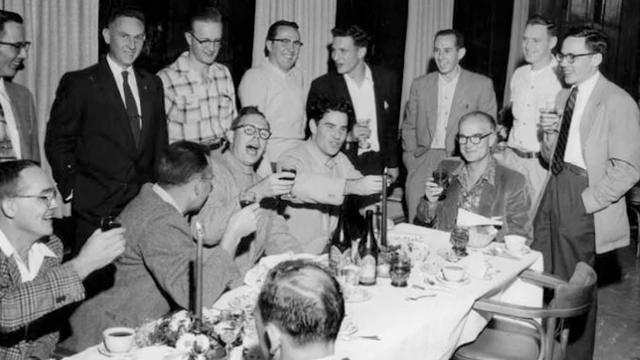

Image for chunk 1

silicon device company in what became Silicon Valley [00:25].

The Traitorous Eight: Following disputes, eight of Shockley's employees left to form Fairchild Semiconductor in 1957.

Founding Intel: In 1968, Robert Noyce (who created the first integrated circuit) and Gordon Moore left Fairchild to found Intel, supported by investor Arthur Rock [01:26].

Early Innovations

Memory Chips: Intel’s initial focus was on se

Image for chunk 2

miconductor memories. Their first product was the 3101 Schottky Bipolar memory in 1969, followed by the 1103, the first commercially available DRAM, which largely replaced magnetic memory [02:21].

The Microprocessor Breakthrough: While developing integrated circuits for the Japanese company Busicom, engineer Ted Hoff designed a central processing unit on a single chip. This became the 4004, the first microproces

Image for chunk 3

sor, released in 1971 [03:02].

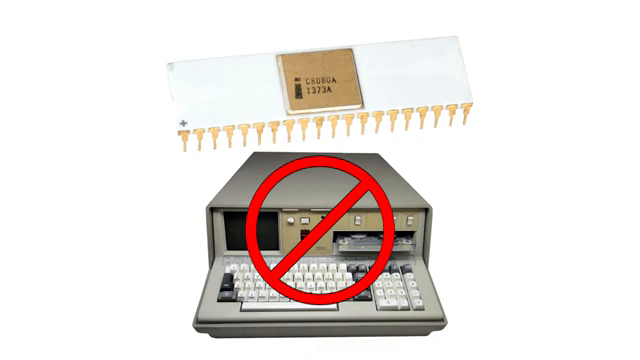
Standardization: The 8080 (1974) became an industry standard. Later, the 8086 (1978) proved vital as Intel shifted focus away from memory, which was facing heavy competition from Japanese firms [03:35].

IBM Partnership and Dominance

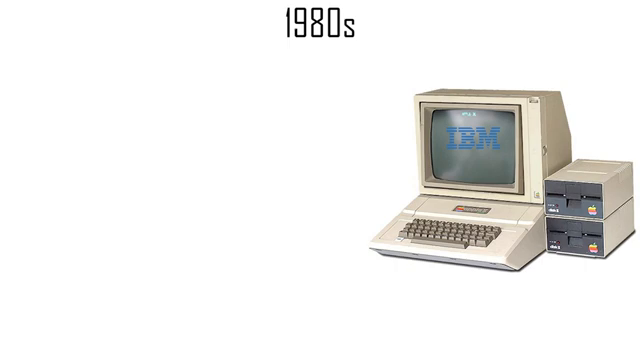
The IBM PC: In the early 1980s, IBM partnered with Intel for processors and Microsoft for operating systems to quickly enter the PC market. The resulti

Image for chunk 4

ng IBM PC (1981) used a modified 8086 processor, cementing Intel's role as the primary supplier for the PC industry [04:38].

Growth: Intel reached $1 billion in revenue in 1983 and saw massive net income growth over the following decade. The release of the Pentium line in 1993 further solidified their market position [05:46].

Challenges and Evolution

Competition and Strategy Shift: After the dot-com crash and in

Image for chunk 5

creased competition from AMD in the early 2000s, Intel faced significant profit declines. They moved away from a singular focus on raw processor speed to energy efficiency [06:35].

Centrino: Released in 2003, the Centrino platform—combining a processor, chipset, and wireless network—helped Intel capitalize on the rising popularity of laptops [07:06].

Antitrust and Modern Focus: Intel has faced various antitrust

Image for chunk 6

lawsuits globally, including a massive fine from the European Union in 2009 regarding manufacturer incentives [07:58]. Today, the company continues to branch out into fields like machine learning, solid-state drives, and autonomous vehicles [08:23].

For more information, you can watch the full video here: https://www.youtube.com/watch?v=szaWnH-8OeQ

Intel: The Godfather of Modern Computers

Business Casual · 513K

No image available for chunk 7

Viewer Discussion & Comments

@BusinessCasual
🚨We have received thousands of comments reporting that YouTube removed our most recent video, Why I’m Suing YouTube from your sub-feed. Worse yet, they are now suppressing traffic to all of our other videos. We need your help. If you are reading this, please take a moment right now to subscribe to our free Substack to make sure you receive our next video. ➡ https://businesscasualhq.substack.com (using a non-Gmail address is highly recommended)
@mattshnoop
"Capable of storing 64 bits"
@lukelouw515
Story of Intel: He left his company and started his own company and then someone left his company, and then someone left that company and made intel
@shiftees
Not sure people were exactly using their PCs for YouTube in 2001..
@snowdaysrule
"MOORE Powerfull, MOORE or Less" I see what you did there haha ;)
@Jakub-fy4hj
4:41 Anyone else noticed Felix from Re:Zero?
@anandkothari9616
7:05 its funny how YouTube was not even founded till 2006!
@bwzes03
Nice video, however IMHO you missed the paradigm shifting product known as the 80386.
@nigeltown6999
I worked on a 4004 based 'smart' terminal, many, many moons ago - before PCs, it had a card cage and was programmable, could also do comms - HASP and the like, if anyone remembers that sort of thing...
@BrilliantLightGlowing1111
I saw that. Trying to sneak Felix in
@AbideTheCold
More interesting story would've been about the "Traitorous Eight" and how they founded Fairchild Semiconductors that established Silicon Valley in what it is today seeding the area with talent people who left and made their own companies. Robert Noyce in particular. He was known as The Mayor of Silicon Valley for a reason. I think Fairchild Semiconductor was one of the the most influential company of 20th century.
@C0nstantineify
120.000 views, 98.000 subscribers. It seems like quality makes the difference. Great job infotaining us, we salute you ;)
@saskiavanhoutert3190
The chip, the microprocessor, the transistor, the CPU, the Hard-disc all great inventions that we need in the computertechnologie, thanks for showing and kind regards.
@sparksthedaytrader9606
Yes!
@qwertyqart
I think music is little louder. other then that, great