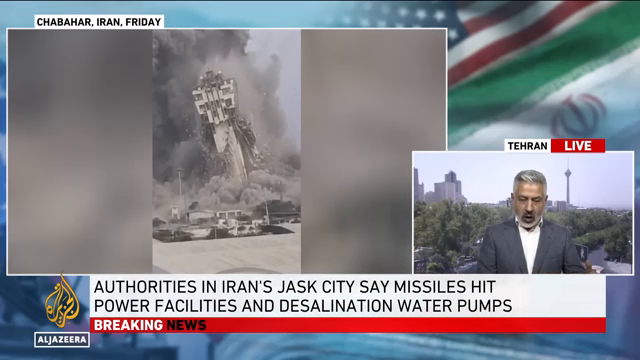
Iran-US War Escalation: Water, Power and Key Sites Hit in New Attacks


Channel: Al Jazeera English
Uploaded by Al Jazeera English on 20260718
Categories: News & Politics
Tags: Civilian Infrastructure, Desalination Plants, Gulf Crisis, Iran, Iran Conflict, Middle East Tensions, Military Attacks, Regional Escalation, US Strikes, Water Shortage, al Jazeera, al Jazeera English, al Jazeera live tv news English, aljazeera live, aljazeera live tv news English, الجزيرة مباشر
US attacks on Iran have damaged infrastructure, leaving thousands without water, while Iran retaliates across the Gulf. Tensions rise as strikes hit military targets and critical civilian facilities. Al Jazeera’s Resul Serdar reports from Tehran in I ran and Laura Khan from Doha in the Qatar. Subscribe to our channel: http://bit

Overview

This Al Jazeera English news report details a significant escalation in the conflict between the United States and Iran, marking the seventh consecutive night of military operations. The conflict has expanded geographically, shifting from strictly peripheral targets to the heart of Iran, while heavily impacting civilian and economic infrastructure on both sides of the Gulf region.

Key Developments and Impact

1. U.S. Attacks on Iran

The United States Central Command (CENTCOM) conducted its seventh night of air strikes targeting both military assets and critical civilian infrastructure inside Iran.

Military Targets: U.S. forces ta
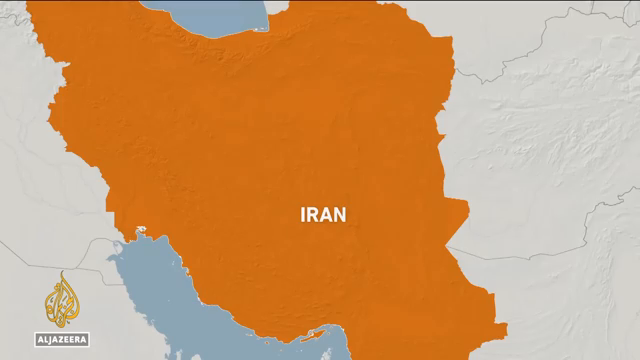
Image for chunk 1

rgeted underground weapons storage facilities, surveillance sites, and maritime capabilities. For the first time, strikes hit deep inland, targeting the central province of Yazd and the city of Lar (Fars province), areas known to host Islamic Revolutionary Guard Corps (IRGC) missile bases [00:26], [02:16].

Civilian Infrastructure Damage:

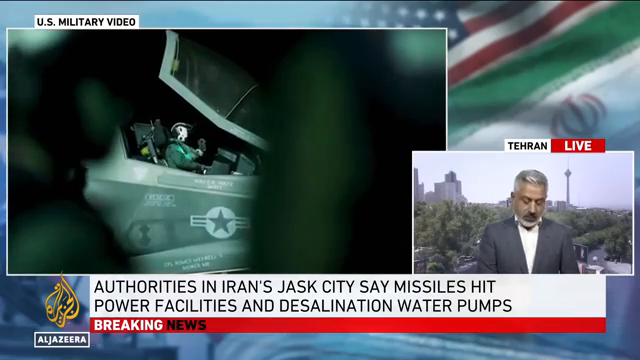
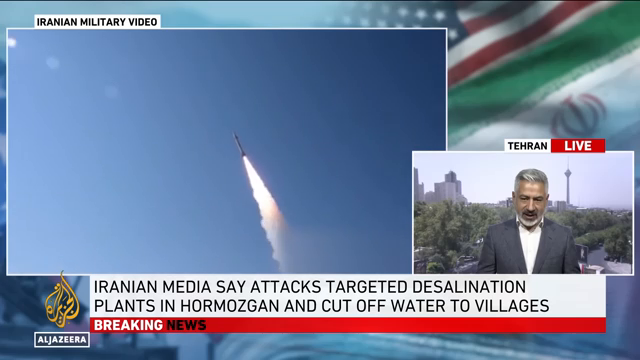
Water Supply: Strikes hit desalination pumps in the city of Jask (Hormozgan province), leaving roughly 10,000 people across 20 villages without access to fresh water [00:09], [04:48].

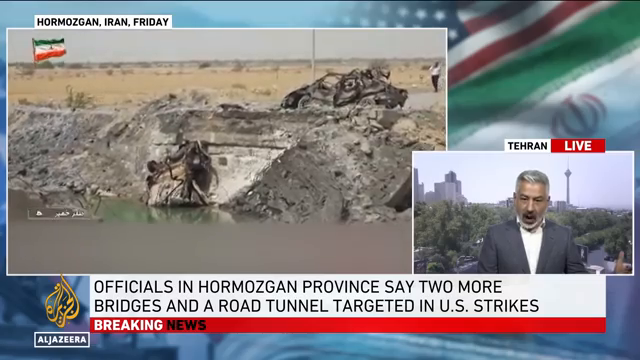
Logistics & Transportation: The U.S. systematically targeted transportation networks to isolate Bandar Abbas, Iran's larg

Image for chunk 2

est import port. At least eight bridges and one crucial tunnel connecting the port city to the rest of the country have been taken out of service, halting the flow of essential goods [03:10], [05:19].

Power and Energy: Bombings caused power outages in Iran Shahr (which hosts a civilian airport) and sporadic blackouts on Kish Island [05:04].

2. Iranian Counter-Attacks and Regional Spillover

In response to U.S. operations, Iran's IRGC launched retaliatory missile and drone strikes targeting U.S. military assets across the Gulf region, directly drawing neighboring countries into the conflict.

Kuwait: An Iranian strike hit a power and water

Image for chunk 3

desalination plant, causing fires and forcing the shutdown of multiple power generation units [00:58]. The IRGC claimed to hit U.S. military assets in Kuwait, including a refueling fleet along a pier and knocking out telecommunications at former U.S. bases [07:02]. Kuwait subsequently closed its airspace [01:13].

Jordan: Jordanian armed forces intercepted and shot down 10 Iranian missiles passing through their airspace [01:13], [07:26].

Bahrain: Air defense sirens were activated for the second time as the country responded to incoming threats [01:21], [07:26].

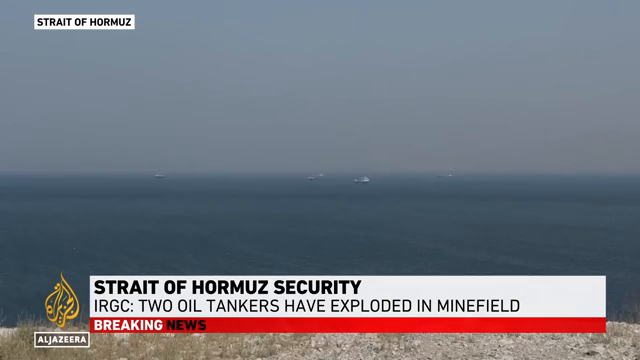
Maritime Escalation: Conflicting reports emerged from the Strait of Hormuz. Ir

Image for chunk 4

an claimed it stopped eight vessels, stating two oil tankers exploded after hitting a minefield. U.S. CENTCOM denied these claims, calling the reports of tanker explosions false [01:46], [03:25].

Regional Responses and Diplomacy

Gulf nations are managing the crisis using a multi-pronged strategy:

+-------------------------------------------------+

| GULF COUNTRIES' CRISIS STRATEGY |

+-----------------------+-------------------------+

|

+---------------------------------+---------------------------------+

|

Image for chunk 5

| |

+-------v---------------+ +---------v---------+ +---------v-------------+

| MILITARY DEFENSE | | DIPLOMATIC EFFORTS| | DOMESTIC REASSURANCE |

| | | | | |

| Multi-layered ground | | Pushing for talks | | Informing citizens via|

| & air architecture | | to honor the June | | official channels; |

| to intercept drones/ | | US-Iran MoU to | | heavily condemning |

| missiles (UN Art. 51).|

Image for chunk 6

| end the conflict. | | Iranian retaliation. |

+-----------------------+ +-------------------+ +-----------------------+

Egypt's Intervention: Egypt's Foreign Minister, Badr Abdelatty, held talks with the U.S. Special Envoy to the Middle East, Steve Witkoff. Egypt strongly urged both sides to adhere to the memorandum of understanding (MoU) signed between the U.S. and Iran in June, emphasizing that diplomacy is the only viable off-ramp to stop the conflict from completely destabilizing the Gulf [07:39], [09:32].

Iran-US War Escalation: Water, Power and Key Sites Hit in New Attacks

Al Jazeera English · 138K

No image available for chunk 7

Viewer Discussion & Comments

@topten3218
the gulf countries are condemning iran about iran retalitaing, how dare they retaliate?, meanwhile they are asking their people to not trust their eyes and hear their officials lie because nothing to see here although the water desilination plant is hit.
@IsmaInnocent-f6f
When other countries hit civilian infrastructures Senators call it war crime but when Trump and Israel destroy civilian infrastructures Senators call it methodology to negotiate, where is ICC why double standard slap war crime charges against Trump for committing war crimes and crimes against humanity, why elect puppet people who kill innocent children and destroy civilian infrastructures to rule democratic country
@kaczynski2333
I hope everyone is ready for no oil.
@tornes3426
victim card activated
@moldymush
Best of luck then, GCC.