Large Language Models explained briefly


Channel: 3Blue1Brown
Uploaded by 3Blue1Brown on 20241120
Categories: Education
Tags:
A light intro to LLMs, chatbots, pretraining, and transformers. Dig deeper here: https://www.youtube.com/playlist?list=PLZHQObOWTQDNU6R1_67000Dx_ZCJB-3pi Technical details as a talk: https://youtu.be/KJtZARuO3JY This was made for an exhibit at the Computer History Museum: https://computerhistory.org/ Instead of sponsored ad reads,

The video titled "Large Language Models explained briefly" by 3Blue1Brown explains the fundamental concepts behind Large Language Models (LLMs) and Transformers. Below is a detailed breakdown of its content:

1. Next-Word Prediction & How Chatbots Work

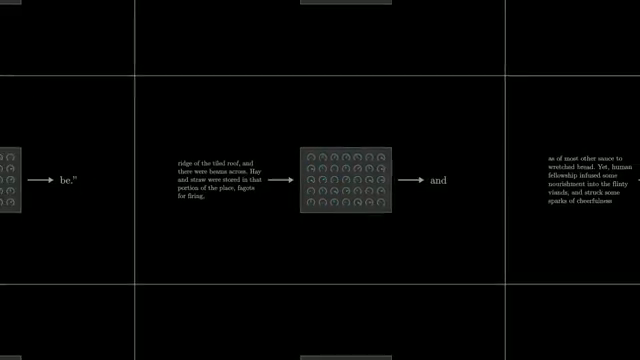
The Core Mechanism: An LLM is essentially a mathematical function that predicts the probability distribution of the next word given an input text [00:33].

Chatbot Dialogue: Interaction with a chatbot works by prompting the model with a simulated conversation script and iteratively predicting the subsequent words that a hypothetical AI assistant wou
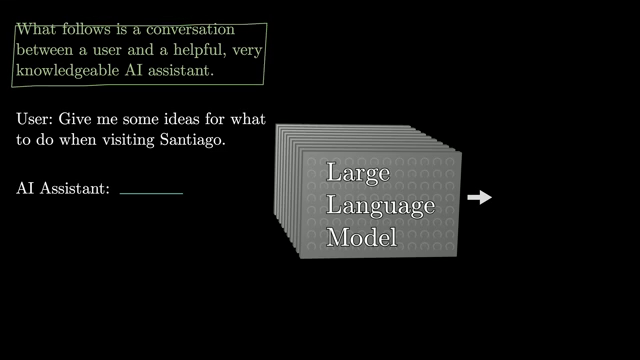
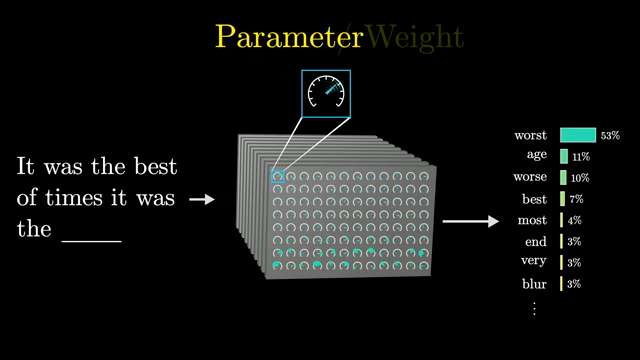
Image for chunk 1

ld respond with [00:54].

Randomness/Temperature: Even though the underlying model is deterministic, allowing it to randomly sample lower-probability words makes the output feel more natural, giving different outputs for the same prompt [01:13].

2. Scale, Parameters, and Pre-Training

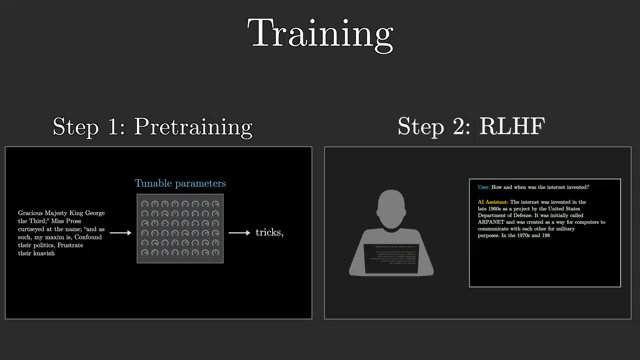
Training Data: Models learn from massive amounts of internet text. For instance, reading the GPT-3 dataset non-stop would take a human over 2,600 years [01:32].

Parameters/Weights: An LLM's behavior is dictated by continuous values called parameters or weights, often numbering in the hundreds of billions [01:52].

Bac

Image for chunk 2

kpropagation: Parameters start completely at random (generating gibberish). Using the backpropagation algorithm on trillions of training examples, parameters are iteratively adjusted to increase the likelihood of predicting the correct next word [02:16].

Scale of Computation: Training modern LLMs requires astronomical compute. At 1 billion operations per second, a single human would need over 100 million years to perform the calculations required [03:14].

3. Fine-Tuning: RLHF

Reinforcement Learning with Human Feedback (RLHF): Pre-training only teaches the model to autocomplete text. RLHF is used

Image for chunk 3

to transform it into a helpful assistant by utilizing human evaluators to flag unhelpful or problematic responses and further fine-tune the parameters [03:46].

4. Transformers and Attention

GPUs and Parallelization: High-scale training requires GPUs to perform parallel operations. Older models processed text sequentially, word-by-word [04:16].

The Transformer Architecture (Google, 2017): Processes all input text simultaneously in parallel [04:38].

+---------------------------------------------------------------+

| Input Text Prompt |

+----------------

Image for chunk 4

-----------------------------------------------+

|

v

+---------------------------------------------------------------+

| Vector Embeddings: Convert words to numerical representations |

+---------------------------------------------------------------+

|

v

+---------------------------------------------------------------+

| Attention Mechanism: Allows tokens to interact & adjust based |

| on context (e.g., "River Bank") |

+-----------------------

Image for chunk 5

----------------------------------------+

|

v

+---------------------------------------------------------------+

| Feed-Forward Networks: Stores broader patterns & context |

+---------------------------------------------------------------+

|

v

+---------------------------------------------------------------+

| Final Layer: Outputs probability distribution for next word |

+---------------------------------------------------------------+

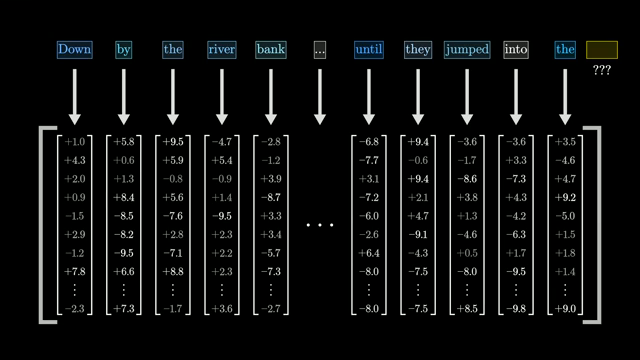
Embeddings: Words are converted

Image for chunk 6

into continuous vectors (lists of numbers) that encode semantic meaning [04:53].

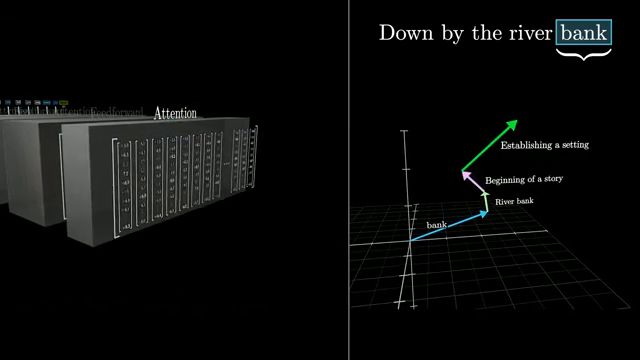
Attention Mechanism: Allows word vectors to exchange context with one another (e.g., refining the general word "bank" into the context of "river bank") [05:13].

Feed-Forward Layers: Provide additional capacity to store language patterns learned during training [05:42].

Emergent Behavior: The specific capabilities of the model emerge from parameter interactions, making it extremely difficult to pinpoint exactly why a model makes a specific prediction [06:31].

Large Language Models explained briefly

3Blue1Brown · 7M v

Image for chunk 7

Viewer Discussion & Comments

@daylight8296
just got a research internship because of you, final question was “explain neural nets like i’m 5”, used your explanation from a video with number recognition. Interviewer was super impressed with how concise i was with my response, thanks for making me an expert now blue :)
@aneurysmjs
"A Large Language Model is a sophisticated mathematical function that predicts what word comes next for any piece of text" - you just couldn't describe it better, amazing explanation.
@MinuteEarth
3B1B explains LLM with RLHF for the CHM!
@mystlake
This breakdown of large language models is 🔥. It actually reminded me of a book I just read 12 Codes of Collapse which takes this same foundation and shows how subtle AI shifts could snowball into full societal breakdowns. Watching this video felt like seeing the ‘mechanics,’ and that book felt like the warning label.
@film2filmps284
The Thai translation is excellent!!:yougotthis: I’m here to support you! creators and translators, thank you for your incredible work.