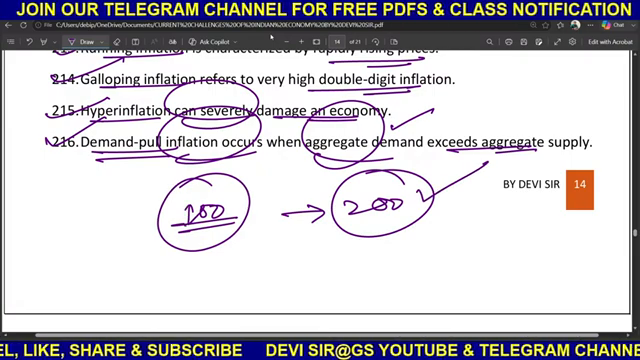
ONE LINER FACTS REVISION//CHALLANGES OF INDIAN ECONOMY//INDIAN ECONOMY//BY DEVI SIR


Channel: DEVI SIR @ GS
Uploaded by DEVI SIR @ GS on 20260717
Categories: Education
Tags:
ONE LINER FACTS REVISION//CHALLANGES OF INDIAN ECONOMY//INDIAN ECONOMY//BY DEVI SIR

This video, titled "ONE LINER FACTS REVISION//CHALLANGES OF INDIAN ECONOMY//INDIAN ECONOMY//BY DEVI SIR," is a comprehensive revision session focusing on three major economic challenges in India: Poverty, Unemployment, and Inflation. The presentation is conducted in Odia and Hindi, targeting students preparing for competitive exams.

1. Poverty in India

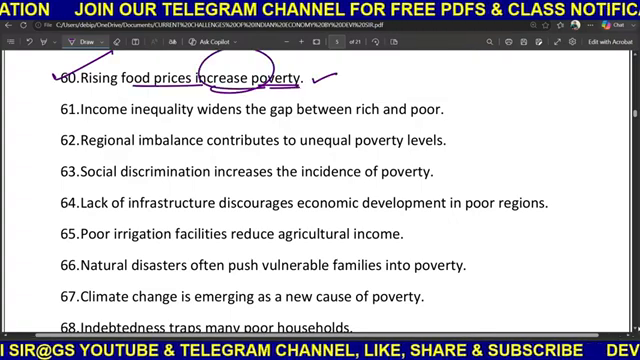
The session defines poverty as the inability of a person to meet minimum basic needs such as food, clothing, shelter, education, and health care.

Categories of Poverty:

Absolute Poverty: Inability to satisfy minimum subsisten
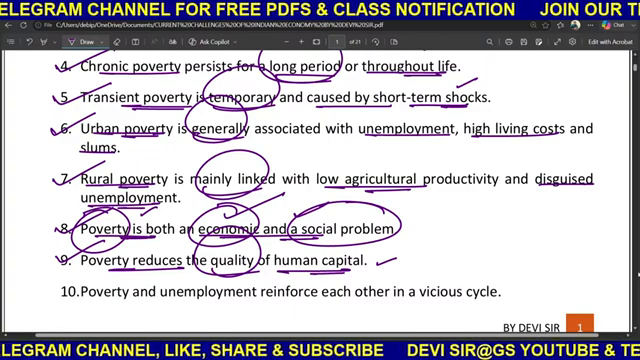
Image for chunk 1

ce requirements.

Relative Poverty: Comparing living standards across different sections of society.

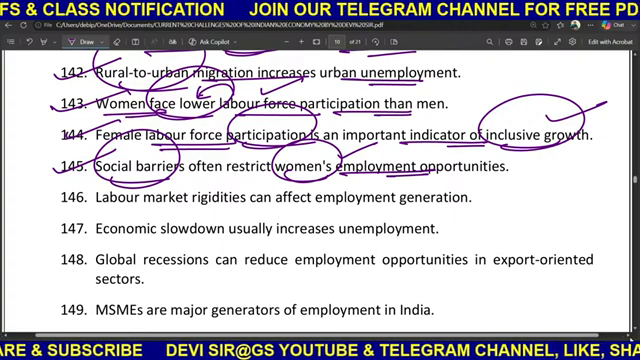
Chronic Poverty: Long-term, generational poverty.

Transient Poverty: Short-term poverty caused by unexpected life events.

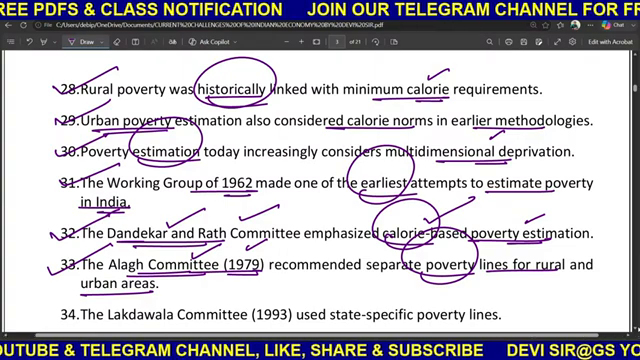
Measurement: Historically, the Planning Commission (replaced by NITI Aayog in 2015) was responsible for estimating poverty in India. Various expert committees have been used for this:

Working Group (1962): First attempt to estimate poverty.

Dandekar & Rath Committee: Focused on calorie-based estimation.

Alagh Committee (1979): Suggested separate poverty li

Image for chunk 2

nes for rural and urban areas.

Lakdawala Committee (1993): Used consumption expenditure.

Tendulkar Committee (2009): Shifted focus from calorie intake to comprehensive consumption expenditure.

Rangarajan Committee (2014): Recommended a higher poverty line than Tendulkar.

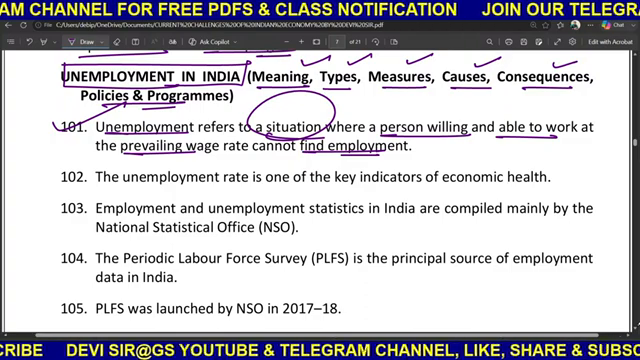
2. Unemployment in India

Unemployment is defined as a situation where people who are willing and able to work at prevailing wage rates cannot find a job.

Types of Unemployment:

Open Unemployment: Being without a job despite actively seeking one.

Disguised Unemployment: Prevalent in agriculture; where more p

Image for chunk 3

eople are working than required, resulting in zero marginal productivity.

Seasonal Unemployment: Unemployment during certain seasons (off-season).

Structural Unemployment: Arises from economic shifts, such as moving from manual to automated processes.

Frictional Unemployment: Temporary unemployment during job transitions.

Cyclical Unemployment: Caused by economic recessions.

Underemployment: Working below skill level or for fewer hours than desired.

Key Data Source: The Periodic Labour Force Survey (PLFS), introduced by the NSO in 2017, is the principal source of employment

Image for chunk 4

data in India.

3. Inflation in India

Inflation is a sustained increase in the general price level of goods and services over a period, which reduces the purchasing power of money.

Types of Inflation:

Creeping Inflation: Slow, mild rise in prices (annual rate around 3%).

Walking/Running Inflation: Rapid rise (double digits).

Hyperinflation: Extremely uncontrollable rise in prices.

Demand-Pull Inflation: Caused by aggregate demand exceeding supply.

Cost-Push Inflation: Results from increased production costs (e.g., higher wages or raw material prices).

Control Mechanisms:

Mo

Image for chunk 5

netary Policy: Managed by the RBI and its Monetary Policy Committee (MPC). They use tools like the Repo Rate, Cash Reserve Ratio (CRR), and Open Market Operations to regulate money supply.

Fiscal Policy: Managed by the government through tax adjustments and controlling unnecessary public expenditure.

Target: The RBI follows a flexible inflation targeting framework, aiming for 4% (+/- 2%).

Summary Table: Key Institutions & Concepts

Entity/Concept Function

NITI Aayog Replaced Planning Commission in 2015 for economic policy.

NSO Responsible for household and labor force survey

Image for chunk 6

s.

RBI Manages monetary policy and inflation targeting.

Poverty Line Minimum level of income/expenditure for basic needs.

MPC Decides key rates like the Repo Rate.

The video concludes by emphasizing that sustainable economic growth, employment generation, skill development, and effective implementation of welfare schemes (like MGNREGA, PM Awas Yojana, and Ayushman Bharat) are essential to overcome these challenges.

YouTube URL: https://www.youtube.com/watch?v=rNRyrzFkAv4

ONE LINER FACTS REVISION//CHALLANGES OF INDIAN ECONOMY//INDIAN ECONOMY//BY DEVI SIR

DEVI SIR @ GS · 4.5K

No image available for chunk 7

Viewer Discussion & Comments

@DEEPAK-z9h4y
Economics ra next class😮 anatu. Sir 👍 👍
@onemenarmy4444
Thank you sir ❤ most valuable classes
@rasmitabiswal8833
Bahut bahut vala session... Many more thanks Sir 🙏♥️♥️♥️♥️🙏
@MANOSMITASARANGI-v4k
Thank you sir for this valuable class
@StarGalaxy-i8c
Thank you very much sir 🙏❤ wonderful session