Scientists Think We’re Witnessing Jupiter’s Death in Real Time


Channel: BRIGHT SIDE
Uploaded by BRIGHT SIDE on 20260801
Categories: Science & Technology
Tags: brightside, brightsideglobal, curiosities, earth, mystery, planet, world
Jupiter’s Great Red Spot has raged for centuries, making it the largest and most famous storm in the Solar System. But new observations suggest the colossal vortex is shrinking faster than expected, leading scientists to believe humanity may be witnessing the beginning of its final chapter. Some astronomers now believe Jupiter’s tr

This video, titled "Scientists Think We’re Witnessing Jupiter’s Death in Real Time" by BRIGHT SIDE, explores fascinating cosmic phenomena across our solar system, with a primary focus on Jupiter, its massive storms, and how it shapes planetary defense, along with other planets, moons, and distant exoplanets.

Jupiter: The King of the Solar System

Mass and Scale: Jupiter is the largest and heaviest planet in the solar system, holding 75% of the planetary mass [26:21]. It is 318 times more massive than Earth and 2.5 times heavier than all other planets combined [
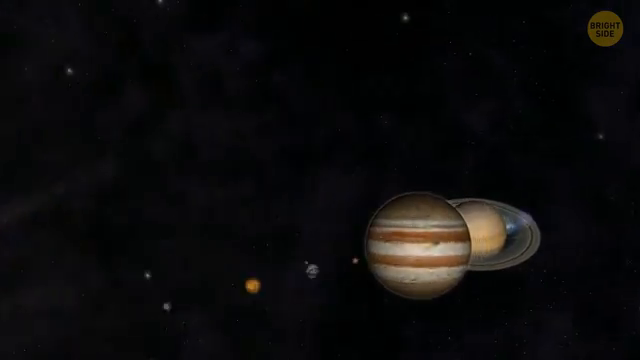
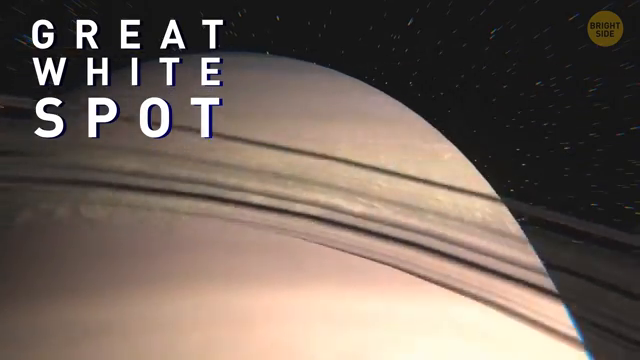
Image for chunk 1

00:05, 26:28]. Surprisingly, adding more mass would actually make it denser and cause it to pull in on itself, meaning it could be four times heavier while keeping the same size [00:13].

Fastest Rotation: It takes only 10 hours to complete a full rotation on its axis, making it the fastest-spinning planet in the solar system [00:26].

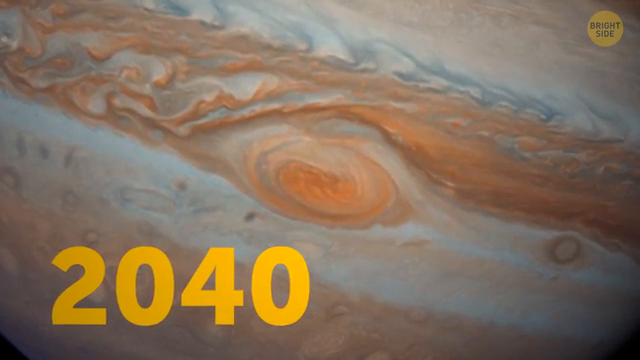
The Great Red Spot: This massive storm in the southern hemisphere is wider than Earth [09:48] and reaches wind speeds between 270 and 420 mph [33:06]. While historically believed to be shrinking or slowing down, data shows the out

Image for chunk 2

er winds have actually picked up speed [11:13], though the mystery of its internal fuel source and distinct reddish color (potentially caused by UV radiation reacting with layers below) remains under investigation [12:00].

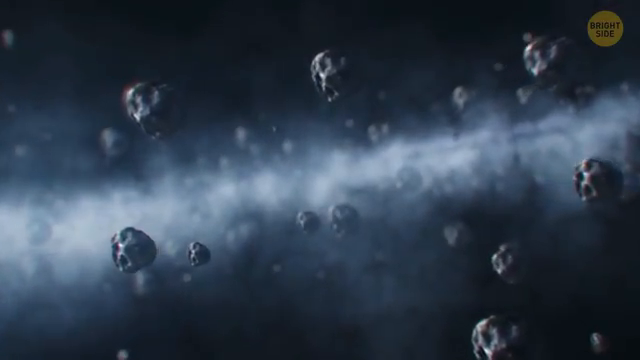
Cosmic Shield or Hooligan? Jupiter's immense gravity pulls in numerous space rocks and comets [02:17]. While some scientists view it as a protective shield that vacuums up dangerous objects—such as the famous 1994 impact of Comet Shoemaker-Levy 9 [00:52, 27:32]—others argue its gravitational pull can also deflect comets into paths that bring

Image for chunk 3

them closer to the inner solar system [27:41].

Auroras and Lightning: NASA's Juno spacecraft helped solve a 40-year mystery regarding Jupiter's X-ray auroras, revealing that ions surf the planet's magnetic field lines down into the atmosphere [31:10]. Spacecraft have also captured rare green lightning flashes within its ammonia and water clouds [35:15].

Could It Become a Star? Despite being composed largely of hydrogen and helium, Jupiter lacks the necessary mass (needing about 75 to 80 times more mass) to trigger the core nuclear fusion required to become a

Image for chunk 4

true star [23:28, 29:02].

Other Planets and Moons in the Solar System

Venus: Possesses insanely violent winds moving faster than its own rotation [02:51], a thick steam-heavy atmosphere, and evidence of a violent ancient past involving asteroid impacts [03:25].

Mars: Exhibits new craters forming frequently [04:46] and has been found by NASA's Perseverance rover to experience tiny electrical discharges—essentially mini lightning sparked by friction in dust storms [37:38].

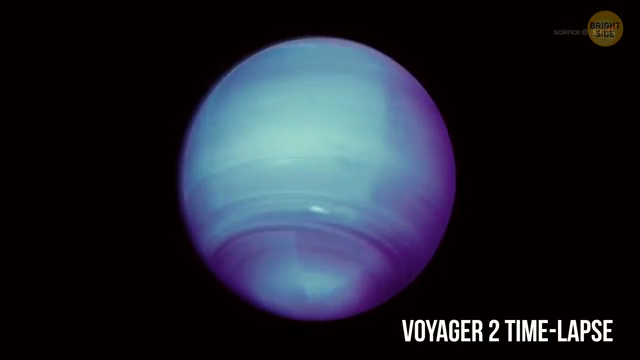
Uranus and Neptune: Often categorized as ice giants, newer models suggest they might conta

Image for chunk 5

in significantly more rock than previously thought [40:58]. Uranus features a unique sideways axial tilt likely caused by an ancient collision [39:46]. Uranus's moon Ariel may have once harbored a massive underground ocean [42:12].

Saturn and Titan: Saturn features powerful winds and the periodic Great White Spot storm system [13:52]. Its moon Titan is the only moon in the solar system with a thick nitrogen-rich atmosphere, making it a prime location of interest for potential habitability [07:52].

Europa: One of Jupiter's Galilean moons, Europa is considered o

Image for chunk 6

ne of the most promising locations to search for life due to a vast subsurface saltwater ocean hidden beneath its icy crust [29:57].

Beyond Our Solar System

Exoplanets: The video touches on extreme worlds like K2-141b, an exoplanet featuring oceans of boiling lava, supersonic winds, and rain made of vaporized rock [16:05], as well as the classifications of "super-Earths" and "hot Jupiters" found orbiting distant stars [17:01, 51:11].

http://www.youtube.com/watch?v=mBxUR_wDpMI

Scientists Think We’re Witnessing Jupiter’s Death in Real Time

BRIGHT SIDE · 123K vie

No image available for chunk 7

Viewer Discussion & Comments

@bobaneko
can you stop with the bait titles in your video it annoy the people that are interested in the topic.
@taurussho86
Jupiter is a shield
@PsytanicA
If this is true, then the Earth and solar system in general is going to lose it's mighty bodyguard.
@FRESHCLIPS2
Do you know why it gets hit so many times because it’s there to protect us from getting them
@kaesardb
3:45 Uranus also had a collision. :elbowcough:
@Tanya-ty2rc
Jupiter is the reason why we dont get bombarded by asteroids ..its very important to earth being stable enough for us to sustain life....its our bigger protective bro ...
@mnemonic_de
3:52 How do they know I lie sideways in my bed?
@Will-yf7ut
Click Bait - This incoherent video is really just a mash-up of several different AI-generated space-related videos. As Melania might say: "Be Better; and I was never on Jeffrey Epstein's plane."
@alexbowman7582
Jupiter observations are where it was realised there’s a speed of light. The Newtonian clockwork like rotations and occultations and reappearances of the 4 main Moons should be a reliable clock in the days where an accurate time was militarily important for geo positioning of ships but it was quickly realised as Jupiter went farther away then so the observations of those Moons showed longer times for their movements so there had to be a speed of light.
@HEXZ0R-
scientists think alot and yet not much of it is true ,but sounds cool
@Neko_Plays1
Here is a
@ErikV777
"But he was wounded for our transgressions, he was bruised for our iniquities: the chastisement of our peace was upon him; and with his stripes we are healed." If you know, you know.
@DayannaChirilescu
Just watched ur height video! And im 5’7 5’8 rn so I practically met my goal cuz I got 310 points!
@alexbowman7582
There’s not enough energy from thermal planetary contraction and internal nuclear fission to drive those weather belts and the Great Red Spot, there’s extra energy coming from the inside. I think there’s some sort of internal nuclear fusion probably around a solid metallic core. If you pull the plug out of a sink of water you get a water spout, similarly the Great Red Spot is an rising heat spout driven by limited internal heat rising to the surface, what else could drive a storm so massive for centuries?
@USAConceptLab
“The more you know about the Universe, the less you know.”