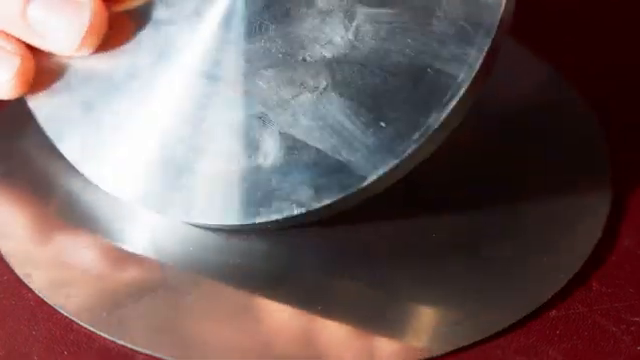
The Euler Disc Is The Wrong Shape


Channel: Steve Mould
Uploaded by Steve Mould on 20260801
Categories: Science & Technology
Tags:
Get your own Singularity Disc here: https://metmo.co.uk/singularity Large discs like the Euler disc spin for a really long time but we discovered some optimisations to make it spin even longer.

The Euler Disc Is The Wrong Shape

In this video, Steve Mould explores the physics behind spinning discs (often known as Euler discs) and details a collaborative project with Metmo to design an optimized pocket-sized version called the Singularity Disc.

Introduction and Unedited Footage

Mould opens the video by showcasing three different discs [00:00]: a standard coin, a large chunky disc, and a medium-sized mystery disc. Instead of cutting straight to the explanation, he leaves several minutes of unedited footage of t
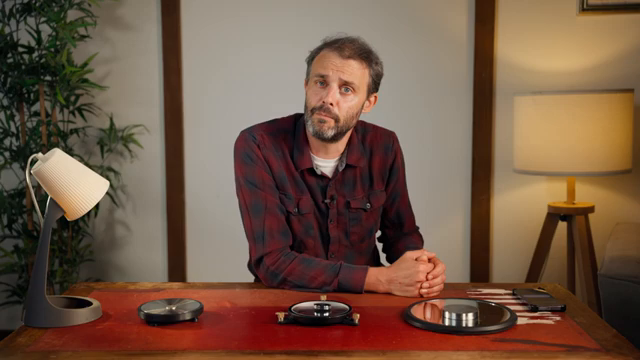
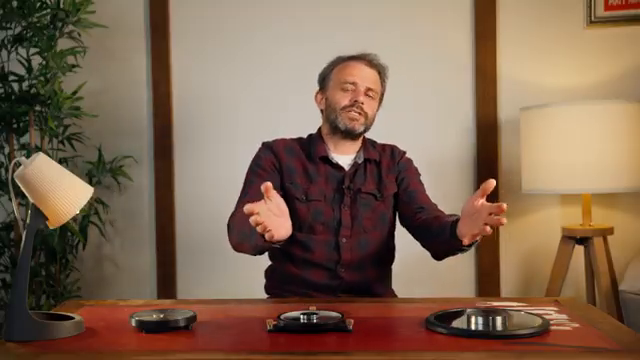
Image for chunk 1

he discs spinning [00:31], reflecting on viewer attention spans, online video trends, and the hypnotic audio produced as the discs wind down [02:15].

The Core Problem: Contour Friction

Traditional large Euler discs can spin for around 1 minute and 39 seconds, while smaller discs can run even longer [02:22]. Mould and the team at Metmo set out to engineer a compact disc that matches or exceeds these long spin times [02:59].

Air Resistance: Although commonly blamed, research shows air resistance only plays a major role

Image for chunk 2

in the final couple of seconds of a spin [04:30].

Contour Friction: The primary energy drain is contour friction [04:44]—a phenomenon distinct from rolling friction [06:08]. It involves microscopic deformation of both the disc and the surface it rolls on [05:35] as the contact point races around [06:02].

Iterations and Engineering Discoveries

The team experimented with three primary design variables, often finding that the empirical results directly defied their initial expectations:

Mass Distribution (Rings vs. Cones

Image for chunk 3

):

Mould initially hypothesized that transforming the disc into a ring [03:37] would concentrate mass near the edge, retain more kinetic energy [03:50], and lower the speed of the contact point to reduce contour friction [06:38]. However, testing revealed that rings performed worse than solid discs [04:17].

Reversing the idea by adding extra mass close to the center resulted in a cone profile, which proved to be significantly more efficient [08:21].

They also tested different materials like tungsten, which yields high

Image for chunk 4

er density and better extreme personal-best spin times due to its higher initial kinetic energy capacity, though it is more expensive and difficult to machine [08:26].

Edge Roundness:

Testing various edge profiles disproved the assumption that maximum roundness is ideal [09:41]. Instead, an optimum roundness with about a 1 mm radius yielded the best performance [09:44].

Sharp edges proved detrimental because they focus mass onto a smaller area, causing heavier deformation on both the edge and the base [09:57].

Base Co

Image for chunk 5

mposition and Stability:

After testing multiple materials, thick glass emerged as the superior base surface [10:35]. Unlike tougher metals like steel, glass excels at elastic deformation, returning energy back to the disc rather than absorbing it plastically [10:51].

To prevent base wobble—a major contributor to energy loss—they utilized a three-legged design with adjustable outriggers made from rigid engineering nylon (PA12) [12:09]. Three-legged configurations naturally eliminate table wobbles, and outriggers make l

Image for chunk 6

eveling adjustments accessible even while the disc is spinning [12:15].

The Singularity Disc

Named after the sound it produces at the end of its spin [16:10]—which mirrors physical finite-time singularities found in colliding black holes or bouncing ball bearings [16:18]—the final product is available in options like tungsten or stainless steel cones alongside a specialized glass base [14:26].

Check out the video here: https://www.youtube.com/watch?v=ti2qiU_JTUQ

The Euler Disc Is The Wrong Shape

Steve Mould · 328K vie

No image available for chunk 7

Viewer Discussion & Comments

@SteveMould
Get your own Singularity Disc here: https://metmo.co.uk/singularity
@caliigo
When Steve said "don't put it on 2x speed" I felt judged, but I may have heard him wrong because I had it on 2x speed.
@matheusboaron_
while michael is able to stay perfectly silent, steve is able to stay perfectly unsilent
@onelarebe
The SlowMo guys should take their fastest camera and capture the final second of Disc movement
@x9x9x9x9x9
Best first 2:25 in any video. The "how cool was that though" with the hyper cuts got me to full laugh alone like a lunatic.
@robotskirts
Damn, I already blew my monthly toy budget on a grill scrubber.
@drgazter
“Don’t put it in 2 times speed.”
@janskeet1382
I loved the 'forshadowing' gag. 😃
@reffyaldo
01:20 Imagine if steve said "well i'm not Michael Steven... Even though i am"
@GaraxyAurora
The sound the discs made just gave your speech that much more tension.
@Xanderviceory
this was the best infomercial i've ever seen and thats all that was on tv after 11pm in the 90s
@Johnwalter1044
The SlowMo guys should take their fastest camera and film that last second of Disc movement.
@TsandLman
The sound of the spinning disk as it nears the end is also a good example of frequency modulation. The sound of the disk slip-sticking against the base gets louder or softer depending on the disk's orientation relative to your ears. At first, the frequency of the change in volume is below the threshold of human hearing, but as it increases, it becomes an audible tone in itself, increasing in pitch right until the end.
@SchiferlED
A thought on why the donut disk performs worse: The hole is allowing air pressure under the disk to equalize with air above the disk. The full disk traps air under it as it spins, making a cushion of higher pressure air that holds the disk up longer and reduces friction.
@ChrisMacdonald-ns8rx
@stevemould I think you may have underestimated/disregarded a particular factor; elastic matching between the disc and the base. What I mean is that contour compression in the surface will result in an elastic compression and rebound, but this will go in two directions, one back on the disc and the other will propagate through the base, reflect and come back. I would speculate that the reason you can't simply 'go bigger' and get a better result is that you would need different thicknesses of base, and the speed (of sound) through the base and its thickness might therefore play its part. You might have to fire a solid block of porcelain an inch or two thick to maximise this effect (for example).