The European Mindset is Destroying Europe


Channel: 2 and 20
Uploaded by 2 and 20 on 20260302
Categories: News & Politics
Tags: europe economy, european union, eu vs usa, europe vs america, europes decline, europe tech industry, silicon valley vs europe, brain drain europe, europe regulation, europe startups, venture capital europe, why europe is falling behind, why europe cant compete, europe losing to america, european economy explained, europe technology, europe vs us economy, macron AI, draghi report, europe economy crisis, EU regulation, europe vs united states, europe economy 2025, 2and20
Give Odoo a Try Here: https://www.odoo.com/r/qJb Our Discord Community (FREE): https://discord.com/invite/Efbjh7Qj4V 📚 Review our sources ►https://pastebin.com/ctFDZNMQ 💻 Check out our other socials ► linktr.ee/2and20 ✋ Get in touch ► kamal@2and20media.com Europe has more AI talent per capita than the US, nine of the world's t

Based on the content of the video "The European Mindset is Destroying Europe" by the channel "2 and 20," here is a detailed breakdown of the arguments, data, and visual models presented regarding why Europe's tech sector is lagging behind the US and China.

1. The Disconnect in Tech Scale and Innovation

The video opens by highlighting a disconnect between how European politicians view innovation and the reality of global tech economics [00:00].

The Example: In February 2026, France announced a €30 million fund to attract 40 wor
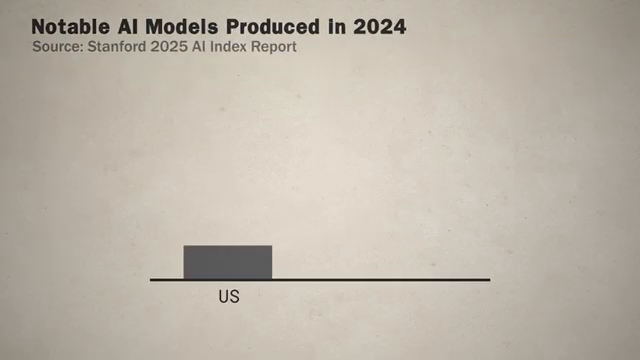
Image for chunk 1

ld-class AI researchers (€750,000 each) [00:00]. The host compares this to the private sector in the US, where senior researchers at Anthropic earn $1.0M–$1.5M, OpenAI pays $1.5M–$3.0M, and Meta packages for top scientists have crossed $100M [00:15].

Key Metrics Contrast:

AI Investment: Europe invests only 4% of the amount Washington invests in AI [00:47].

AI Models (2024): The US produced 40 notable AI models, whereas Europe produced only 3 [00:55].

Unicorns: Despite having double the population of the US, Europe has produced

Image for chunk 2

only 226 unicorns compared to America's 868 [01:05].

2. The Lack of Company Formation and "Old Money"

The video argues that the European ecosystem struggles to create massive new businesses [01:22].

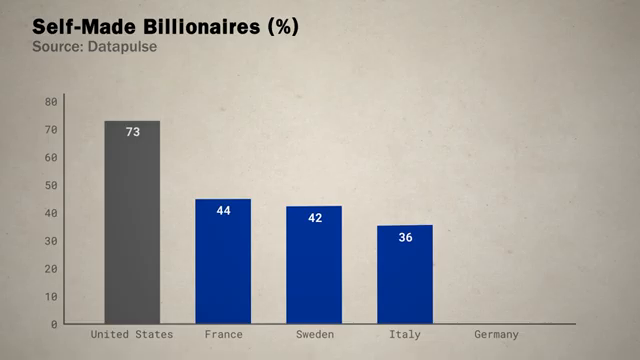
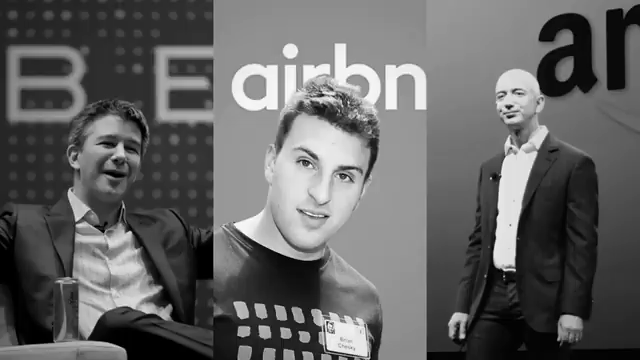
Billionaire Profiles: 73% of US billionaires are self-made, and the top 10 richest Americans are all self-made (mostly in tech) [01:34]. In contrast, the percentages of self-made billionaires are much lower in Europe: France (44%), Sweden (42%), Italy (36%), and Germany (only 25%) [01:49]. European wealth remains predominantly "ol

Image for chunk 3

d money" [02:00].

The 50-Year Market Cap Gap: There is no company in the European Union with a market cap exceeding €100 billion that was built from scratch in the last 50 years [02:07]. Meanwhile, all six US companies valued over €1 trillion were built during this same window [02:14].

3. Regulatory Burden (The "Silicon Ceiling")

The video analyzes how the EU's pride in regulation ("the US innovates, China replicates, the EU regulates") actively harms local startups [02:23].

A. GDPR (General Data Protection Regulation)

Instead

Image for chunk 4

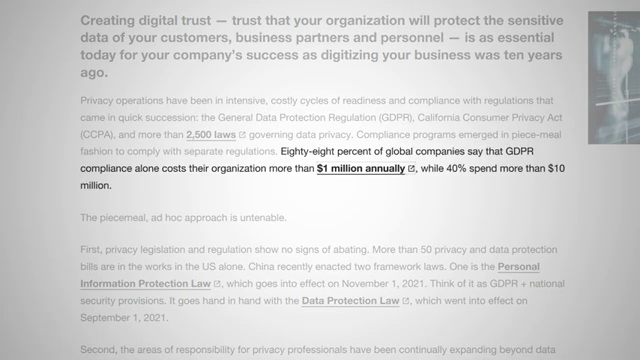
of treating data as a business asset like the US, the EU treats it as a liability [02:54]. Compliance introduces high costs that small businesses cannot absorb as easily as massive firms like Meta, Google, or Apple [04:49]:

The Record of Processing Activities (RoPA): Requires 40 to 80 hours of upfront investment to map out data collections [03:18].

Maintenance Costs: A small business spends roughly $10,000/year on software, 4–8 labor hours per month, and $3,000–$7,000/year for legal consultations, plus up to $20,000 if audite

Image for chunk 5

d [03:38].

Engineering Requirements: Enforcing features like a 30-day "right to be forgotten" button, data exportability, and strict encryption across transit and servers requires highly documented compliance structures [04:19].

B. The EU AI Act

The framework created a strict "high-risk AI" classification [06:12].

EU politicians anticipated that only 5% to 15% of applications would fall into this category [06:27].

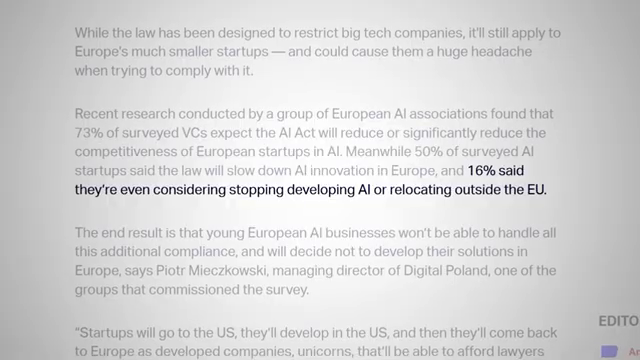
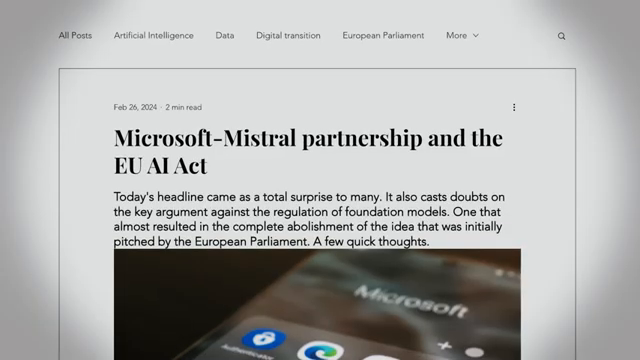
Independent studies revealed that 33% of all AI products fall into the high-risk framework, creating hundreds of t

Image for chunk 6

housands of dollars in extra compliance overhead [06:35].

As a result, 16% of AI startups in the EU have actively considered relocating to the US or the UK [06:49].

Impact of Regulation on Profit Margins:

+------------------------+-------------------+

| Firm Size | Profit Decline |

+------------------------+-------------------+

| Large IT Firms | -4.6% |

| Small IT Firms | -12.1% |

+------------------------+-------------------+

Note: California's privacy law (CCPA) explici

Image for chunk 7

tly exempts companies making under $25 million in revenue to protect startups, a nuance the EU did not adopt [05:46].

4. The Shortage of Venture Capital

Startups depend on venture capital (VC) funds because banks do not lend to high-risk early-stage tech ideas [09:29].

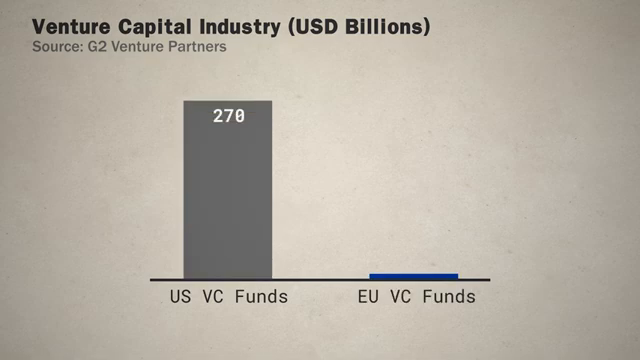
Fund Capitalization: US venture capital funds manage $270 billion, which is over six times the $44 billion managed by EU-based funds [10:49].

The Institutional Investment Gap: US venture funds rely heavily on allocations from pension funds and insurance companie

Image for chunk 8

s [11:05]. Following the ERISA reforms of the 1970s, US pension systems embraced alternative asset risk [11:20].

Across Europe, pension funds manage over €3 trillion, but only 0.12% goes to venture capital [11:34].

In the US, pension funds allocate 1.9% (nearly 16 times higher) to venture capital [11:43].

Even successful European startups (e.g., Klarna, Spotify, Bolt) have had to raise their major funding rounds from US venture capital firms and ultimately choose to go public on US stock exchanges [12:00].

5. Market Fragmentat

Image for chunk 9

ion and Bureaucracy

While the EU is a unified trading bloc on paper, it operates as 27 fragmented domestic ecosystems [12:42].

[ US Market Structure ] [ EU Market Structure ]

+----------------------------+ +-------------+-------------+

| 300 Million Consumers | | France | Germany |

| Single Language (Eng) | | (French/ | (German/ |

| Homogeneous Legal System | | Legal Docs) | Legal Docs) |

+----------------------------+ +-------------+-------------+

Image for chunk 10

| 27 countries, 24 languages|

| Max single block: Germany |

| (80 million people) |

+---------------------------+

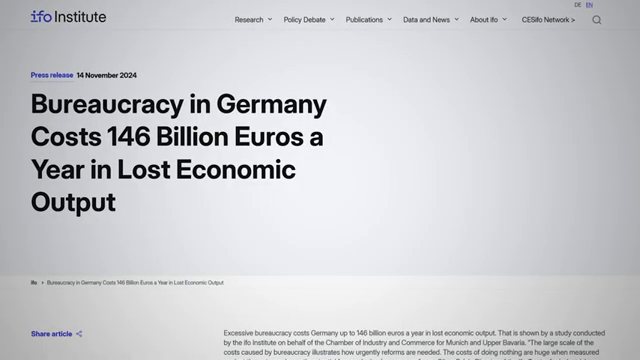
A European company scaling from France to Germany must deal with entirely different corporate structures, labor laws, legal regimes, and languages [13:32]. The largest single domestic launch market available in Europe is Germany (80 million people), which suffers from notoriousl

Image for chunk 11

y slow bureaucratic processes [14:45].

6. Brain Drain: The Outflow of Top Talent

Europe excels at producing high-tier technical talent and holds roughly 30% more AI talent per capita than the US [16:12]. However, significant tax burdens and lower compensation drive this talent abroad [16:27].

Salary Disparity: A senior software engineer in Paris commands an average salary of roughly $65,000, whereas the exact same position in the US pays an average of $320,000 [16:47].

Since 2019, the migration of European tech workers to the

Image for chunk 12

US has risen by 15%, with 3.4% of all EU-born graduates holding advanced degrees choosing to move [17:03].

7. The Geopolitical and Historical Bottleneck

Political efforts to fix this fragmentation, such as the recently proposed "28th regime" business framework, have historically failed [17:25]. A similar initiative in 2008 (the European private company statute) spent five years in negotiations before being shelved because 27 different parliaments and special interest groups couldn't agree on standard worker representation rule

Image for chunk 13

s [17:42]. Furthermore, a sequence of compounding crises over the last 15 years—including the Eurozone crisis, Brexit, the migrant crisis, the pandemic, and the war in Ukraine—has exacerbated deep internal differences between member states [18:06].

Conclusion Example: The Story of OpenClaw

The video concludes with a case study of Austrian developer Peter Steinberger, who launched an open-source tool called "OpenClaw" [19:14].

US Reaction: The project quickly earned 150,000+ GitHub stars, and the CEOs of major American tech gia

Image for chunk 14

nts (OpenAI, Meta, Microsoft) contacted him directly to collaborate [19:22].

EU Reaction: No politicians or business leaders reached out with support. Instead, European regulators flagged him for potential cyber security threats and accused him of violating GDPR, NIS-2, and the AI Act [19:39].

The Outcome: Before the EU paperwork was finalized, OpenAI acquired his technology and relocated him to San Francisco [19:52].

URL: http://www.youtube.com/watch?v=MVwFJt9ml2s

The European Mindset is Destroying Europe

2 and 20 · 106K view

Image for chunk 15

Viewer Discussion & Comments

@2and20
Give Odoo a Try Here: https://www.odoo.com/r/qJb
@EduPimentel
This video focuses on the downside in market of overregulation and rightfully that might be true, but no wonder Europeans have a much higher standard of living with an incredibly more positive happiness index, it's because the European union is doing one thing, protecting the wellbeing of the people... If this means Europe is falling behind on the megalomaniac race for ultimate billionaire aristocracy, then I like living in this backwater continent..
@robwallace9489
Framing user rights to their own data as "destroying Europe" because it slows companies down is pretty stupid
@greenhacker0com
Id rather have governments that prioritizes human & worker rights then Maximum shareholder value and no oversight..
@bartoszszalaj
The whole GDPR section in this video basically tries to convince the audience that allowing people to retain full control and ownership of their private data is somehow bad because it's not convenient for start ups and big corporations. As a normal, everyday citizen I choose feeling like a proper, independent human being over corporate convenience and innovation.