The Horrifying story of Delta Flight 1080


Channel: Green Dot Aviation
Uploaded by Green Dot Aviation on 20260801
Categories: Entertainment
Tags:
Download Opera for free using my link! 👉 https://opr.as/07-Opera-browser-greendotaviationyt 🟢 Patreon supporters got early access to this video. Support the channel and get exclusive perks here! https://www.patreon.com/GreenDotAviation Follow me! 👇✈️👇 https://discord.gg/w7bZWQARJv https://www.instagram.com/greendot_aviation/ ht

Delta Air Lines Flight 1080: The Miracle Survival of a TriStar

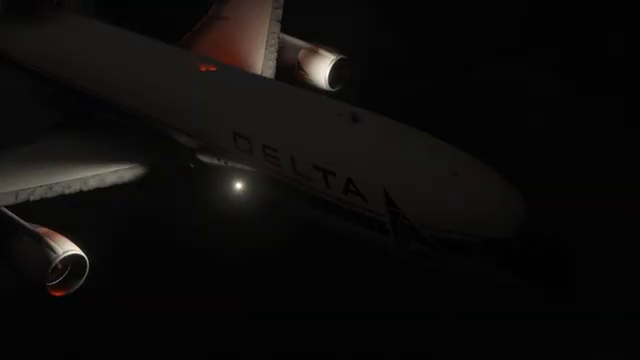
On April 12, 1977, Delta Air Lines Flight 1080—a Lockheed L-1011 TriStar carrying 41 passengers and 11 crew members—departed San Diego International Airport for Los Angeles en route to Atlanta [00:42]. Moments after rotation, the aircraft experienced an unprecedented control failure that threatened to stall the massive trijet and crash it into the Pacific Ocean [00:13].

The Flight Crew & Background

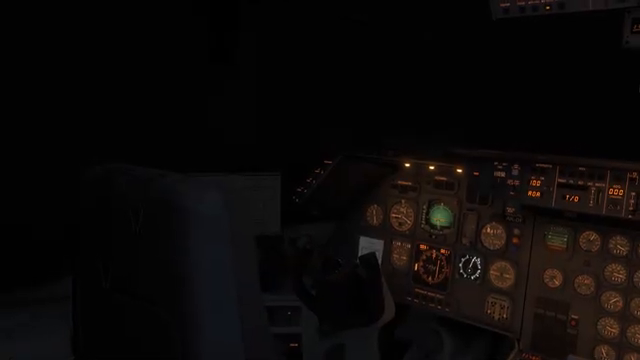
Commanding the flight was Captain Jack McMahon (56), a veteran pilot with 36 years of aviation experience, including military service in World War II and decades of commercial flying across more than 12 aircraft types [01:21]. Assisting him were First Officer Wilbur Radford (42) [
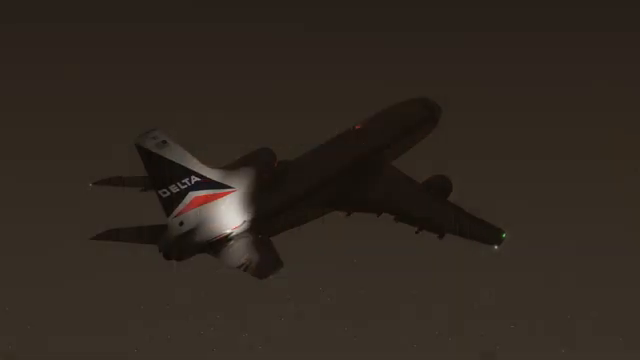
Image for chunk 1

02:21] and Flight Engineer Steven Height (30), who was making his first official flight as an L-1011 flight engineer [02:54].

The crew took off under dark, overcast skies with cloud cover extending from 800 ft to 9,000 ft [07:09].

Emergency After Takeoff

As the L-1011 reached its rotation speed on Runway 27, the nose began pitching up violently on its own before Captain McMahon even pulled back on his control column [08:00].

Takeoff Roll → Uncommanded Nose-Up Pitch → Control Column Pushed Fully Forward (No Effect)

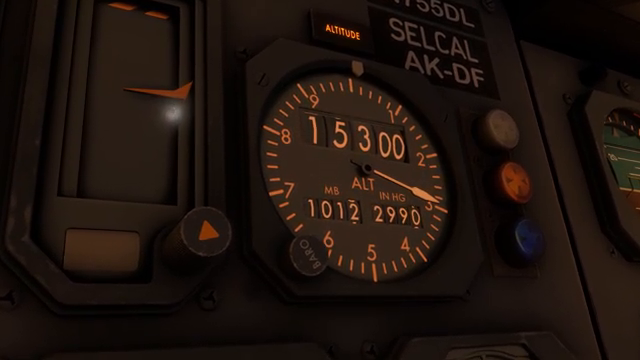
Despite McMahon jamming the control column completely forward, the aircraft pitched up to 18° and then 22°, causing airspeed to decay below V

2

(138 knots) [15:38]. The aircraft was on the verge of an aerodynamic stall over t

Image for chunk 2

he ocean in complete darkness [16:17].

System Diagnostic Diagnostic Attempts

Stabilator & Trim: The horizontal stabilizer was physically set correctly at 3.5° [08:57], but electric and manual pitch trims were ineffective because the trim system indicated it was already at the full nose-down limit [11:46].

Hydraulics & Breakers: Flight Engineer Height verified all four independent 3,000 PSI hydraulic systems were operating normally, and no circuit breakers had tripped [12:41].

Fault Lights: No warning or caution lights illuminated in the cockpit [13:24]. The aircraft's system computers were unaware that a mechanical jam had occurred.

Captain McMahon’s Creative Flying Technique

Realizing standard pitch control inputs were failing, Captain

Image for chunk 3

McMahon devised an innovative solution using differential thrust [18:00]:

Reducing Wing Engine Thrust: Throttle on Engines #1 and #3 (mounted under the wings) was brought back, reducing the pitch-up moment caused by underslung engines [18:23].

Maximizing Tail Engine Thrust: Engine #2 (mounted high in the tail above the center of gravity) was pushed to full power, producing a nose-down moment [18:51].

Counteracting Left Roll: The jam also produced an uncommanded roll to the left, which McMahon counteracted by advancing Engine #1 slightly ahead of Engine #3 [20:03].

Using this thrust arrangement, the pitch settled around 18°, allowing the aircraft to gain airspeed past 150 knots and enabling the crew to retract the flaps from 10° to 4° [

Image for chunk 4

20:12].

Strategy & Approach into Los Angeles (LAX)

The crew managed to level off at 10,000 ft by maintaining a delicate airspeed window between 190 and 200 knots [25:41]. Flight attendants moved all passengers to the front of the cabin to shift the center of gravity forward [27:09].

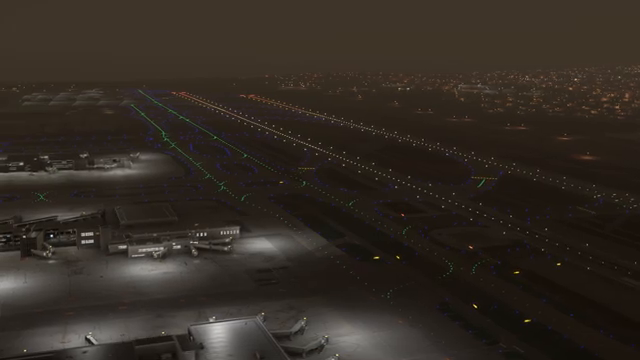
After evaluating alternative diversion options—such as Palmdale, Edwards Air Force Base, Las Vegas, and Phoenix—the crew selected Los Angeles International Airport (LAX) [29:43]. LAX offered long sea-level runways, full crash-fire-rescue support, and an approach over water in case control was lost [30:03].

Approach Setup (LAX Runway 06R)

├── Flaps set to 10°, then 18° [00:35:11]

├── Target speed: 165–170 knots [00:34:26]

├── Gear Down at 2,500 ft → Violen

Image for chunk 5

t pitch-up counteracted by Engine #2 burst [00:40:15]

└── Breakout of clouds at 700 ft [00:42:48]

At 12:45 AM, Flight 1080 touched down on Runway 06R at 170 knots without flaring or deploying ground spoilers to avoid pitch fluctuations [43:50]. McMahon applied full wheel braking and max reverse thrust on Engines #1 and #3 to bring the TriStar to a stop safely without a single injury [44:28].

Investigation Findings & Aftermath

An investigation by the National Transportation Safety Board (NTSB) revealed the root cause:

Corroded Crank Bearing: Moisture had accumulated inside the left elevator control crank mechanism over repeated pressurization cycles, causing severe corrosion [47:03].

Control Jam: During the pre-takeoff control check on

Image for chunk 6

the ground in San Diego, the left elevator jammed in the fully trailing-edge-up position [46:38].

Lack of Indication: The L-1011 cockpit instruments measured the overall stabilator position rather than individual elevator surfaces, hiding the jammed elevator from the crew [47:09].

Following the incident, Lockheed issued service bulletins requiring water deflectors and improved seals on elevator bearings across the L-1011 fleet [47:18]. Captain Jack McMahon and his crew were awarded commendations for their exceptional airmanship in saving the flight [46:20].

Want to know more about the structural differences between traditional elevators and an L-1011 stabilator?

Yes

The Horrifying story of Delta Flight 1080

Green Dot Aviation · 70K view

No image available for chunk 7

Viewer Discussion & Comments

@GreenDotAviation
Download Opera for free using my link! 👉 https://opr.as/07-Opera-browser-greendotaviationyt
@CaptainPicard1701D
Green Dot here on Friday night for the win!
@sonbui7063
“Wow, that was a near death experience, let’s do that again” - Captain McMahon
@TjSBMD1810
The way how the pilots managed the situation was remarkable.
@cheea5
All that for a snarky complaint from a passenger 😅 I'd be so irritated
@everixisbored
The guts that cockpit crew had to have to handle a situation that, frankly, should have been fatal, still make a basically perfect landing, AND THEN IMMEDIATELY TURN AROUND AND GET ON ANOTHER PLANE is insane.
@Escarabajo_
Ah.
@Gregthecool800
And Green Dot arrives at the terminal just in time!
@chikenmcnuggets4899
its crazy that the passenger has the audacity indirectly confront the pilot about being late .even if they didn't know what went wrong, disrespecting someone doing such a already difficult job is absurd.
@mt_baldwin
I do like the way Greendot presents these incidents, by not revealing what the problem is, or cause of the problem, until after the resolution, it lets us experience the confusion the way the pilots did. I've seen so many of these now that I usually get it pretty fast, but this time I had no clue what was wrong.
@nikolaa1625
I know the passengers didn’t know about the danger, but imagine one minute you’re thinking „I’m gonna die in a few minutes, that’s non-negotiable, but where do I crash so the least amount of people die with me“ and the next minute you have to deal with a passenger who’s bummed out about this little stunt of yours
@ScubaNerd_02
One of the very few channels I take the extra effort to watch on the TV
@LeftStrobeAviation
You've explained the Tristar really well. Nice production on it Emmet!
@pleaseenteranamelol711
I wonder how those passengers felt when they learned what actually happened to their plane. The crew was so competent they barely had any inkling they were in any danger!
@leerose1056
I finally screwed up my courage to begin a terrible journey I must make this night, but now I will not have to undertake it alone. Wishing GreenDotAviation and all of you a better night.