What China Understands About AI That the US Doesn’t


Channel: The Infographics Show
Uploaded by The Infographics Show on 20260714
Categories: Education
Tags:
What China understands about AI that the US doesn’t is surprisingly simple. The future of artificial intelligence will not be decided by better software alone. It will be decided by energy. While Microsoft, Amazon, Google, and Meta compete to secure nuclear reactors and private power connections for their data centers, American hou

This video, "What China Understands About AI That the US Doesn’t," analyzes the diverging energy strategies of the United States and China as they compete for dominance in the Artificial Intelligence sector. It argues that while the US is creating a fragmented, privatize
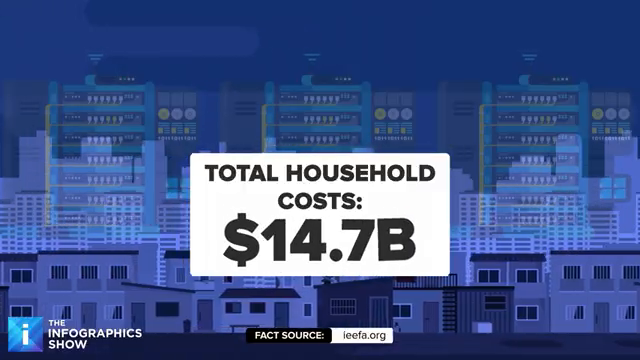

Image for chunk 1

d energy grid to support AI data centers at the expense of public utility costs, China is implementing a coordinated, national strategy to align computing capacity with abundant energy sources.

The American Context: Private Reservoirs vs. Public Grid

The video highlights

Image for chunk 2

a growing crisis in the US power system driven by the massive electricity requirements of AI server farms.

The AI Tax: In the PJM grid region (serving 67 million Americans), auction prices for electricity capacity have surged due to demand from data centers, with prices

Image for chunk 3

jumping 833% in a single year [00:34]. This results in significant, long-term costs for ordinary households [01:40].

Privatization of Clean Energy: Hyperscalers (Microsoft, Amazon, etc.) are securing dedicated, carbon-free nuclear power, effectively "cannibalizing" clea

Image for chunk 4

n energy resources that would otherwise support the shared public grid [02:23], [03:33].

Reliability Requirements: AI data centers require "5 nines" (99.999%) uptime [04:20]. Because renewables are intermittent, these companies are prioritizing firm nuclear power [04:46]

Image for chunk 5

.

Infrastructure Stress: The immense heat generated by advanced AI chips requires direct liquid cooling, further driving the need for reliable, round-the-clock power [05:11]. This has led to the delayed retirement of fossil-fuel plants, which are kept online to ensure gr

Image for chunk 6

id stability [05:37].

The Efficiency Trap: Although AI chips are becoming more energy-efficient, total electricity demand is exploding because cheaper, faster computing leads to vastly increased usage—a phenomenon the video identifies as "Jevons' Paradox" [09:09], [09:42

Image for chunk 7

].

Data Center Alley: Northern Virginia, the hub of North American internet traffic, exemplifies the strain, with Dominion Energy planning massive infrastructure projects whose costs are spread across the entire regional grid, regardless of whether residents actually ben

Image for chunk 8

efit from the data centers [06:25], [07:38].

The Chinese Context: The East-to-West Master Plan

In contrast to the US approach, China is executing a centralized, state-led strategy to optimize energy use for computing.

National Restructuring: The "East Data West Computing

Image for chunk 9

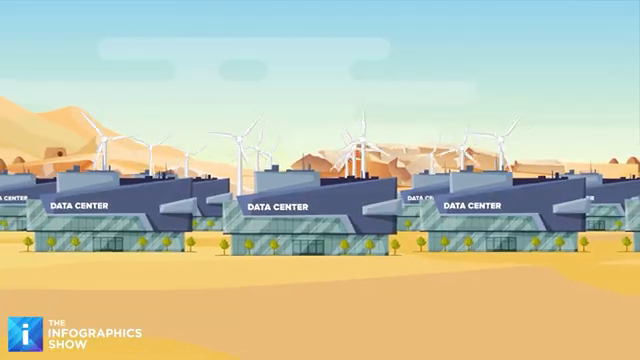
Initiative" directs computing tasks away from dense coastal cities to inland, western regions where land and renewable energy (hydro, wind, solar) are abundant [11:26], [12:21].

Strategic Alignment: By moving the demand to the supply, China avoids the need for massive n

Image for chunk 10

ew transmission infrastructure while ensuring data centers have access to cheap, stable power [12:35].

Efficiency: China treats energy and computing as a singular state asset, leading to significantly higher energy efficiency ratings for its data centers compared to the

Image for chunk 11

global average [13:13], [13:40].

Comparison: Two Different Models

The video summarizes the core conflict as a fundamental difference in governance and strategy:

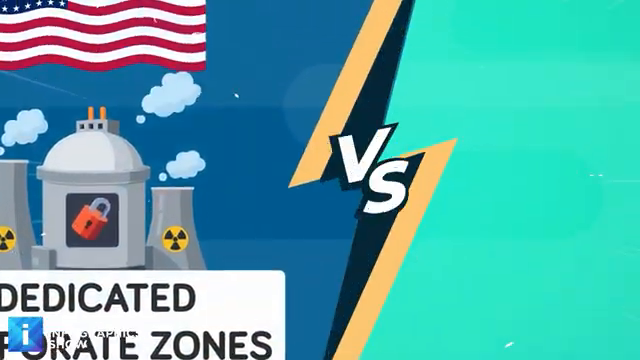
Feature United States China

Strategy Privatized/Corporate-led Coordinated/State-led

Grid Structure Two-tier (C

Image for chunk 12

orporate vs. Public) Unified National System

Resource Allocation Behind-the-meter corporate deals Geographically placed at energy sources

Primary Driver Market competition / Private profit Industrial strategy / Resource optimization

Ultimately, the video concludes that t

Image for chunk 13

he AI race will be won by the side that can best secure scalable, always-on energy, as software and hardware leads are temporary, while energy infrastructure takes decades to build [19:43]. It warns that the US is creating a system where the costs of this transition are

Image for chunk 14

borne by the public, while the infrastructure itself is becoming a private utility for the world's largest technology companies [18:13], [20:02].

http://www.youtube.com/watch?v=5u2rQevZPF4

What China Understands About AI That the US Doesn’t

The Infographics Show · 158K v

Image for chunk 15

Viewer Discussion & Comments

@taputechnic
"Socialize the costs, privatize the profits."
@Rev-Max
Maybe we should stop auctioning off power?
@sleepyjoe4529
Wow it's almost as if China's government is planning 5-10 years at a time while America's government is planning for shot-term profits over people.
@xcar0982
Welcome to our cyberpunk future
@frostboy1987
Anyone else first read, “What China Understands About AI That the U.S. Doesn’t”? Or is that just me?