You Are Overworked and Underpaid


Channel: The Infographics Show
Uploaded by The Infographics Show on 20260717
Categories: Education
Tags:
You are overworked and underpaid, but it isn’t because you’re lazy or failing to work hard enough. Productivity has increased, companies are generating more wealth than ever, and employees are taking on heavier workloads. Yet wages are struggling to keep up with housing, food, fuel, healthcare, and nearly every other basic expense.

Here is a detailed breakdown of the content of the video titled "The Math Behind the Modern Economy is Broken" from the channel The Infographics Show:

Overview of the Economic Crisis

The video sets a stark reality: modern workers are producing more value than any generation in history, but winning financially has become physically impossible. The economic system is not failing; it is working exa


Image for chunk 1

ctly as it was designed to, making the "American Dream" unreachable for the average person.

1980 vs. 2026 Median Home Price to Income Ratio

1980 [###] 3.5x Income

2026 [##########] 10x+ Income (Major Hubs)

1. The Inflation Trap and Financial History [00:45]

The primary reason money does not go as far today is systemic inflation.

Housing Costs: In Q1 of 1980, the median American home p

Image for chunk 2

rice was $63,700 [00:51]. By Q1 of 2026, it ballooned to $433,000 [00:59].

Historical Spikes: Historically, major price spikes only occurred during massive national crises (The Revolutionary War, the Civil War, and World War II) [01:42]. In the past, prices fell back down to a normal baseline after the wars ended. However, after World War II, the cost of living kept rising permanently.

The Feder

Image for chunk 3

al Reserve's Stance: The Federal Reserve deliberately mints new cash to inject into circulation (increasing the money supply) because they believe gradual inflation stimulates tech investment and productivity [02:18].

2. The Fear of the Deflationary Spiral [02:54]

The post-WWII strategy of permanent inflation was implemented to avoid a "deflationary spiral," which was the core driver of the Grea

Image for chunk 4

t Depression [03:08].

[Economic Crisis] -> Less Disposable Income

|

v

[Reduced Demand] -> Prices Drop

|

v

[Downscaled Production] -> Workers Laid Off

|

v

[Fewer Spenders] -> Warehouses Fill up / Prices Plummet Further

3. Baumol's Cost Disease [03:52]

Intentional inflation assumes that as technology increases workplace effi

Image for chunk 5

ciency, wages will rise to match the costs. However, this fails in labor-intensive sectors that hit an "efficiency plateau" (e.g., healthcare, education, and the arts) [04:20]. A singer today cannot sing a song any faster or more efficiently than a singer a century ago [04:34]. Because low-productivity sectors must still raise wages to compete for talent with high-tech sectors, the costs are pus

Image for chunk 6

hed entirely onto the consumer, fueling structural economic rot [05:11].

4. The Shrinking Labor Share of Income [05:42]

The labor share of income measures how much wealth goes to workers' paychecks versus owners and shareholders. Four key factors are systematically shifting this wealth away from workers:

Technological Advancement: A 1% increase in R&D spending drops the labor share by up to 1.3%

Image for chunk 7

[06:23]. The threat of machine replacement kills worker bargaining power.

Globalization: A 1% increase in export revenue drops the labor share by 0.3% [06:37]. Companies leverage their freedom to relocate if workers demand more.

High Market Concentration: Low competition allows a small handful of corporate giants to keep workforces lean and dictate terms [06:49].

Intangible Factors: Copyrights,

Image for chunk 8

patents, and trademarks lock down bargaining power firmly at the top of the corporate pyramid [07:15].

5. "The Great Flattening" and Decreased Mobility [07:54]

Internal mobility—the classic concept of climbing the corporate ladder from entry-level to executive—is largely dead. Companies like Amazon, Google, Microsoft, Walmart, and Starbucks are actively downsizing middle management to cut costs

Image for chunk 9

[08:41]. This "great flattening" destroys the promotional bridge between ground-level labor and capital holders.

6. The Rise of Overwork and Income Stacking [09:13]

Stagnant wages and soaring costs have forced millions into survival strategies:

Multiple Jobs: As of late 2025, 9.3 million Americans (5.7% of the active labor force) worked multiple jobs [09:24]. Half a million of them worked two f

Image for chunk 10

ull-time jobs simultaneously [09:39].

Income Stacking: Gen Z is increasingly locked out of salaried positions with benefits, relying instead on stacking multiple freelance or contractor roles [09:53].

7. Workplace "Efficiency" and Toxic Strategies [10:23]

Corporate culture prioritizes shareholder returns via hyper-efficient strategies that destroy human health:

Lean Staffing / Just-In-Time Staff

Image for chunk 11

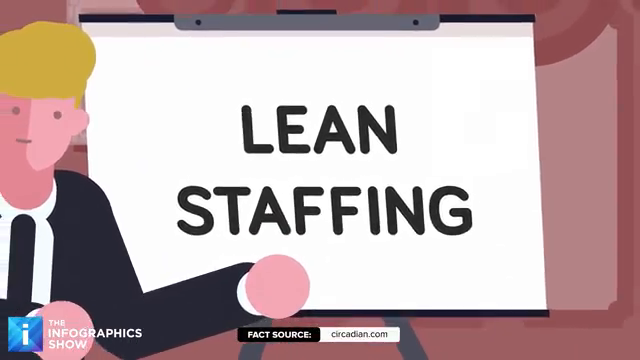
ing: Companies operate with the absolute bare minimum number of employees, forcing individuals to wear multiple hats [11:02]. While highly profitable, it results in massive worker fatigue and spikes in absenteeism due to physical illness [12:00].

The Danger of Overwork: Working more than 54 hours a week drastically increases the risk of dying from occupational diseases, causing nearly a million

Image for chunk 12

global deaths annually [12:25].

Digital Panopticon: Tools like Zoom and Slack destroy work-life boundaries [13:04], while invasive employee monitoring software ("bossware") tracks every keystroke and live-logs screens, forcing employees to stay under constant high stress [13:22].

8. Performance Punishment [13:58]

The video highlights the corporate reality that "no good deed goes unpunished." Exc

Image for chunk 13

eptional employees who hit deadlines and display high quality are hit with performance punishment—delegated extra workloads without any increase in compensation [14:16]. Furthermore, managers actively avoid promoting top performers to different departments because they do not want to lose the free, highly optimized labor they are already extracting [15:00].

Conclusion [15:27]

The economic engine

Image for chunk 14

functions on maintaining a workforce that is overworked, underpaid, and structurally frozen in place. Hard work no longer digs workers out of financial holes; under the current financial system, it simply digs them deeper. Workers remain expendable parts within a broken math model optimized solely for capital holders.

The Math Behind the Modern Economy is Broken

The Infographics Show · 160K vie

Image for chunk 15

Viewer Discussion & Comments

@SylvainNsengimana
This man is the one keeping me simultaneously insane and keeping me from going truly insane.
@CorporateShill66
Hard work is the biggest scam nowadays
@KeepItClean25
We saw that first title.
@yeyeballesteroschannel8302
Right now, I am not over worked and for me I am overpaid.
@PrestonHanson-l6n
We dont produce anything that means our economy doesnt exist. Only wall street gambleing matters and it increases inflation it doesnt produce anything